






 Portuguese
  Spanish


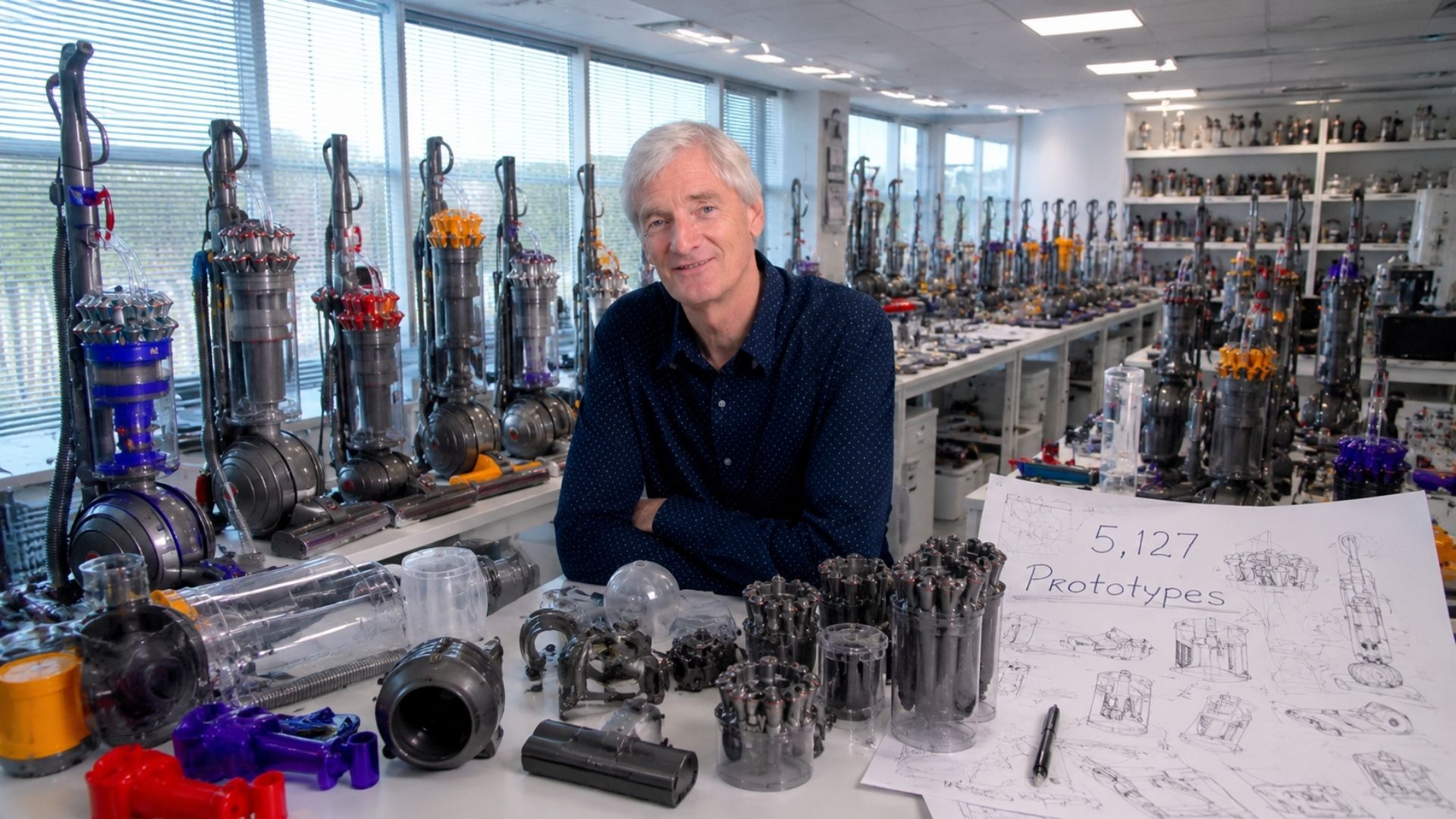

James Dyson couldn’t stand seeing the vacuum cleaner lose power with each use. Instead of accepting it, he spent five years and the family’s savings on thousands of prototypes until he created the bagless vacuum cleaner. The result: one of the greatest fortunes in world design, born from 5,126 failures.
Few stories illustrate the power of stubbornness as well as that of the bagless vacuum cleaner. According to the Cooper Hewitt, Smithsonian Design Museum, and the Science Museum in London, Englishman James Dyson was so bothered by a vacuum cleaner that lost suction that he decided to reinvent it from scratch and only stopped after 5,127 attempts.
The number is no exaggeration. There were 5,127 prototypes built one by one, which means 5,126 failures before success. When the final model finally worked and hit the stores in 1993, Dyson had in his hands not only a revolutionary vacuum cleaner but the embryo of a billion-dollar fortune.
Five years, a lot of debt, and the wife’s income

The obsession began with a mundane domestic annoyance. Tired of seeing the vacuum cleaner clog and lose power, Dyson decided to tackle the problem head-on and plunged into five years of experiments that nearly bankrupted the family. Now a symbol of innovation, the Dyson brand was born precisely from this almost stubborn insistence.
-
Scientists use an experiment over 200 years old, point a laser at a small disc, and manage to create four types of light structures simultaneously.

-
JBL launches Tuner 3 in Brazil with 7W RMS Pro Sound, Bluetooth 5.3, up to 15 hours of battery life, and IP68 water and dust protection at a low price.

-
NASA searches for the state of matter predicted by Einstein in a mini-fridge-sized laboratory on the Space Station
-
Hot food in the refrigerator burns the motor? Specialist explains what can really happen


During the toughest years, it was the income of his wife, Deirdre, an art teacher, that supported the household while debts piled up.
Dyson built practically one prototype a day, altering one detail at a time. In total, there were 5,127 versions until the model number 5,127 finally worked without losing suction, meaning 5,126 failed attempts along the way.
The technology stalled since 1901
To understand the magnitude of the achievement, it’s important to remember what vacuum cleaners were like until then. When Dyson began experimenting in the 1980s, the technology of vacuum cleaners had been practically the same since 1901. The appearance changed, but the functionality did not.
The devices still relied on bags with filters that clogged right after the first use, accumulated bacteria and allergens, were bulky, and most of the time, collected only two-thirds of the dust.
Dyson’s insight was to adapt industrial cyclone technology for domestic use, used in large towers to separate particles from the air, thus creating a vacuum cleaner that sucked up more dirt and dispensed with the bag.
1993: the world’s first bagless vacuum cleaner is born

After more than five thousand prototypes, the result took shape in the DC-01, launched in the United Kingdom in 1993. It was the world’s first bagless vacuum cleaner and looked like nothing else on the shelves.
The design was thought out in minute detail: inspired by NASA aircraft and painted yellow to add a touch of fun, the device caught the eye at first glance.
More than just a beautiful design, however, it was a vacuum cleaner entirely rethought inside and out.
2002: seven cyclones and the conquest of the United States
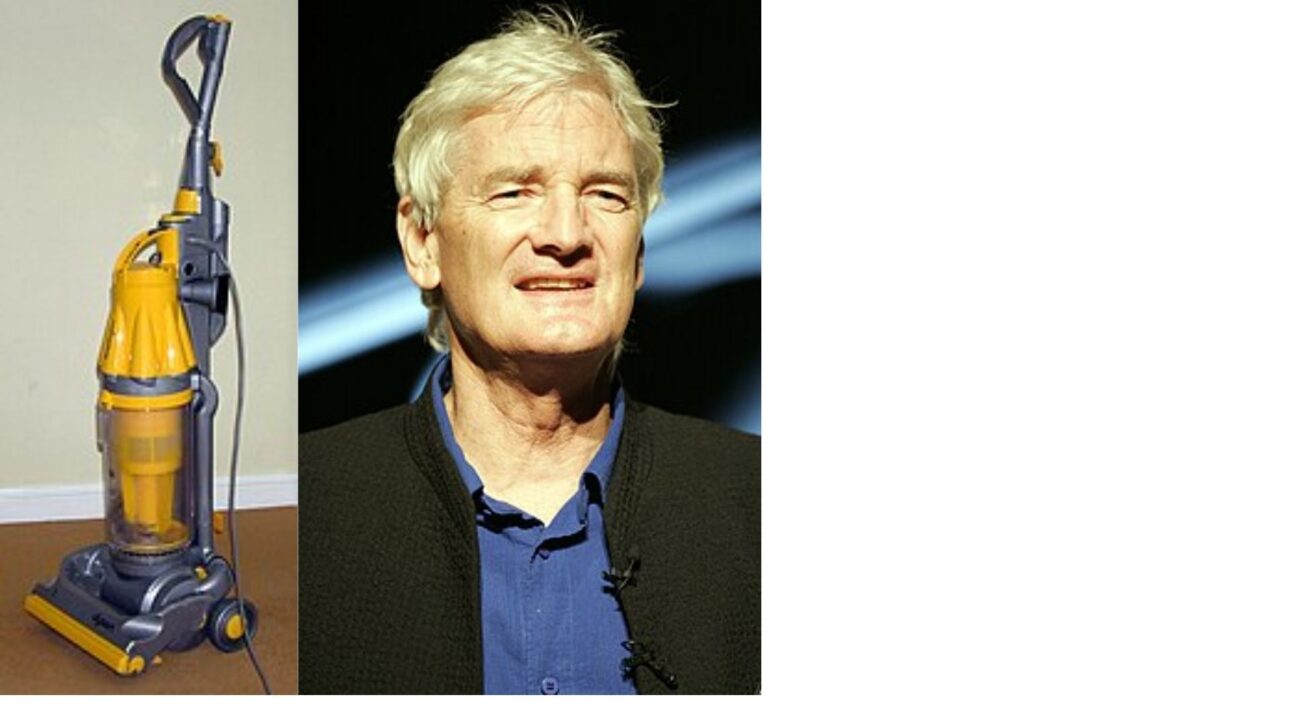
The success did not stop in the United Kingdom. In 2002, after having sold almost ten million devices, Dyson entered the American market with the DC-07 which the inventor himself described in his autobiography as “the best Dyson and, by definition, the best vacuum cleaner ever made”.
The improvements justified the pride. He divided the single cyclone into seven cyclones, increasing the power by 50%, created a dust compartment emptied by a trigger, reduced the weight of the vacuum cleaner to just 1.8 kg, and included washable filters, among other advances that increased the efficiency and lifespan of the product.
From Domestic Nuisance to “Sexy” Object
The most curious thing is that Dyson managed to make an object desirable that no one thought was charming. He transformed an everyday, boring item into something, in the words of the time, “sexy”.
So cool that, at the New York Fashion Week, in the spring of 2003, designer Tara Subkoff requested 25 units of the DC-07 to parade alongside her topless models on the runway.
The prestige even reached royalty. When presenting Dyson with the CBE medal (Commander of the Order of the British Empire) at Buckingham Palace, Queen Elizabeth II herself commented: “We have dozens of them scattered around”.
The yellow and silver vacuum cleaner was, officially, elegant enough for fashion and for the monarchy.
The Lesson Behind 5,126 Failures

Behind all the fortune, there is an almost banal method due to its simplicity. Dyson often says that he sees an everyday problem and, instead of living with it, solves it.
It was like that with the vacuum cleaner and would be the same later with dryers, fans, and other brand products.
The great lesson, however, is in the numbers. A billionaire fortune was born from 5,126 consecutive failures — the proof that persistence and method can transform frustration into revolution. For Dyson, each prototype that didn’t work wasn’t an end, but a clue on how to reach the next one.
And You, Would You Have the Patience to Try 5,127 Times?


From a vacuum cleaner that lost suction to a global design empire, the story of James Dyson shows that great ideas often arise from small irritations and a lot, a lot of persistence.
And you, would you have the patience to try 5,127 times until you get it right? What everyday nuisance would you love to see someone reinvent? Tell us in the comments and tag that friend who gives up at the first attempt.


