Portuguese
  Spanish


The Werrington railway tunnel was built alongside the line and moved with hydraulic jacks to create an exclusive route for freight trains, reduce conflicts with fast passenger services, and avoid a prolonged closure of the British railway.
Instead of gradually digging a railway tunnel under a busy passage, engineers prepared a 155-meter curved structure alongside the tracks and then pushed its approximately 11 thousand tons of concrete into the ground.
The movement took place in Werrington, north of Peterborough, in the United Kingdom. Four hydraulic jacks moved the structure at about 1.5 meters per hour, while teams carefully removed the soil in front of it.
The installation began on January 16, 2021 and took nine days. The information was released by Network Rail, the company that manages the British railway infrastructure. The tunnel officially went into operation on December 9, 2021.
-
They lived four people in an eight-square-meter van until a new pregnancy gave them a nine-month deadline: the 20-square-meter tiny house they built fits two bedrooms, a kitchen, and a living room in a carpentry puzzle.

-
She collected more than 10,000 glass bottles that were going to be thrown away and built a 70-square-meter house in Foz do Iguaçu: the bottle house cost R$ 3,000 and became an example of sustainable construction.
-
A house made of earth built with soil bags from the Arizona desert itself operates 100% off the grid, using solar energy and rainwater, and the hyperadobe technique creates walls that withstand the extreme climate without bricks.
-
A couple renovates a chalet and, when the foundation gives way, finds under the hallway an almost 200-year-old well, 8 meters deep with clean water, which they transform into a glass-covered attraction and now helps to generate £629 per week in rent.


The railway tunnel was built before the opening of the underpass
The main structure was not assembled gradually within an excavation. The concrete roof and walls were constructed in advance in an area next to the railway, close to the final position.
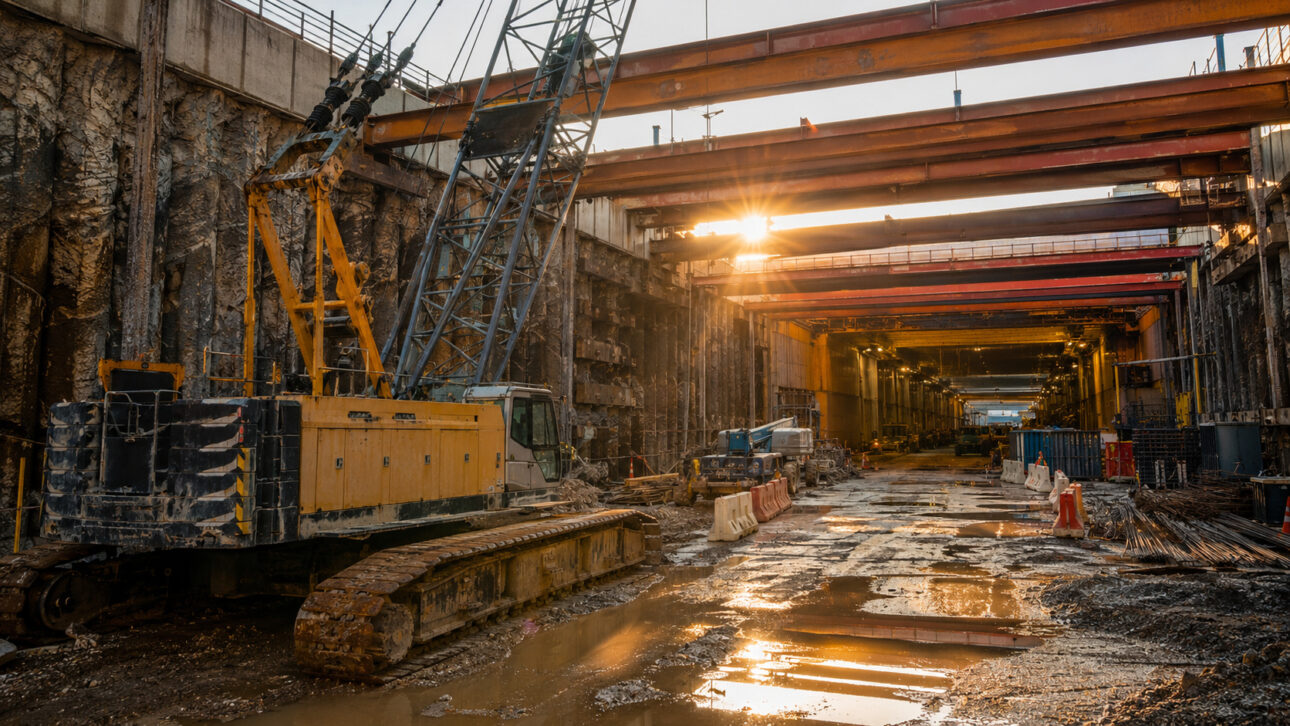
Once the concrete was ready for movement, controlled earth removal began. The excavation created space at the front, while the jacks pushed the curved railway tunnel to occupy the cleared section.
The method reduced the need to maintain a large opening under the railway for months. Much of the work with the structure took place outside the area occupied by the main tracks, reducing the duration of the most delicate stage.
Four hydraulic jacks faced approximately 11 thousand tons
The four hydraulic jacks provided the necessary force to move the structure. These devices use liquid under pressure to produce a slow, powerful, and controlled displacement.
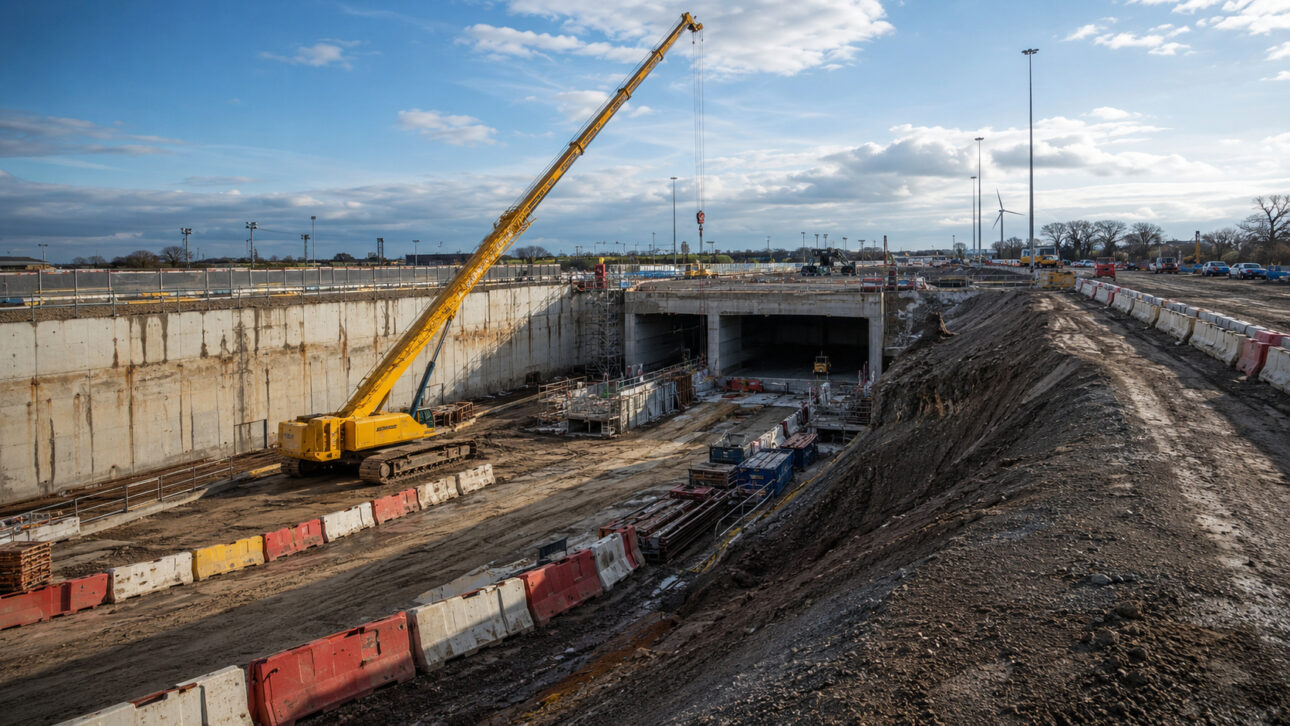
Even with this force, the railway tunnel advanced only 1.5 meters per hour. The low speed allowed for earth removal, observation of the concrete position, and maintaining movement within the prepared path.
The main operation lasted nine days. During this period, the teams repeated the process of excavating the front part and pushing the structure until its 155 meters occupied the planned position under the railway.
Small tunnels guided the direction and height of the curved structure
Before the major displacement, two smaller tunnels were opened under the railway line. They received support paths and plates used to guide the lower corners of the main structure.
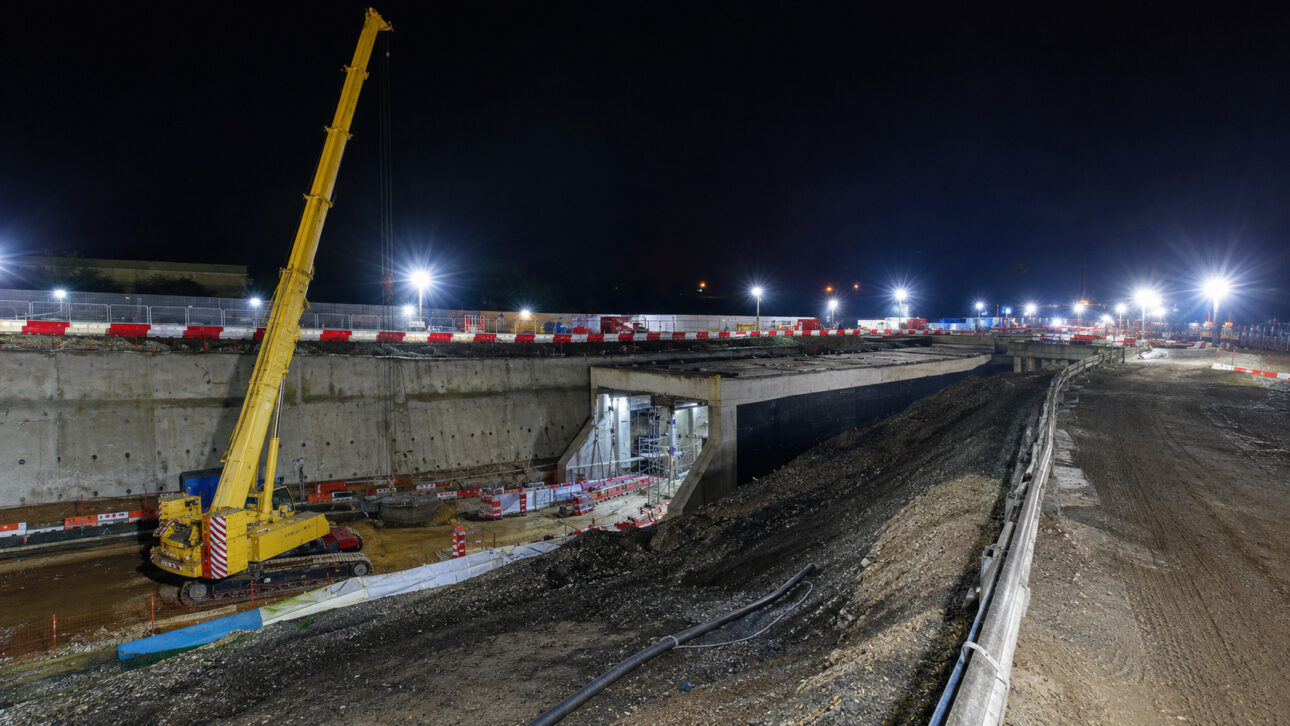
These paths functioned as guiding rails. They helped maintain the lateral direction of the curve and the correct level while thousands of tons advanced through the terrain.
Control was essential because the structure did not follow a straight line. The tunnel needed to complete the curved path without deviating from the route reserved for the new cargo tracks.
The structure was pushed without the final floor to reduce weight and resistance
The displaced part was a portal, the name given to the set formed by the roof and the two side walls. The final floor did not accompany the pushing and received concrete after the structure reached its destination.
This choice reduced the weight that the jacks needed to move. It also prevented an entire concrete base from dragging directly over the terrain, which would increase resistance to movement.
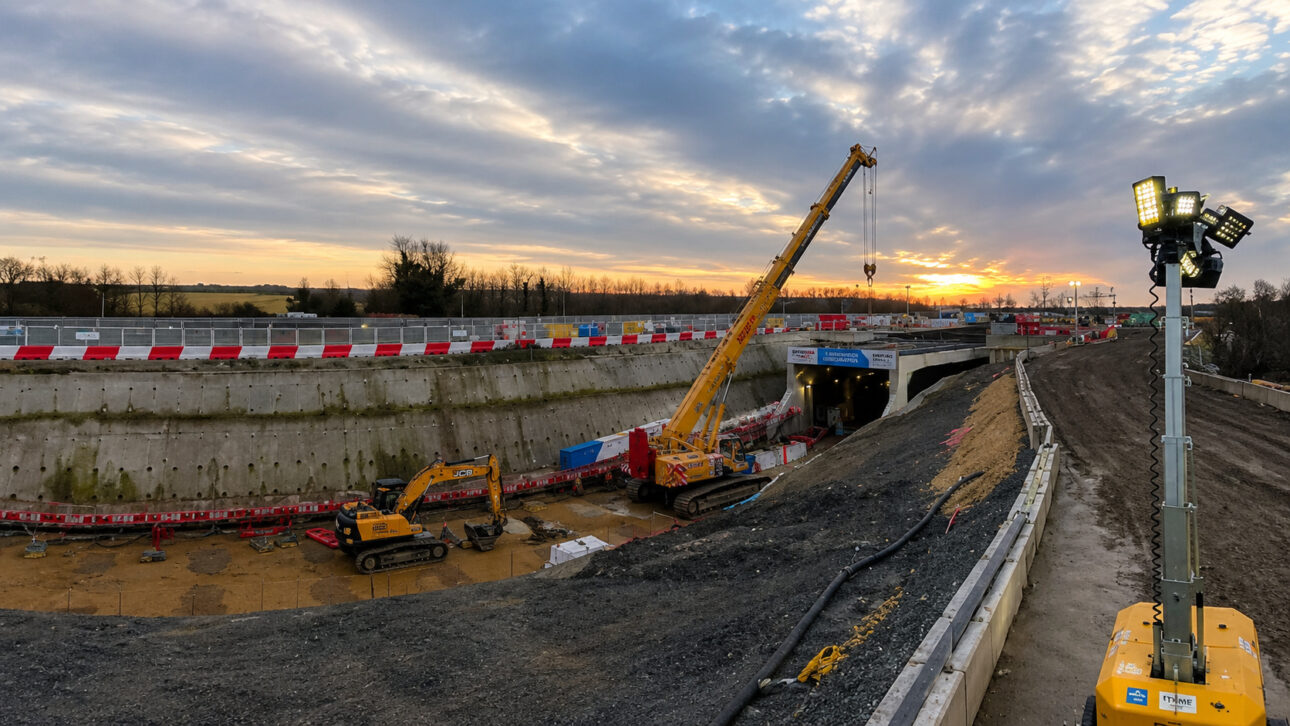
After the installation of the portal, the interior received the floor and the necessary components to form the railway passage. The new tracks were placed inside the tunnel to accommodate the freight trains.
The railway suffered restrictions during the nine days of operation
The installation did not occur with all trains running normally at every moment. Three tracks were temporarily removed in the work area, overhead cables were lifted, and the ground was accessible for excavation.
A reduced operation was maintained during the critical period. After the railway tunnel reached the correct position, teams covered the structure, replaced the tracks, and prepared the line for the resumption of regular services.
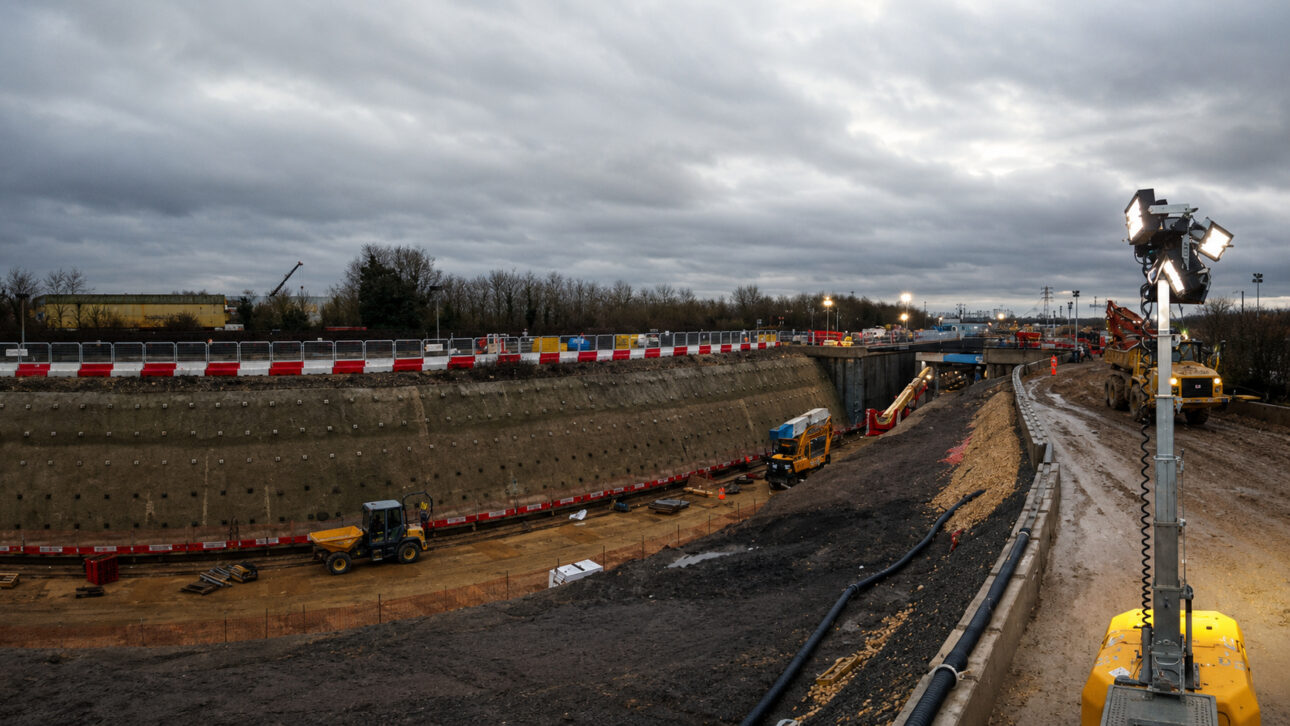
Network Rail, the company that manages the British railway infrastructure, recorded that the method avoided a much longer blockade. The planning concentrated the phase of greatest impact in nine days.
Freight trains stopped crossing the fast passenger route
Before the construction, slow freight trains needed to cross the tracks used by fast passenger services. This crossing created a point of conflict and limited the utilization of the railway.
The tunnel allowed the freight compositions to pass under the main line and reach a nearby track. In practice, the slow services stopped cutting across the fast trains’ path at the same level.
The separation improved the circulation of freight and passengers in the Peterborough region. The infrastructure began to offer different paths for services with distinct speeds and functions.
The Werrington project showed that a railway tunnel can be built next to the line and then moved to the final position. The technique required temporary restrictions but avoided a prolonged conventional excavation under a busy route.
The result was a curved passage of 155 meters, moved at 1.5 meters per hour by four hydraulic jacks. Its approximately 11 thousand tons of concrete now separate freight trains from rapid passenger services.
If an 11 thousand ton structure could be installed in nine days, which Brazilian railway projects could reduce delays using a similar technique? Leave your opinion in the comments and share the publication.