






 Portuguese
  Spanish


Além disso, moedas medievais e outros vestígios de diferentes períodos históricos foram encontrados no local, indicando a importância contínua da área ao longo dos séculos.
Os arqueólogos continuam a investigar o sítio, esperando descobrir mais sobre as práticas funerárias e a vida das pessoas que viveram naquela região durante a era anglo-saxônica.
Essas descobertas oferecem uma visão fascinante sobre a história e a cultura da Inglaterra antiga, contribuindo para o nosso entendimento do passado.
-
Genetically modified babies are closer to reality after scientists edited specific letters of human embryo DNA with unprecedented precision, although errors and risks still prevent its use in pregnancies.

-
Japan has officially entered the SpaceX race: for the first time, the country’s space agency launched, maneuvered in the air, and landed upright its reusable rocket, the RV-X, in a flight of less than a minute that promises to significantly reduce the cost of space missions.

-
An excavator operator at a mine in Canada hit something strange in 2011 and, after years of preparation, revealed an armored dinosaur with intact skin and armor, 110 million years old and nearly 1,300 kg, now the best preserved in the world.
-
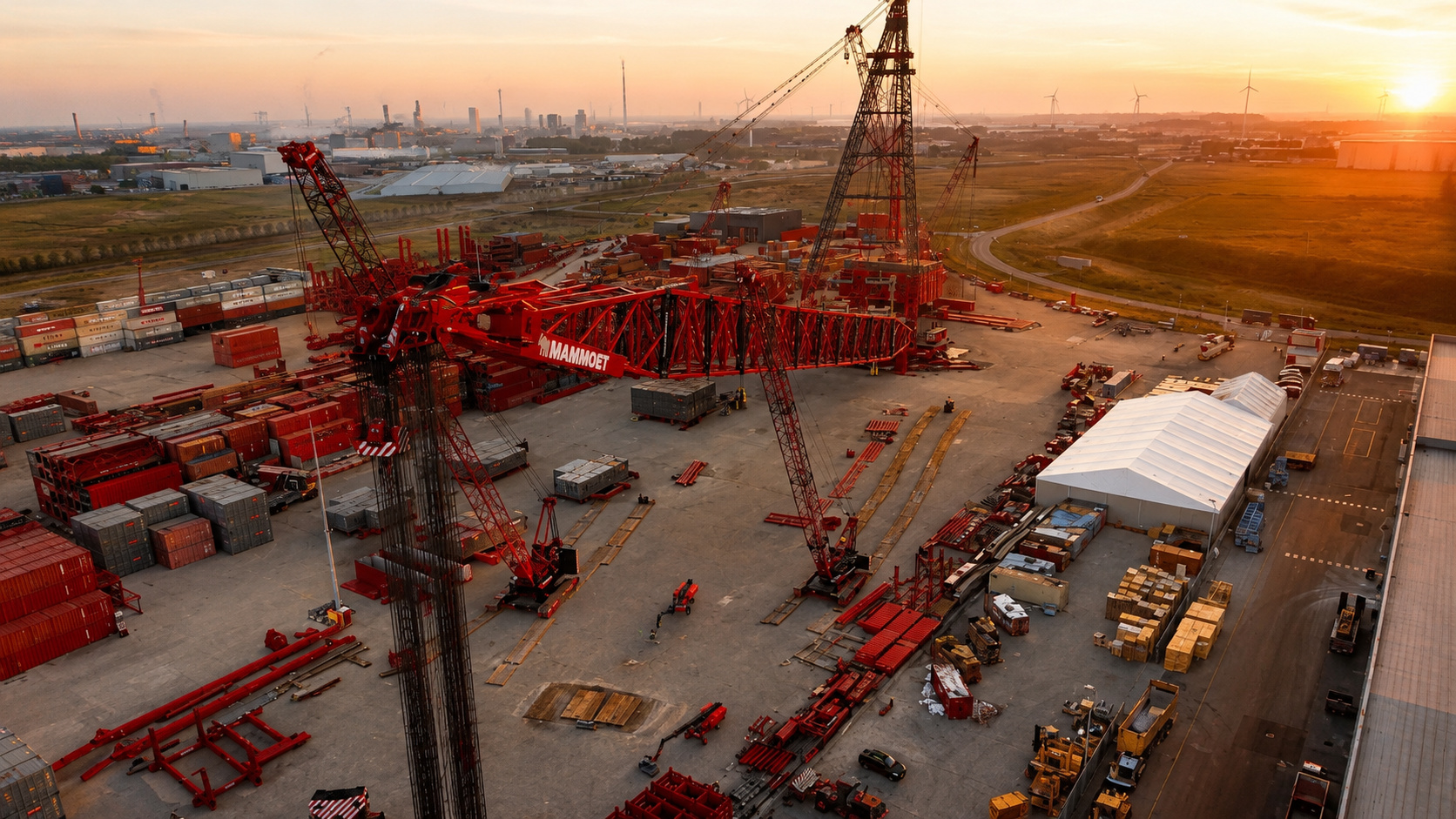
Most powerful land crane on the planet: Mammoet SK6000 lifts 6,000 tons, raises 3,000-ton parts to 220 meters, and carries 4,200 tons of counterweight to unlock mega projects in the offshore wind, nuclear, and oil and gas industries.




The horse also received an elaborate burial. The animal was buried with the harnesses still positioned over its head and shoulders, including decorative pieces made with copper alloy and a probable iron bit in its mouth.
Maria Bellissimo, spokesperson for Oxford Cotswold Archaeology, stated that the weapons, the horse, the metals, and the burial mound itself suggest that the two individuals belonged to the elite.
The sex, exact age, and identity of the people remain unknown. However, the evidence indicates that they were buried simultaneously and probably died in the same period.

Horse sacrifice is still a possibility
The cause of death of the two adults could not be determined, as the bones were not preserved. Archaeologists also cannot obtain from the sand silhouettes the same amount of information provided by complete skeletons.
Bellissimo considers it likely that the horse was sacrificed to accompany the owners in the burial.
The interpretation, however, remains a hypothesis based on the arrangement of the graves and the objects found.
Archaeologist Howard Williams, professor at the University of Chester, noted that the cemetery is located on a ridge visible to those traveling from the coast towards the interior.
At the time, maritime communities maintained trade and family connections along the English east coast.
The discovery may expand knowledge about the beliefs and practices of the emerging kingdom of East Anglia after the end of the Roman province of Britannia.
Excavation revealed coins and remnants from other eras
During the work, archaeologists also located a treasure with more than 300 silver coins from the 11th century. The pieces were wrapped in lead and fabric.
The team believes that the collection may have been buried as a financial reserve during a period of strong social and political instability.
The excavations also revealed a Roman period ceramic kiln, an Iron Age oak ladder, remnants of Bronze Age settlements, and several medieval kilns. Research on the site is still ongoing.
This article was prepared based on information from Oxford Cotswold Archaeology and Live Science, with data, numbers, and statements preserved as per the consulted material.


