Portuguese
  Spanish


Himalayan pink salt is extracted at the Khewra Mine in Punjab, with detonations, manual loading, and processing in Lahore, before reaching over 80 countries as a premium item, although cited research points to microplastics, heavy metals, and health benefits without robust evidence for curious Western consumers.
Himalayan pink salt comes from the Khewra Mine in the Punjab province of Pakistan, where workers use explosives, tractors, and manual loading to remove blocks that can weigh hundreds of kilos. Extraction occurs daily in dark tunnels, while international demand transforms the product into an expensive item in markets like Europe and the United States.
The information is based on a video published on the Insider Português channel on July 10, 2026. According to the content, the Khewra Mine has large reserves of pink salt, exports products to over 80 countries, and supports a chain involving mining, processing in Lahore, tourism, and global sales.
Dark tunnels hold giant blocks of salt
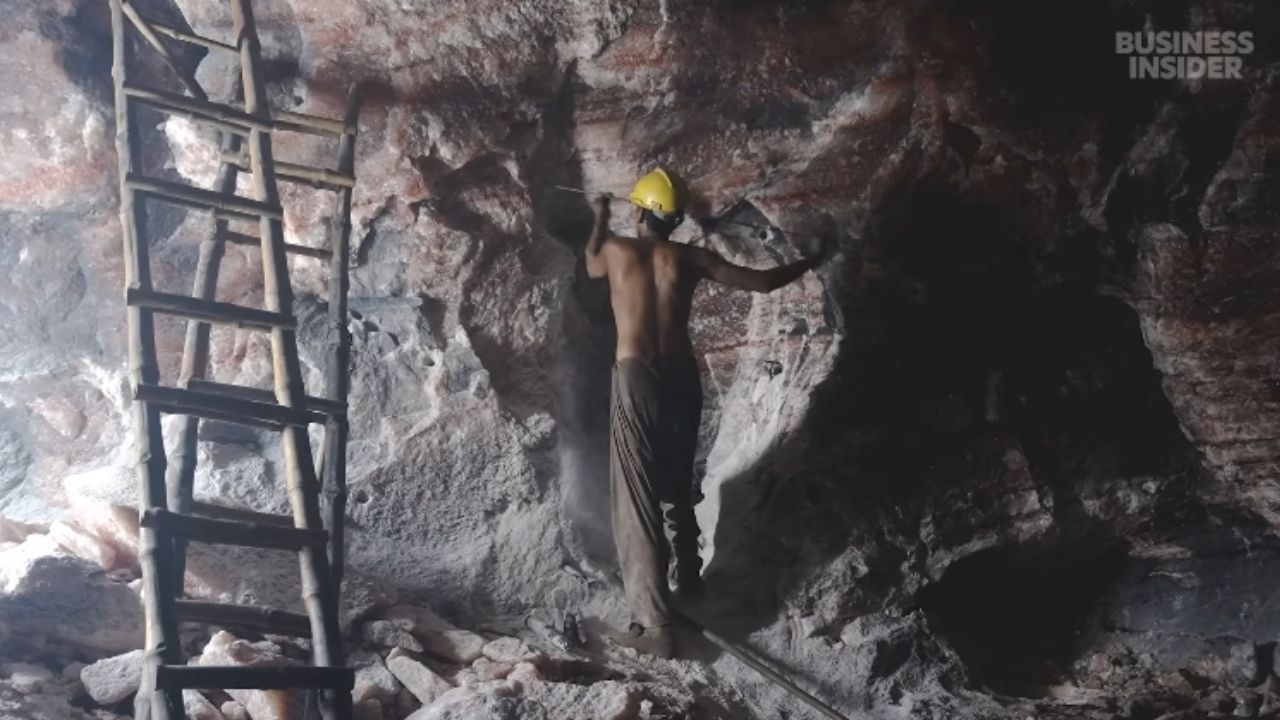
The Khewra Mine is presented as one of the main sources of Himalayan pink salt in the world, although the salt does not exactly come from the Himalayan mountain range. According to the source, the deposits are located on the Pothohar Plateau, at a lower altitude, in the Pakistani province of Punjab.
-
A 17-year-old teenager from Paraíba didn’t have money to buy a professional telescope, so he built equipment with margarine buckets and a wall mirror, saw the Moon up close, went viral on social media, and now takes children from the Sertão to observe planets, stars, and nebulas in squares and schools.

-
It combines maximum strength and minimum weight, and that’s why the hexagonal structure has become the secret weapon of engineering: the honeycomb shape, copied from nature, supports airplane panels, satellites, trains, and construction around the world.

-
It is estimated that over 35,000 Brazilians cross the border to study medicine in Paraguay, where the monthly fee drops from R$ 8,000 to less than R$ 2,500 and admission does not require the competitive entrance exam.
-
He arrived in Brazil with a thousand liras, saw the cargo of his first business disappear in the sea, and started almost from scratch, but a decision involving pork lard, cans, and flour eventually led the immigrant to command 200 factories, 30,000 employees, and one of the largest industrial empires in Latin America.




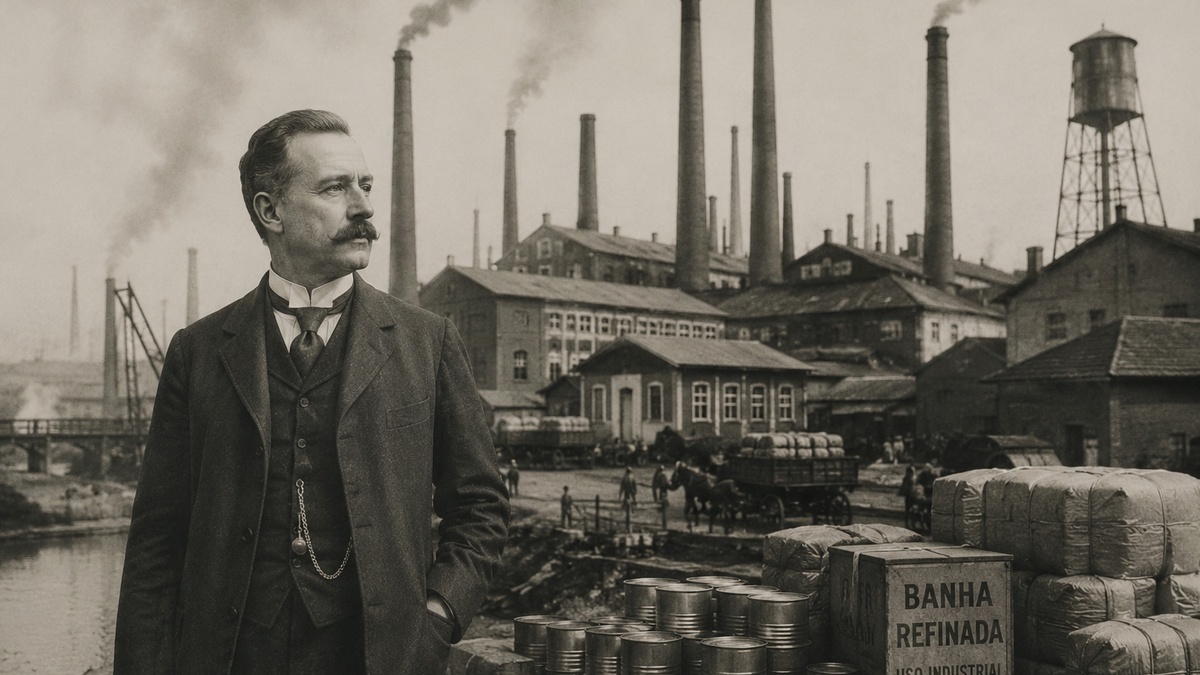
Inside the mine, there are about 40 kilometers of tunnels connecting 17 levels divided into chambers. The darkness, the use of explosives, and the weight of the blocks make the routine risky, especially because some raw pieces can weigh up to 800 kilos, too much to be lifted by hand.
Explosives open the way inside the mountain
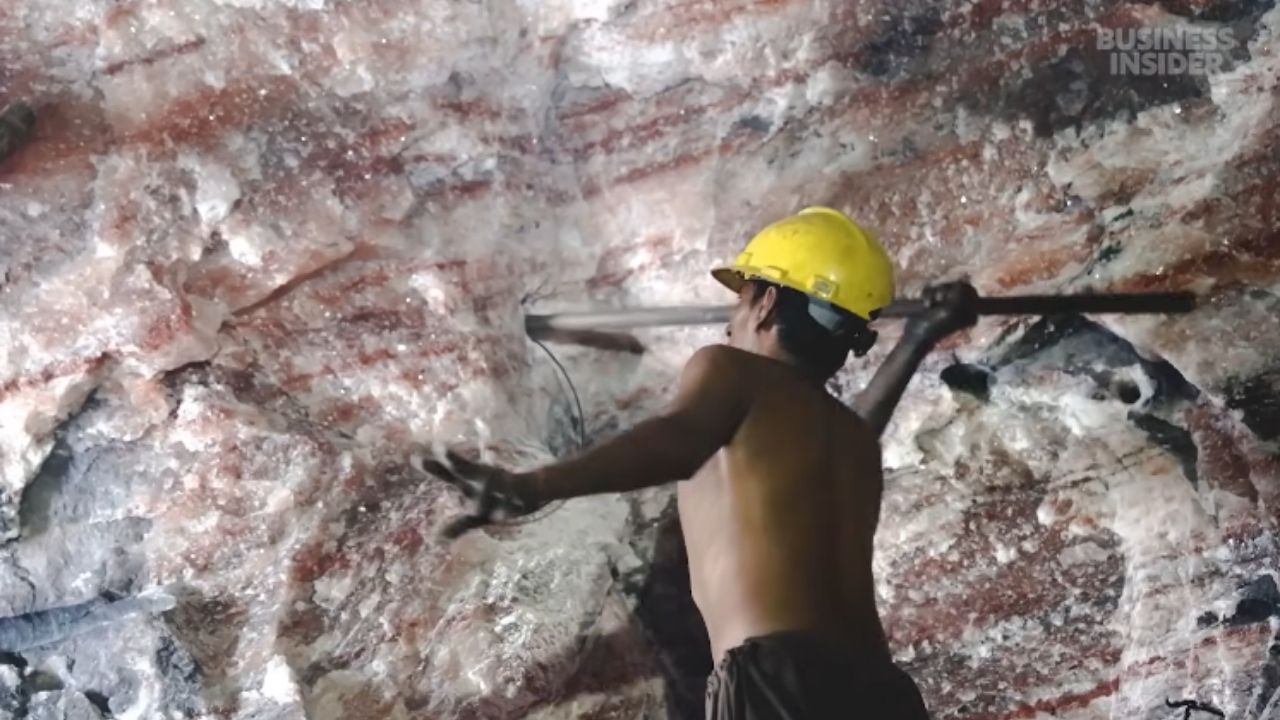
Before extraction, experienced miners examine the walls in search of higher quality salt. The assessment combines geological surveys, practical experience, and ancient techniques, such as tapping the rock and illuminating the surface with flashlights to identify the best spots.
After that, workers drill holes about 1.20 meters deep and manually fill them with explosives. A failure in detonation, a delay, or entering the chamber too early can cause an accident, so the supervisor only allows the return after verifying that the area is safe.
Not all rock can be removed
Mining does not remove all the salt found in the chambers. Part of the rock needs to remain as structural support to prevent collapse within the tunnels, maintaining the stability of the excavated areas over time.
According to the source, workers extract about 400,000 tons of salt per year, but this represents only a fraction of the region’s reserves. Even at this pace, the estimate presented is that the deposit could last for centuries, sustaining the activity for many generations.
Mine sustains families for generations
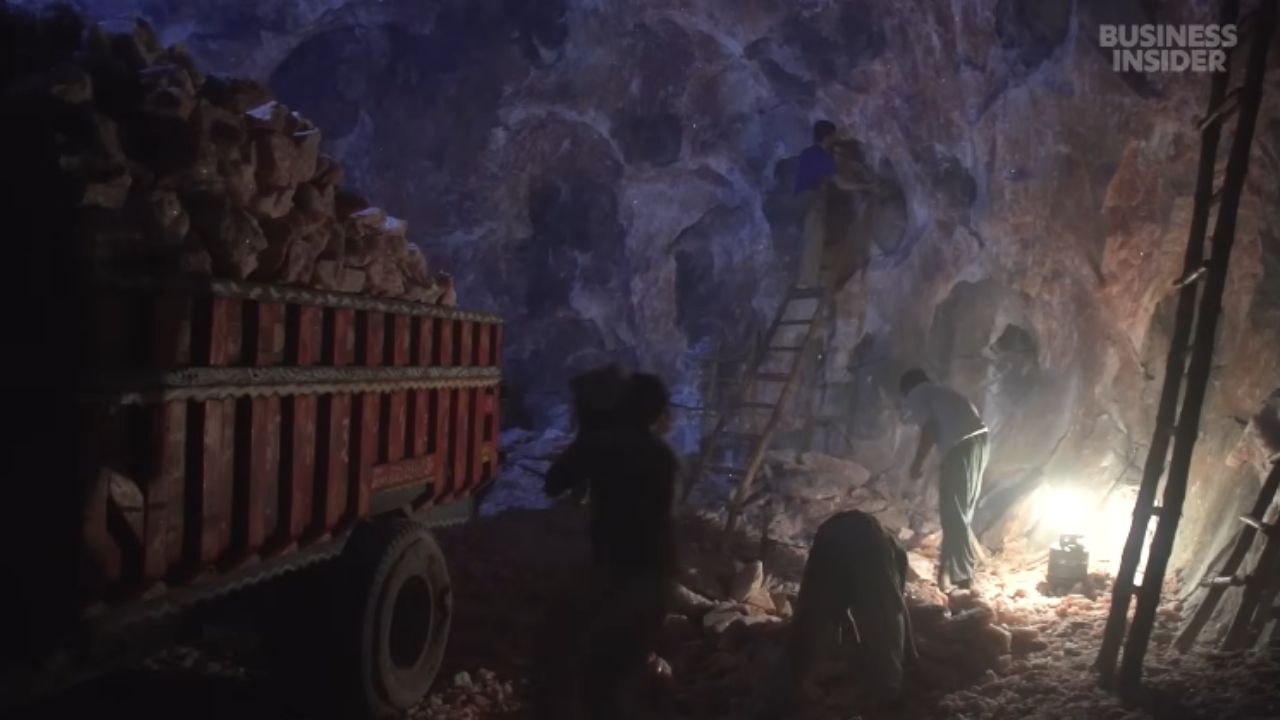
The routine in the mine is treated as an activity passed down from generation to generation. One of the characters mentioned in the source is Asif Mahmood, a safety supervisor who has worked with Himalayan pink salt since he was young and lives in a community historically linked to extraction.
The mine belongs to the government, but sections are leased to private companies, such as Ittefaq Salt. According to the transcript, Asif receives about 100,000 rupees per month, equivalent to approximately US$ 350, an amount presented as sufficient to cover his family’s basic needs.
Pink color comes from iron oxide
The salt in the region is believed to have formed about 600 million years ago, when ancient seas evaporated and left large mineral deposits. The pinkish hue comes from small amounts of iron oxide, a compound also associated with the reddish color of rust.
The greater the presence of iron, the more intense the color of the salt can be, ranging from light pink to dark red. This appearance is one of the reasons the product gains value in the market, especially when sold as a natural, decorative, or gourmet item.
Processing takes place far from the mine
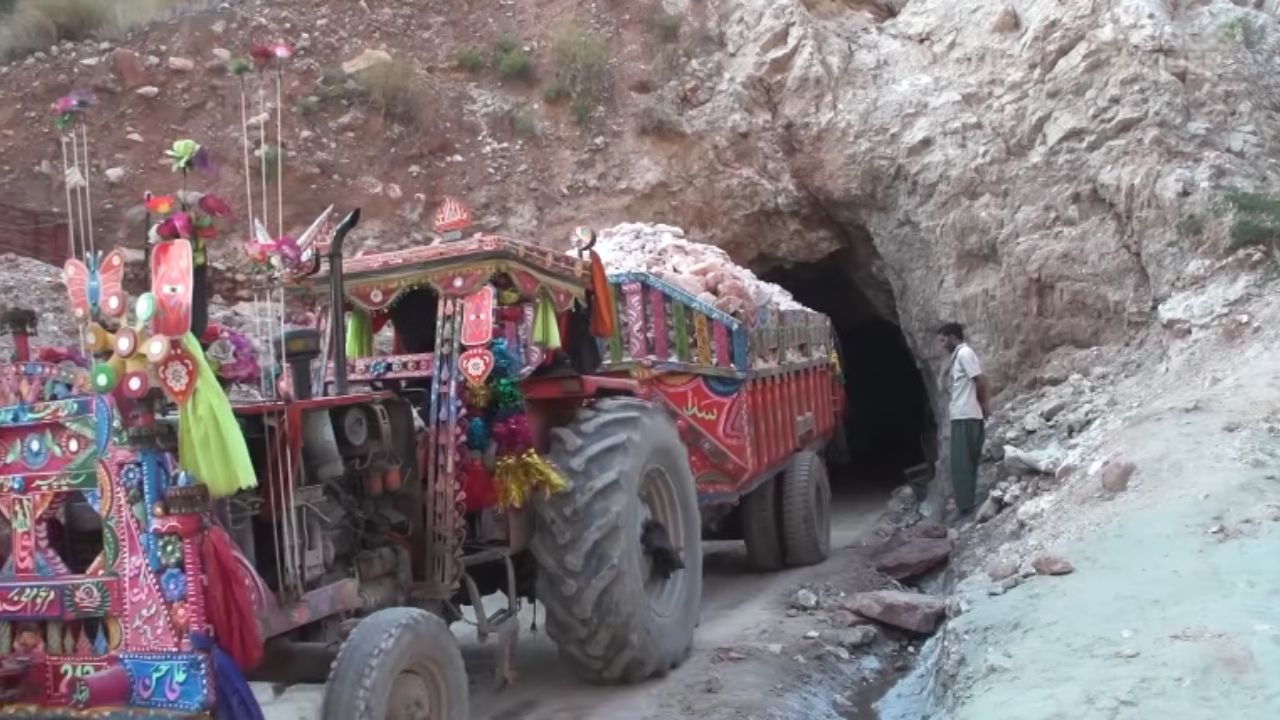
After extraction, the blocks are sent to factories like the one mentioned in Lahore, about 280 kilometers from the mine. There, workers evaluate the rocks, sort by color, check for cracks, and remove any possible gunpowder residues before cutting.
Processing involves its own risks. The pieces can weigh up to 100 kilos, and cutting with diamond-tipped blades requires caution because hands are close to the machine as the blocks get smaller. The danger doesn’t end at the mine; it continues at the factory, in handling and finishing.
Salt vapors also concern workers
In the manufacture of lamps and other products, workers drill and cut the blocks, releasing salt particles and vapors into the air. To reduce dispersion, the source describes the use of water during cutting and protective equipment such as gloves, caps, goggles, and masks.
According to the report, these particles can accumulate in the lungs over time and make breathing difficult. Therefore, new hires undergo training before working in processing. The pink salt industry depends as much on extraction as on the protection of those who transform the rock into a sellable product.
Products are shipped to more than 80 countries
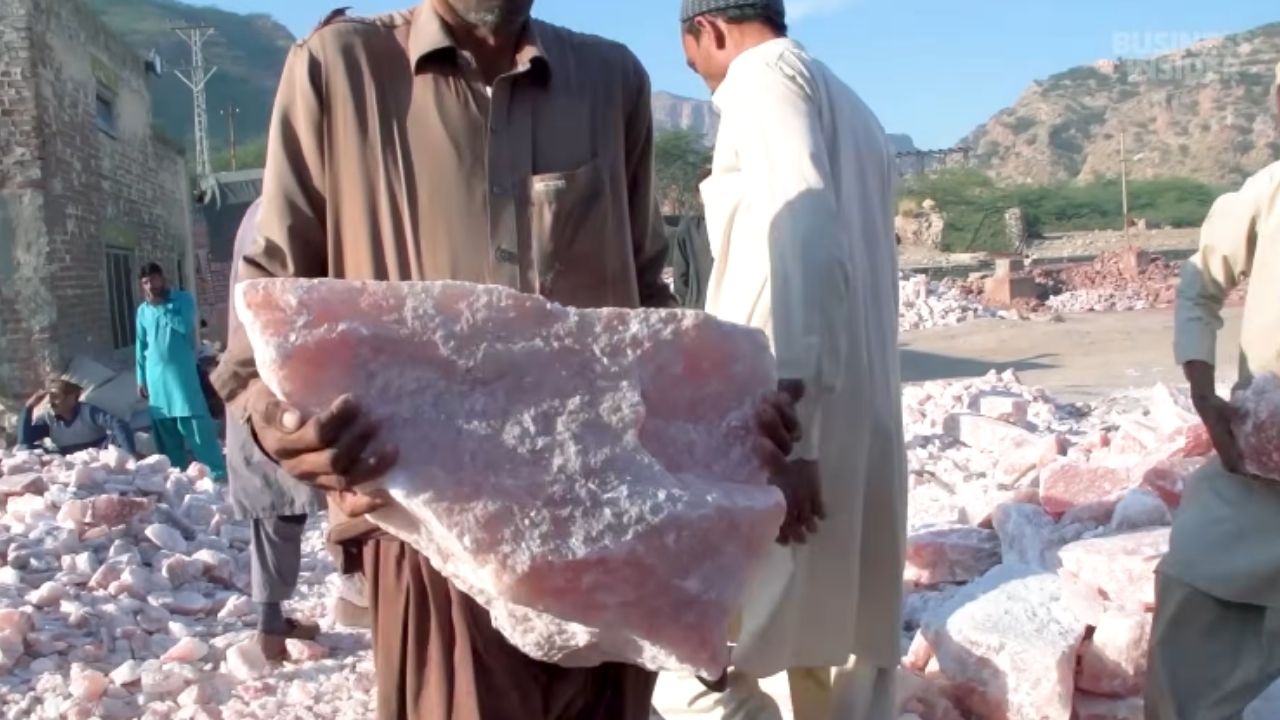
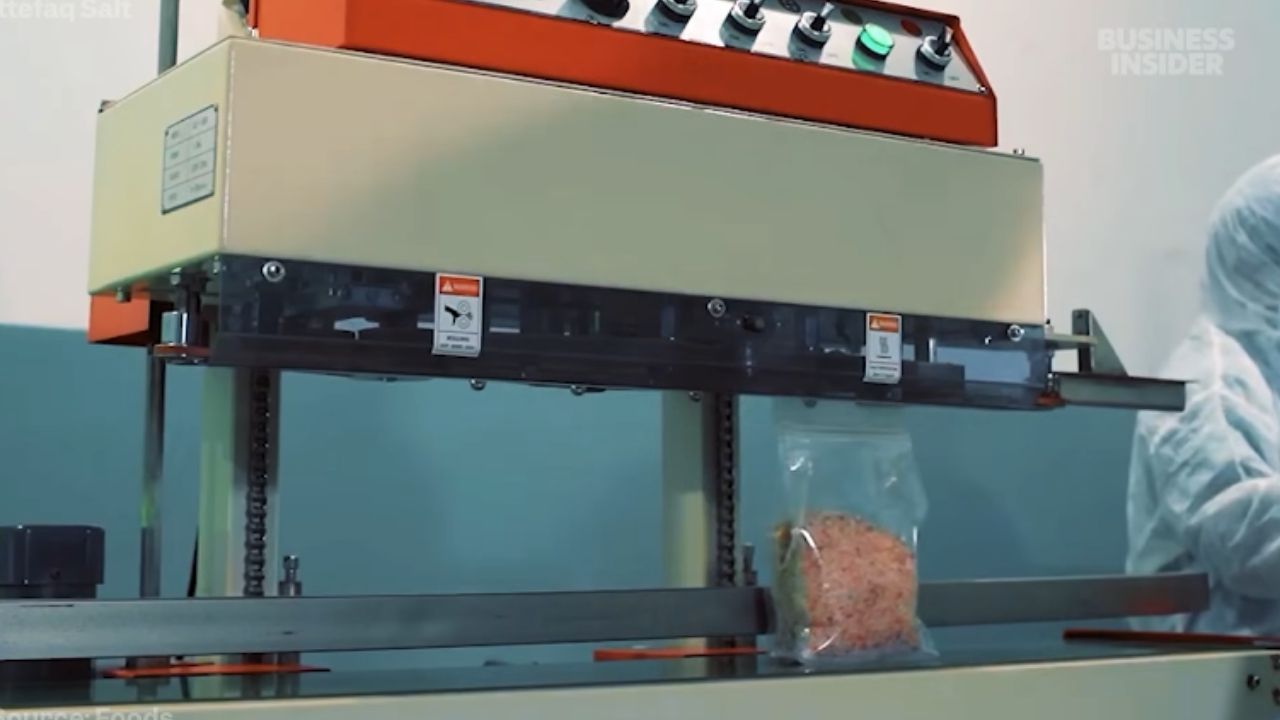
After cutting and finishing, Himalayan pink salt is transformed into table salt, bath salts, lamps, and items associated with aromatherapy. The products are stacked, packaged, labeled, and shipped to more than 80 countries.
The factory mentioned in the source processes nearly 350 metric tons of salt per day, a volume comparable to the weight of a fully loaded Boeing 747. This number helps to gauge how a rock extracted from tunnels in Pakistan becomes a global commodity.
Expensive product gains status in Western markets
In supermarkets in the United States, a jar of Himalayan pink salt can cost around $10, while a larger package of regular salt may cost approximately $1, according to the transcript. The price difference is associated with how the product is marketed.
Pink salt is often presented as a more natural, sophisticated, or healthy alternative to common white salt. However, the premium price does not automatically mean proven benefit. The packaging, exotic origin, and color help build value, but do not replace scientific evidence.
Health promises lack solid evidence
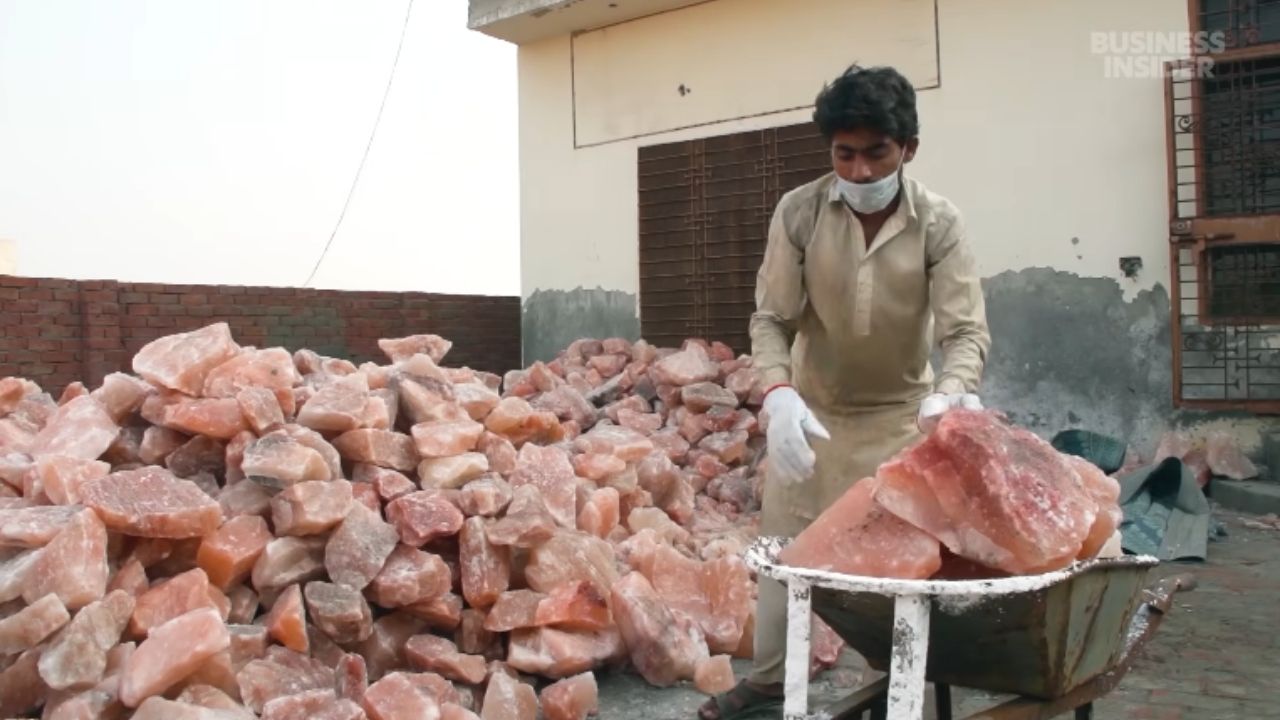
The source points out that influencers often associate Himalayan pink salt with supposed benefits such as blood sugar regulation, improved sleep, and body detoxification. Scientists cited in the content, however, state that there is no solid evidence to support these claims.
This difference between marketing and science is central to the debate. The product may have visual and culinary appeal, but promises of healing or detoxification require robust studies. Without proof, health benefits become a commercial argument, not reliable information for the consumer.
Cited studies point to microplastics and heavy metals
The transcript mentions studies indicating the presence of microplastics in pink salt samples, with contamination associated with processing and packaging stages. It also cites reports on heavy metals such as lead, mercury, and arsenic.
The presence of these elements does not mean that every product is automatically dangerous in any quantity, but it reinforces the need for control, analysis, and transparency. When a food is sold as healthier, the requirement for quality and proof should be even greater.
Greater profit remains in the processing chain
Despite its international fame, Pakistan has not always retained the majority of the added value of Himalayan pink salt. For years, according to the source, the country exported raw salt at low prices, especially to India, where part of the material was processed and resold to Western markets as a premium product.
After political tensions between Pakistan and India in 2019, bilateral trade was suspended, affecting one of the main export routes for raw salt. Since then, Pakistani companies have started investing more in local processing, trying to capture a larger share of the profits from the global chain.
Khewra also became a national tourist attraction
The Khewra Mine is not just an extraction area. According to the source, it receives about 250,000 tourists per year and is seen as a source of pride for many workers and local residents connected to the sector.
This combination of mining, tourism, and export gives the site a symbolic role within Pakistan. The pink salt comes from the earth, becomes a shelf product abroad, and also helps build a national narrative of identity, work, and mineral wealth.
Global market continues to expand


Since 2018, the global Himalayan salt market has been growing and is expected to reach nearly $700 million by 2030, according to the submitted transcript. Demand is advancing in different sectors, from food to cosmetics, decoration, and wellness.
This growth reinforces the paradox of the industry: the same product sold as natural and healthy originates from a heavy chain, with explosives, dust, blades, international export, and contamination risks. The pink glow on the shelf hides a complex industrial operation.
From the Tunnel to the Supermarket, the Story Becomes Less Simple
The journey of Himalayan pink salt shows how an apparently simple product can involve dangerous mining, manual labor, industrial processing, international marketing, and scientific doubts. What reaches the consumer as a beautiful and expensive item starts in dark tunnels, under explosions and heavy loading.
The final question is less about demonizing the product and more about understanding what is behind it. Would you buy pink salt for its taste, appearance, or supposed health benefits, even with warnings about microplastics, heavy metals, and promises without solid proof? Share your opinion.