






 Portuguese
  Spanish


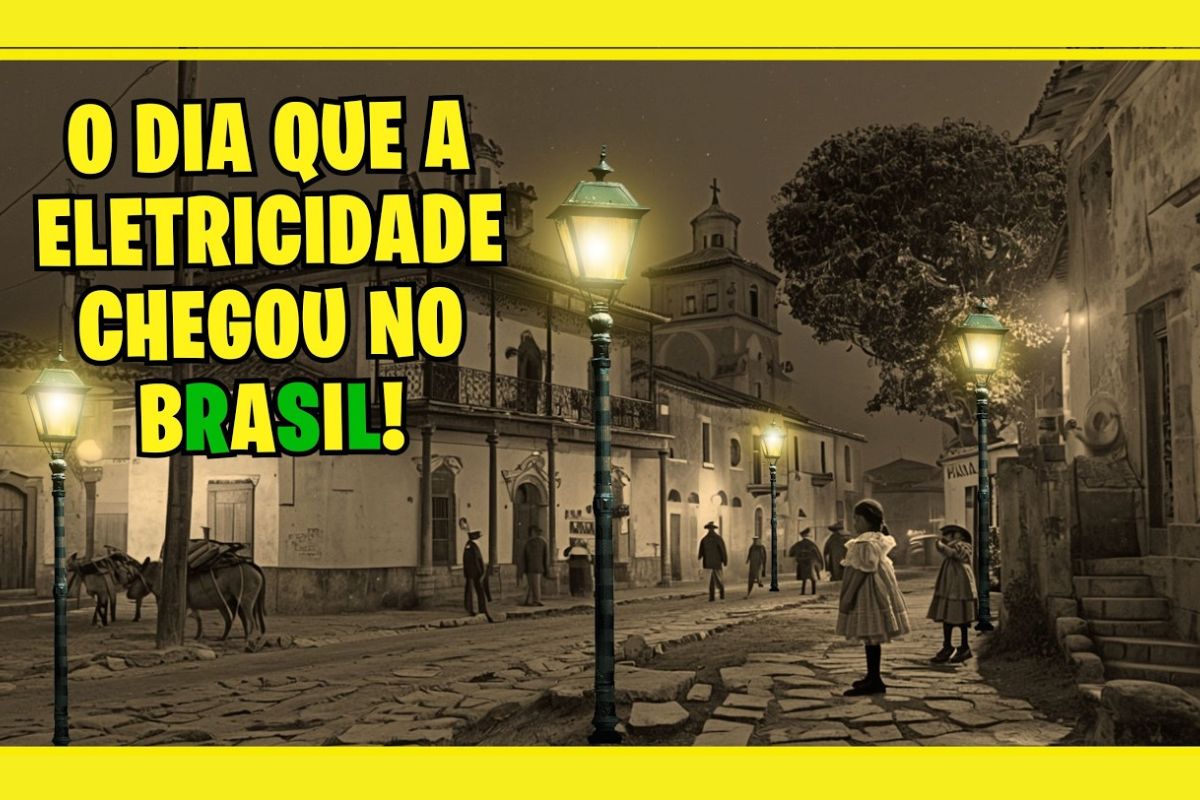


Before São Paulo and Rio, a city in the interior of Fluminense inaugurated electric public lighting in 1883, enchanted Dom Pedro II, and placed the country among the world pioneers by transforming the urban night with a dedicated generation system and high-intensity lamps
The city in the interior of Fluminense that made history was Campos dos Goytacazes. In 1883, the inauguration of public electric lighting changed local routines and projected Brazil on the path to modernity, well before the more famous capitals. The event brought together authorities and the population, on a night that symbolized the definitive transition from lamps to controllable and continuous light.
Before this leap, experiences with electricity had already taken place in specific spots, such as the Central Station of the Dom Pedro II Railway, in Rio de Janeiro, which received a few test lamps. The permanent installation in Campos consolidated the technological turnaround, marking the beginning of adoption in other cities across the country over the following years.
How Brazil Lit Up Before Electricity
Until the end of the 18th century, lighting was essentially private and domestic, based on lanterns and oil lamps, which left the streets dark and unsafe.
-
400 km² of Greenhouses in Almería, Spain, Astonish American Visitor by Producing Millions of Tons of Produce for Cold-Weather Markets

-
Antarctic Volcano Emits Microscopic Gold Particles That Travel Up to 1,000 Kilometers Across the Continent
-
Little-known Japanese factory is the world’s largest zipper manufacturer, producing 7 billion pieces annually and closing half the world’s pants.

-
Brazilian Factory Recycles One-Third of the Country’s Styrofoam Waste, Matching European Levels with 51,000 Tons Reused Since 2007


Festivals and civic dates featured scenes illuminated by candles on facades, creating an occasional and fleeting glow.
In the 19th century, public lighting using whale oil and later gas began to equip some cities.
Rio de Janeiro officially established the oil system as early as 1794, and São Paulo implemented gas in 1854, a service that lasted until the 1930s.
The arrival of electricity, however, promised consistency, power, and reach that none of the previous systems could deliver.
The Night of June 24, 1883 That Enchanted the Emperor
On June 24, 1883, at 7 PM, the inauguration ceremony in Campos dos Goytacazes drew a crowd to the streets.
Dom Pedro II, an enthusiast of science and technology, activated the system in front of about 20,000 people, provoking prolonged applause and a collective feeling of witnessing a new era.
The city in the interior of Fluminense thus gained the first electric public lighting network in Brazil and Latin America, consolidating a chapter that the country would revisit as a symbol of modernization.
This achievement placed Brazil among the first in the world to operate an urban system of this kind.
Technology, Power, and Reach of the Pioneering System
The system in Campos used a thermal machine powering three dynamos, with a capacity of about 52 kW.
The setup powered 39 high-intensity lamps, described as having the brightness of two thousand candles each, initially distributed across five streets at elevated points to enhance light diffusion.
Reports from the time indicate that the system would operate with full strength between 30,000 and 33,000 candles, establishing a remarkable level of brightness for the urban standards of the period.
The infrastructure gained its own station, the “Electric Light Station”, installed on Avenida Pedro II, reinforcing the permanent nature of the service.
After Campos: The Propagation of the Idea
The example set by Campos inspired other cities. Rio Claro, in São Paulo, advanced early with its own plant, while Curitiba, Maceió, and Juiz de Fora moved in the same direction, each with local solutions.
In 1887, Maceió registered the “Lamp of Alagoas”, an invention based on plant fibers.
Interestingly, the large capitals came later.
Rio de Janeiro only implemented electric public lighting on a broad scale starting in 1904, and São Paulo in 1905.
The pioneering spirit of the city in the interior of Fluminense highlights how innovation can emerge far from political and economic centers.
Urban Memory and Visible Vestiges
From the inaugural episode, a historic pole remains in front of the Federal Revenue headquarters in Campos dos Goytacazes, accompanied by a commemorative plaque.
This urban vestige helps to materialize the narrative and create heritage education, transforming history into a concrete experience for residents and visitors.
The technical and social memory of the project also holds lessons on planning, operation, and maintenance of public systems, showing that engineering and management decisions were crucial to making the inaugural service viable.
Why This Pioneering Spirit Still Matters


The diffusion of electric public lighting was decisive in extending industrial shifts, stimulating nighttime leisure, and reorganizing urban life.
By regularly and powerfully lighting squares and streets, the city in the interior of Fluminense accelerated economic and cultural transformations that would spread across the country.
The lesson of public policy also remains: when innovation has institutional sponsorship and a clear purpose, the social impact is immediate.
The inaugural night of 1883 synthesized science, government, and public interest into a single key of progress.
In your opinion, should the city in the interior of Fluminense that inaugurated electric light further explore this heritage in memory and scientific tourism routes, or is the legacy already well-preserved for future generations?





Duas questões.
Primeiro, apesar de deixar claro que se trata do primeiro serviço estável de iluminação pública, mesmo assim a matéria dá a entender que a primeira vez que uma lâmpada elétrica brilhou no Brasil foi em Campos em 1883. E não é correto.
Nos anos 1870 houve várias exibições de iluminação elétrica no país, principalmente no Rio de Janeiro. A energia era gerada em pequenos dínamos a vapor, que queimavam carvão ou madeira.
Segundo, as grandes cidades brasileiras possuíam, desde os anos 1850, contratos de fornecimento de gás encanado. Esses contratos estipulavam privilégios às companhias de gás, entre eles a exclusividade da exploração da iluminação por décadas, entre 30 e 50 anos.
Quando a eletricidade se mostrou viável, essas empresas invocaram seu privilégio e barraram qualquer empresa que desejasse implantar o serviço.
Por isso a eletricidade produzida regularmente e distribuída para a população foi implantada primeiro nos centros menores, onde não havia empresas de gás encanado.
Infelizmente a nossa história do Brasíl está sendo esquecida por todos e nem as escolas ensinam mas a história do Brasil porque isso é história da primeira cidade a ter iluminação pública.
É uma grande pena, mas não deve ter sobrado nada além do tal poste… Mas deveria haver inclusive um “Museu da Iluminação Elétrica de Campos dos Goytacazes”, com peças e fotos da época. Que fim levou tudo isso?