Portuguese
  Spanish


Fearing Soviet advances, US intelligence agencies funded for decades a secret program that used people with supposed psychic powers for military espionage and clandestine operations.
According to History.com, the CIA, the Army, and the United States Defense Intelligence Agency recruited, starting in 1972, men and women who claimed to have extrasensory perception powers — ESP — to help uncover Soviet military secrets. The program, conducted first at a research laboratory in California and then at an Army base in Maryland, remained classified for more than two decades.
When it was partially declassified in 1995, the so-called “remote viewers” had participated in a wide range of operations: locating hostages kidnapped by Islamic terrorist groups, tracking fugitive criminals in the US, and attempting to identify secret military installations in the Soviet Union. The program was not a fringe operation imagined by a renegade agent. It was authorized at the highest levels of the American government — and had a very concrete political reason to exist.
Fearing Soviet advances, CIA invested millions in psychic research
According to TechShack, American officials received reports that the Soviet Union was seriously investing in psychic research, mental influence experiments, and other unconventional ideas. Even if these reports were exaggerated, no one wanted to be the person who ignored a potentially useful capability — especially if the adversary was developing it.
-
When Do Brazil and Japan Face Off in the World Cup?

-
Three-Year-Old Fulfills Dream of Joining Garbage Collectors in Brazil, Captivates Thousands Online with Heartwarming Video

-
Nikon Project Uses Dog’s Heartbeat to Capture Photos, Revealing What Truly Makes Dogs Happy

-
In Los Angeles, Young Adult Opts for Garage Living with Bed, Kitchen, and Bathroom to Avoid Rent, Highlighting Comfort and Organization Challenges in Compact Housing




In 2017, the CIA declassified 12 million pages of records revealing previously unknown details of the program, according to War History Online. The program inspired the book “The Men Who Stare at Goats” by Jon Ronson, published in 2004, and the 2009 film of the same name with George Clooney — although without mentioning the project by name.
The Stanford Institute and the protocols that attempted to transform ESP into science
The fundamental research of Project Star Gate was not conducted at a military base. It was conducted at the Stanford Research Institute — SRI — in Menlo Park, California, by two physicists who undertook the endeavor with total scientific seriousness.
According to Decrypted Matrix, physicist Russell Targ, a laser specialist, and Hal Puthoff, a quantum physicist, were the original architects of the program along with the seer Ingo Swann. Targ and Puthoff developed rigorous protocols for “coordinate remote viewing” in which participants received only minimal information about the target: sometimes nothing more than geographic coordinates or a reference code that researchers called an “address.”
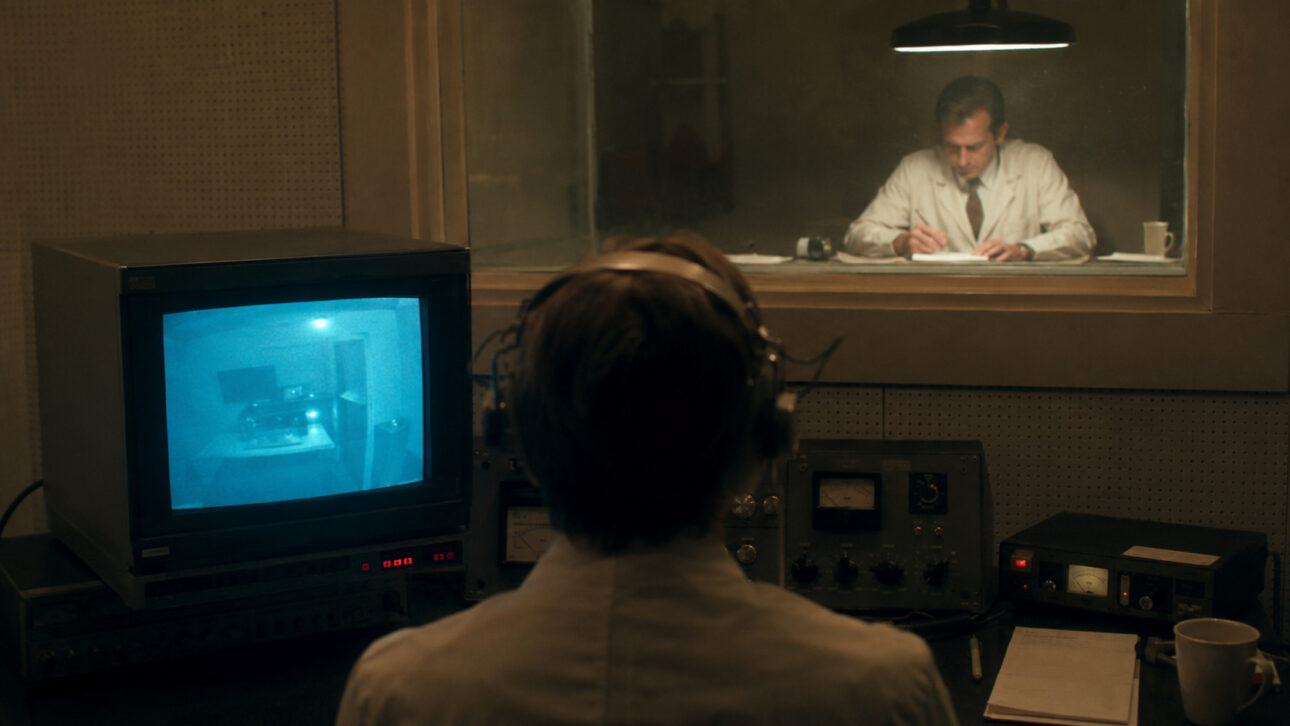
The seers then described shapes, colors, sounds, and even electromagnetic characteristics of the target location. The methodology was divided into progressive stages. In the initial stages, the seer recorded only basic sensory impressions. In the later stages, more detailed sketches and analytical descriptions were allowed.
Each stage was designed to filter out the “subjective noise” from perceptual data. According to program documentation cited by Decrypted Matrix, accuracy in controlled series could reach 80%, with some sessions achieving a level of detail equivalent to architectural plans of target installations.
Ingo Swann, Pat Price, and the Cases that Most Impressed Analysts
The program produced participants who became minor legends in paranormal circles — and who, according to declassified records, achieved results that impressed intelligence analysts enough to maintain funding for more than two decades.
According to Medium, Ingo Swann was an artist and self-described seer who helped develop the protocols for coordinate remote viewing. One of his most cited cases was the description of Jupiter’s rings before they were officially discovered by NASA. Pat Price, another seer in the program, reportedly provided precise details about a Soviet military weapons facility, later confirmed by satellite images.
Seers also located a Soviet aircraft that had crashed in Africa before conventional search teams found it. Joseph McMoneagle, a retired military officer who participated in hundreds of sessions, was so associated with the program that when it was declassified in 1995, he appeared on ABC’s Nightline with Ted Koppel and demonstrated the technique live, according to Decrypted Matrix, with considerable accuracy by the observers present. Pat Price died of a heart attack in Las Vegas in 1975 under circumstances that conspiracy theories have questioned ever since. No evidence of foul play was found.
The 23 years of funding and the missions that went beyond the Soviet Union
The Star Gate Project was not limited to spying on the Soviet Union. As the program matured and gained institutional credibility within the American intelligence community, its missions expanded to a variety of operations that the Cold War had not originally anticipated.
According to Grey Dynamics, the component projects of Star Gate — which included the subprograms Grill Flame, Sun Streak, and Gondola Wish at different phases — targeted objectives that included military movements, facilities, personnel, and enemy technologies. History.com confirmed that the seers were used in attempts to locate hostages kidnapped by Islamic terrorist groups — possibly including American hostages in Iran during the 1979-1981 crisis — and to track the trajectory of criminal fugitives within the US itself.


The total funding of the program over 23 years was never fully disclosed. Estimates cite amounts between $20 million and $60 million, depending on how the subprograms are accounted for. What is documented is that it involved the CIA, Army, DIA, and possibly other agencies at different phases — each with its own contracts, seers, and analysts.
The 1995 report that ended it all and what it really said
When the Cold War ended and funding for unconventional programs came under review, the Star Gate Project was transferred back to the CIA in 1995 — which commissioned an independent evaluation from the American Institutes for Research.
According to War History Online, the AIR concluded that remote viewing had not been proven effective and should not be used operationally. The program was terminated. Social Life Magazine published a recent analysis that nuances this conclusion: the AIR report did not say that ESP does not exist — it said that the results were not reliable enough for operational intelligence use.
The distinction is important. Proponents of the program point out that some results were verified by independent sources — the location of the Soviet aircraft in Africa, details about weapons facilities that were confirmed by satellite — as evidence that something was happening. Skeptics point out that the successes are cherry-picked from a mass of failures and that the double-blind scientific protocol necessary to confirm any psychic phenomenon was not consistently maintained throughout the program.
The 12 Million Declassified Pages and What Is Still Hidden
The 2017 declassification was the largest release of documents from the Star Gate Project at any time since the program’s closure. Twelve million pages of records that the CIA had kept closed for more than two decades became publicly available.
According to War History Online, the documents revealed previously unknown details about the program’s structure, participants, and specific missions. But researchers who analyzed them in detail noted that significant parts are still redacted — censored with black ink over names, locations, and specific operational details. What the 12 million pages definitely confirm is that the Star Gate Project was not an isolated aberration.
It was part of a broader Cold War mentality in which the American government was willing to fund for decades any approach that could offer an advantage over the Soviet Union — including approaches that conventional science would dismiss as impossible.
The program existed because the logic of the Cold War was simple: if the Soviets were doing it, the US could not ignore it. And if the Soviets were not doing it, the cost of checking was too small to ignore investigating. The program lasted 23 years. What the seers saw — or thought they saw — remains, for the most part, classified.