






 Portuguese
  Spanish


Hoarded houses in the United States show how piles of objects can move out of the private sphere and become a building safety issue, emergency response, heavy cleaning, and urban management problem, especially when corridors, doors, and escape areas become blocked.
A house filled with objects may seem like just a domestic problem. But, in many cases, the excess of accumulated items turns the property into a challenge for firefighters, emergency teams, heavy cleaning services, and housing managers.
In the United States, a report from The U.S. Senate Special Committee on Aging, a Senate committee focused on aging, showed how hoarding disorder can affect the safety of houses, apartments, and assisted living facilities.
The problem arises when rooms no longer serve their function, exit routes become blocked, and piles of objects increase the risk of fire, falls, contamination, and difficulty of access for rescuers.
-
Former Brazilian street cleaner overcomes challenges to become a lawyer, now advocates for workers’ rights.

-
Retired Historian in Brazil Restores Over 100 Sewing Machines, Including One from 1875 New York Broadway

-
El Niño Set to Raise Temperatures Above 30°C in Southeastern Brazil by Late July as Cold Wave Ends

-
Brazilian Government Challenges Drug Trafficking Claims Linked to Social Program with Study by Fiocruz and Harvard




The document also mentions legal costs that can range from $10,000 to $30,000 per case in extreme situations involving untreated hoarding, uninhabitable property, and the need for intervention.
When the excess of objects becomes a risk to the house structure
Hoarding disorder occurs when a person has great difficulty discarding possessions, even when they already occupy essential areas of the house. Over time, furniture, boxes, clothes, papers, bags, and other items can take over corridors, doors, rooms, and circulation areas.
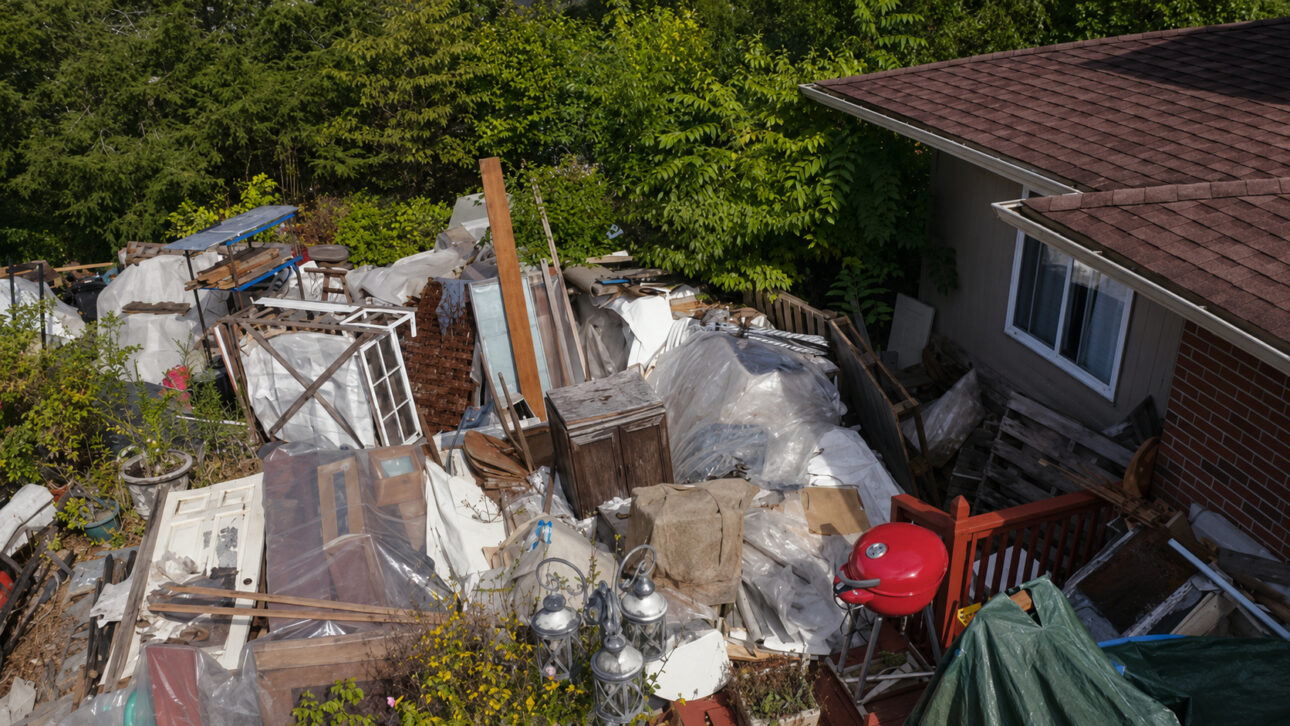
The problem starts to become more than just personal when the house loses functionality. A bathroom may become difficult to access. A bed may be covered with objects. A kitchen may become unsafe. The exit door may become partially blocked.
For building safety teams, this scenario requires attention because the property ceases to function as it should. Spaces designed for circulation, escape, ventilation, and daily use start to operate at their limits.
In collective properties, the concern increases. The risk is not restricted to one person. In case of fire, leakage, fall, or need for rescue, neighbors, caregivers, and emergency teams can also be affected.
Why firefighters worry about overcrowded houses
The risk of fire is one of the most sensitive points in houses with extreme hoarding. Piles of flammable objects can facilitate the spread of flames and hinder the entry of firefighters.
In an emergency, every second counts. If hallways are blocked, doors do not open completely, or rooms are inaccessible, the rescue work becomes slower and more dangerous.
Moreover, the large amount of accumulated material can increase the fire load inside the property. This means there is more fuel available to feed the flames if a fire starts.
Another problem is visibility. In houses filled with objects, rescuers may have difficulty locating residents, identifying safe routes, or reaching important points of the residence.
Therefore, extreme hoarding is treated as a safety issue. It’s not just about clutter. In critical situations, the internal configuration of the property can determine if a person can get out in time or if a team can enter safely.
Heavy cleaning enters as a complex operation, not as a simple cleaning
When the house reaches its limit, cleaning ceases to be a common chore. It may require sorting objects, removing large volumes, team protection, transport, proper disposal, and, in some cases, repairs to the property.
This type of operation tends to be more complex because it involves physical and emotional risks. There is a risk of falling, dust, mold, sharp materials, pests, strong odors, and objects stacked unstably.
There is also the human side. For those who hoard, many items have sentimental value, memory, or a sense of security. Removing everything quickly can cause distress and make the problem return later.
Therefore, specialists advocate that cleaning, when necessary, be accompanied by guidance, social support, and treatment. The removal of objects can make the property safer, but it hardly solves the cause of hoarding alone.
The operational point is clear: the longer it takes to identify the case, the greater the accumulated volume tends to be, the more difficult the intervention becomes, and the more expensive it can be to restore safety to the property.
Hoarded houses also affect health teams, caregivers, and maintenance
Extreme hoarding does not only hinder firefighters. It can also prevent the entry of caregivers, health professionals, maintenance teams, and social services.
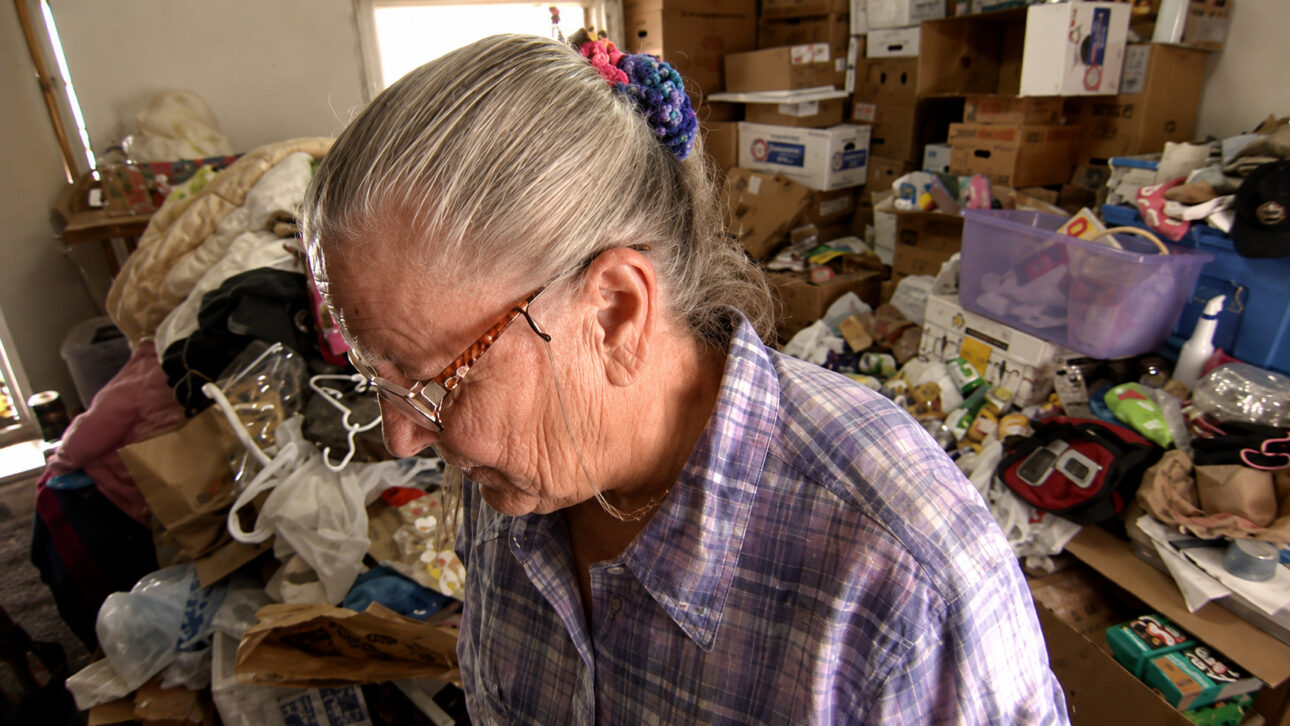
In homes where internal circulation is compromised, simple tasks become difficult. Changing a light bulb, checking an installation, cleaning an environment, providing medical care, or accessing a fallen person can turn into a lengthy operation.
This point is especially important in homes occupied by the elderly or people with reduced mobility. When the house becomes too full, the risk of trips, falls, and isolation increases.
The difficulty of access can also delay important repairs. Leaks, electrical problems, infiltrations, and structural failures can remain hidden behind piles of objects.
Thus, hoarding ceases to be just an individual behavior and starts to interfere with property maintenance, surrounding safety, and the response capability of public and private services.
Costs can reach up to $30,000 in extreme cases
The report from The U.S. Senate Special Committee on Aging cites legal costs of $10,000 to $30,000 per case in situations involving untreated hoarding, safety rule violations, uninhabitable property, and the need for intervention.
This amount does not only represent the removal of objects. In extreme scenarios, the costs include administrative or legal processes, heavy cleaning, repairs, vacant property time, loss of unit use, and mobilization of different teams.
When a house or apartment needs to be emptied, sanitized, and repaired, the impact spreads. The resident may lose stability. The unit may remain unavailable for longer. Housing managers have to deal with costs that could be lower if the problem were identified earlier.
This is why the topic appears as a prevention challenge. The sooner the signs are noticed, the greater the chance of reducing risks without reaching an extreme intervention.
The logic is similar to other areas of urban safety: acting early is usually cheaper, safer, and less traumatic than waiting for the problem to become an emergency.
Prevention can avoid fires, falls, and expensive interventions
The most efficient response doesn’t start when the house is already uninhabitable. It starts when hallways become narrow, doors begin to be blocked, and essential rooms stop functioning.
To reduce risks, experts usually prioritize basic areas: house exits, bed, bathroom, kitchen, hallways, and access for rescue. These points need to remain clear so that the person can live safely and so that teams can enter in case of emergency.

Prevention also depends on a careful approach. Threats, shame, and abrupt removal of objects can worsen isolation. When there is dialogue, the person may accept help with less resistance.
Cities, social services, housing managers, firefighters, and health teams can work together to identify risks, guide residents, and prevent the situation from reaching the limit.
The goal is not to turn a cluttered house into a police case or treat the person only as a problem. The goal is to reduce fire risk, preserve escape routes, allow emergency access, and keep the property minimally safe.
An urban safety issue that starts at home
The hoarding disorder shows how a problem that starts at home can become a topic of building safety, emergency response, heavy cleaning, and urban management.
When objects occupy doors, hallways, kitchens, and bathrooms, the risk is no longer invisible. The house becomes a danger to those living there and also to those who may need to enter for rescue.
In the United States, cited costs of up to $30,000 per case reveal that waiting for the situation to reach the extreme can be expensive for residents, managers, and public services.
More than discussing the number of objects inside a house, the topic raises a practical question: how to act before piles of things block exits, increase fire risk, and turn a home into an emergency scene?
When an overly cluttered house starts to put lives at risk, is the best response to wait for the crisis to happen or to create prevention methods before firefighters and heavy cleaning teams need to enter?


