






 Portuguese
  Spanish
  5 min of reading
  1 comment


AquaRã Enterprise in Princesa gathers 108 pens, complete production cycle and first batch in final phase, with own investment, cold challenge, destination for specialized slaughterhouse and plans to triple the structure
With about 100,000 animals distributed in 108 pens, a couple of entrepreneurs from Princesa, in the Far West of Santa Catarina, transformed an old eucalyptus area into a frog farm dedicated to breeding giant bullfrogs. The AquaRã project started about a year ago, betting on a complete production cycle and already foresees new units.
Giant Bullfrogs Become Unprecedented Bet in Princesa
The breeding of giant bullfrogs was chosen by Mauro Lunkes and Angélica Knob after years of work in other areas.
He is trained as an Occupational Safety Technician, while she has a degree in Administration.
-
In Virginia, a family of small-scale farmers refused to swap the countryside for the city and transformed their milk production into award-winning artisanal cheese from Mantiqueira de Minas.

-
The alligator that was once illegal game has become a business in the Pantanal: Caimasul, the largest alligator slaughterhouse in the world, slaughters nearly 100,000 per year and exports alligator leather and alligator meat.
-
At 17, Andressa swapped the city for life in the countryside with her father on a farm in Minas Gerais, where they take care of 15,000 fish in aquaculture, cows, and other animals.
-
Organic grape juice from São Roque surprises experts, scores over 90 points in a blind test, and wins a national award after six years of agroecological research.


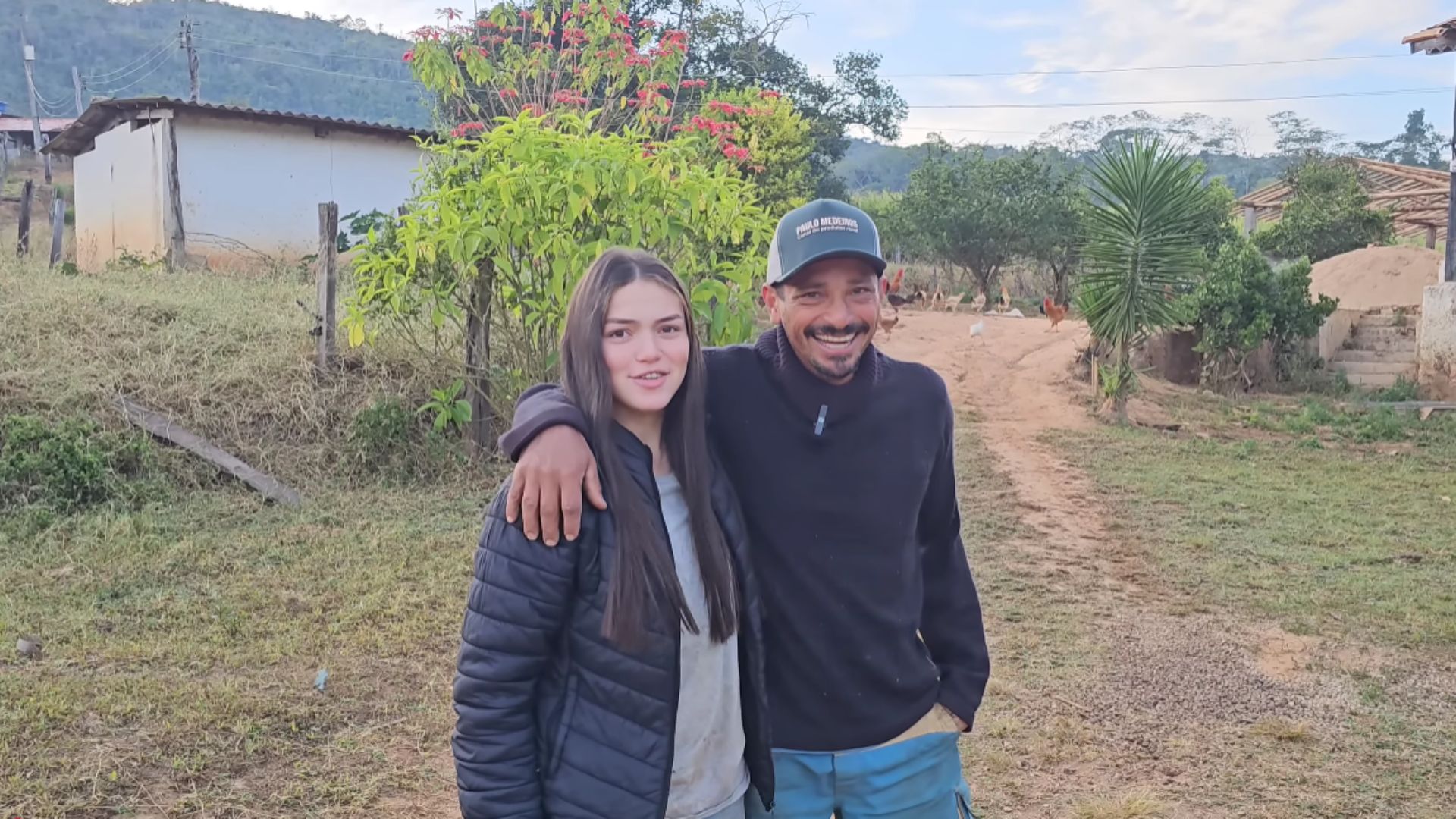

The couple has been together for 12 years and worked for a long time in their fields of expertise. Among the companies they worked for is a high-end furniture industry.
About five years ago, the two decided to start their own business. Mauro began working in pine resin extraction, and Angélica started activities in e-commerce. Even with new businesses, frog farming remained in the plans.
The AquaRã enterprise is considered unprecedented in the region. The breeding is focused on the giant bullfrog, a species originating from the United States and adapted for captive production.
Located in Linha Marmeleiro, in Princesa, the frog farm stands out for the scale of its structure and its proposal for diversification in the field.
The project combines masonry pens, controlled management, and production aimed at a specialized market.

Structure has 108 pens and first batch in final phase
AquaRã started about a year ago and already houses about 100,000 frogs. The animals are distributed in 108 pens, with approximately 800 animals per unit.
This is the first production batch of the giant bullfrog in the enterprise. Part of the animals is already ready for slaughter, while most should remain for a few more days in the development phase.
The area where the frog farm operates today was once a eucalyptus plantation. The transformation required planning, studies, and the entrepreneurs’ own investment.
According to Angélica, the availability of water was one of the decisive factors in choosing the property. The activity depends on a constant supply, especially as it involves tanks, pens, and management in a controlled environment.
The owners also received support from the public authorities through service hours for earthworks, cleaning, and expansion of the existing ponds in the area.
Production operates in a complete cycle
The giant bullfrog breeding was organized in a complete cycle system. This means that the frog farm includes the stages of breeding, tadpole rearing, and fattening.
The breeding area houses the reproductive frogs. In the tadpole rearing area, the tadpoles develop. Then, the animals move to the fattening phase, which lasts about six months.
The external structure houses the breeding and tadpole rearing tanks. The shed is used in the final fattening stage of the frogs.
The fattening pavilion is approximately 750 square meters. Among the main investments of the project are the construction of this space, the purchase of reproductive frogs, and the acquisition of 330,000 tadpoles to start the production cycle.
The masonry pens maintain a constant layer of clean water. The enclosed environment also features controlled management and protection against predators, focusing on the health and development of the animals.

Cold is a challenge for giant bullfrog breeding
The giant bullfrog cycle lasts approximately one year. It takes about six months in the tadpole phase and another six months in the fattening phase.
The frog ready for slaughter weighs, on average, 350 grams. In the far west of Santa Catarina, however, the climate is one of the main challenges of production.
According to the owners, the temperature directly influences the development of the animals. Frogs perform better in warmer environments, which requires special attention during winter.
To reduce this impact, the entrepreneurs are investing in heating in the fattening sector. The measure aims to provide better development conditions for the animals during colder periods.
Currently, the entire management of the frog farm is done by only two people. The production will be destined for a specialized slaughterhouse in Chapecó, with a refrigeration standard aimed at export.
In the future, the owners are also considering implementing their own slaughterhouse on the property.

Project plans three units and partnership with producers
The frog farm currently has a main structure, but the project plans three units of the same size. Angélica states that the construction of the next units should start soon.
The entrepreneurs estimate that the return on investment will occur within two years. Being the couple’s first experience in the sector, some challenges have extended this timeframe.
In addition to their own production, Mauro intends to implement a partnership system with small producers in Princesa and neighboring cities.
The proposal includes lectures on frog farming, identification of interested parties, technical support, supply of animals, and guaranteed purchase of production.
The producer emphasizes that the activity requires compliance with specific regulations and strict environmental licensing. According to him, the process is carried out legally and regularly, with the support of a partner company responsible for guiding and monitoring the implementation.
Frog meat is considered an exotic product with high market value. The food is appreciated for its texture similar to chicken meat, in addition to being rich in protein and low in fat and cholesterol.
For Angélica, frog farming stands out for its profitability and the appreciation of a meat considered noble and healthy.
This article was prepared based on information from the material provided about the AquaRã enterprise, with data, numbers, and statements preserved as per the consulted material.


I m Engineer from India . I have gone through your article and found to be interesting. Is it possible to get contact number of couple working on frog project so as to enable me to know about this business.