






 Portuguese
  Spanish


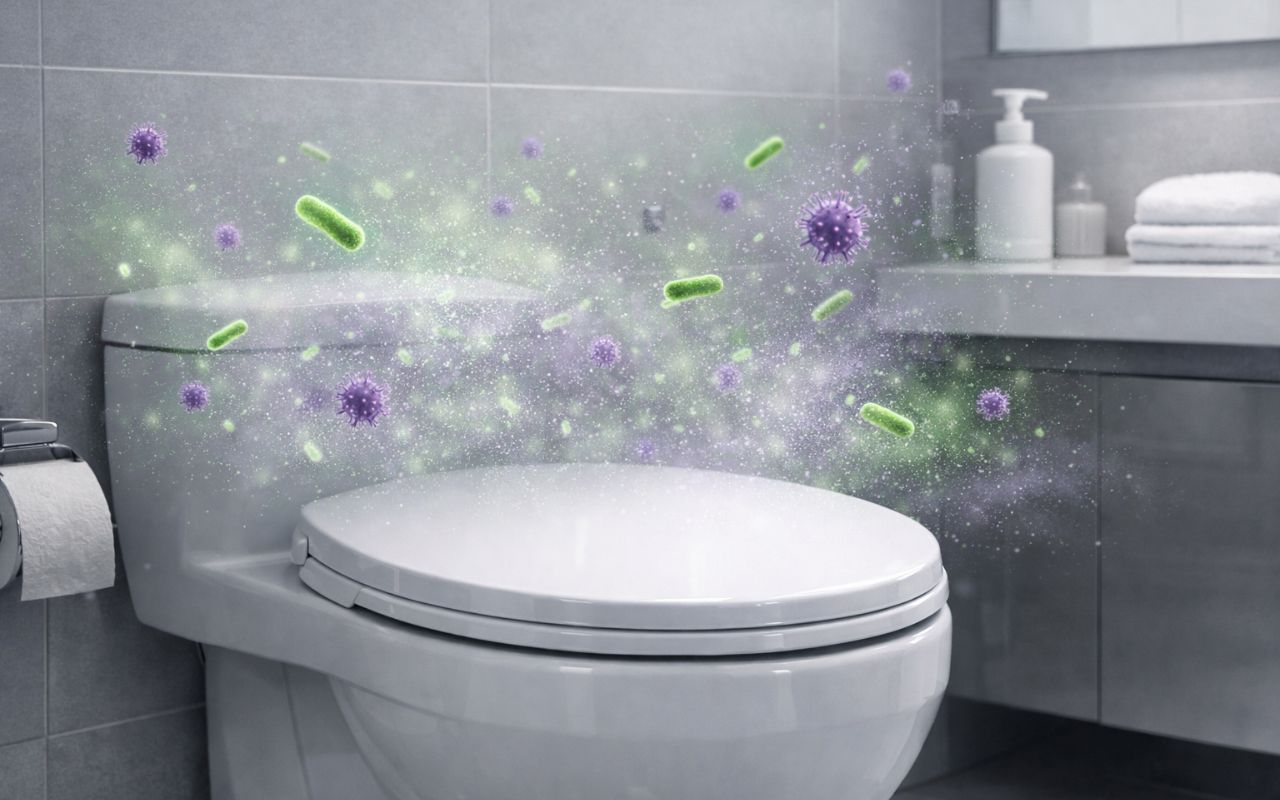

Understand How The Toilet Spreads Bacteria And Viruses Through Aerosols, Even With The Lid Closed, And Discover Effective Hygiene Measures To Reduce Risks.
The toilet, seemingly harmless, is a significant source of bacteria and viruses in aerosols that can remain suspended in the air for hours.
Recent research indicates that, even with the lid closed, thousands of microdroplets escape through the gaps in the seat, turning bathrooms, especially public ones, into high-risk environments for contamination.
Science warns that simple hygiene and ventilation measures are essential to reduce exposure.
-
A fossil kept for years in a small museum in Montreal concealed 450-million-year-old soft tissue, a discovery that has only happened once before in history.

-
Three teenagers transform cut cardboard into Japanese origami-style packaging that promises to retire styrofoam and bubble wrap, win a $12,500 prize, and target giants like Amazon, FedEx, and Home Depot after a robot motor arrived broken.

-
The large jar blender has a rival: Oster Ultra Power bets on 1,000 W, six stainless steel blades, and two portable cups with leak-proof lids.

-
Tesla injected an additional $250 million into the German factory, doubled the battery cell target, and opened its own production line for startups.



The Discharge Plume Phenomenon
When water forcefully enters the toilet, what scientists call a discharge plume occurs. This phenomenon generates bioaerosols, microscopic droplets laden with microorganisms, which are thrown into the air.
Among the identified biological agents are Escherichia coli, Salmonella, Shigella, and Clostridium, as well as viral particles.
To quantify, just 1 gram of feces can contain up to 1 trillion viral particles, ready to spread throughout the environment.
These aerosols are not confined to the toilet: they reach sinks, floors, and nearby personal items like toothbrushes and towels, increasing the risk of contamination.
Why The Lid Is Not Enough?
Lowering the lid helps reduce the dispersion of visible particles by up to 60%, preventing larger droplets from reaching nearby surfaces.
Even so, aerosols smaller than 1 μm manage to escape through the gaps between the seat and the toilet.
Laboratory tests with model viruses, such as MS2, indicate that up to 57% of fine particles can spread even with the lid closed, passing through common air filters.
Public Restrooms And The Amplified Risk Of Bacteria
In shared restrooms, the scenario becomes even more critical. The high flow of people combined with insufficient ventilation increases the concentration of aerosols.
These microdroplets can be inhaled or settle on surfaces touched by multiple people, such as doorknobs, paper dispensers, and faucets, making cleaning and prevention even more important.
Effective Strategies For Virus And Bacteria Protection In The Restroom
In addition to lowering the lid, experts recommend a series of measures to reduce risks:
- Constant Ventilation: keeping windows open or using exhaust fans helps disperse aerosols and renew the air.
- Frequent Cleaning: sanitize seats, lids, sinks, floors, and doorknobs with disinfectants, such as bleach solutions or alcohol, especially in public restrooms.
- Organization Of Personal Items: toothbrushes, towels, and other hygiene items should be stored in cabinets or drawers, away from the toilet.
- Conscious Use Of Towels And Cloths: avoid drying hands with shared towels, preferring disposable paper or automatic dryers.
These practices help minimize exposure to microbial aerosols and maintain the hygiene of home or public restrooms.
The Role Of Science In Restroom Hygiene
Recent studies reinforce that the toilet is an efficient generator of microbial aerosols, something society has ignored for years.
The lid remains an important barrier for larger particles, but it does not replace ventilation, regular cleaning, and care with personal items.
Experts caution that the combination of measures is the only way to reduce the risk of contamination. Therefore, sanitizing, ventilating, and organizing the space are essential steps for a safer restroom, especially in high-traffic areas.
The toilet is not just an everyday object: it can release a significant amount of bacteria and viruses, even with the lid closed.
Microscopic aerosols escape through the gaps, reaching nearby surfaces and objects.
Science recommends combining closed lid, ventilation, frequent cleaning, and organization of personal items to reduce risks and maintain hygiene. With attention to these details, it is possible to make any restroom, whether home or public, much safer for everyone.
With information from Xataka.


