






 Portuguese
  Spanish
  4 min of reading
  1 comment


A Discovery That Challenges Science! ‘Living Fossil’ Found After 15 Years of Searches May Reveal Ancestral Secrets and Change Everything We Know About the Evolution of Life on Earth.
After more than 15 years of searching and a thousand expeditions, researchers from the Ocean Exploration Trust made a discovery that is leaving scientists and nature enthusiasts excited. During an expedition to the Palau archipelago in the Pacific, they found Nautilus belauensis, a rare animal that is considered a true ‘living fossil’. This historical discovery has reignited debates about the conservation of this unique creature.
What Makes the Nautilus a ‘Living Fossil’ of a Rare Animal?
The term ‘living fossil’ is not used lightly. Nautiluses belong to one of the oldest animal families on Earth, with records indicating that they have existed for about 500 million years. These mollusks, distant relatives of squids and octopuses, have spiral shells that resemble true works of natural art. But what is truly impressive is the fact that nautiluses have changed very little over millions of years.
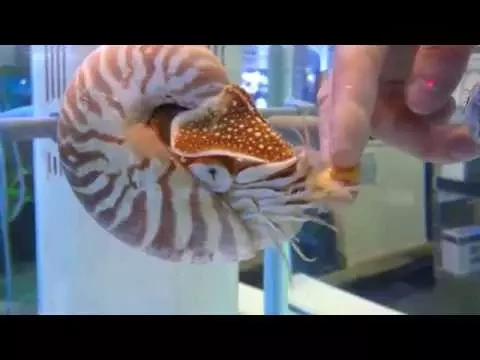

This means that when we look at a nautilus today, we are practically looking at a creature that inhabited the oceans during the time of the dinosaurs. This resistance to extinction and significant evolution makes them true ‘living fossils’, a title that few animals can carry.
-
It accompanies Earth, but it is not a moon: Chinese probe reaches Kamo’oalewa and begins an unprecedented mission to investigate where the strange asteroid came from, what its internal structure is like, and whether its origin is linked to an ancient collision that launched fragments of the lunar surface into space.

-
Space technology used to search for water on Mars is now hunting for invisible leaks under the streets of São Paulo, using satellites, AI, and chlorine signals to help Sabesp recover up to 6.7 billion liters of water.

-
Japan sends ship to extract mud rich in rare earths at nearly 6,000 meters deep in the Pacific, attempts to lift 350 tons per day from the seabed, and transforms sediments near Minamitori Island into a strategic weapon to reduce dependence on China.
-
Venus Aerospace promises a rotating detonation hypersonic engine that takes the Stargazer to Mach 9 and crosses oceans in 1 hour, but the flight that made history barely surpassed the speed of sound.



A Historic Moment
The expedition took place in the National Marine Sanctuary of Palau, a protected area in the western Pacific Ocean, where researchers documented four specimens of Nautilus belauensis. The moment was thrilling. During a live broadcast, team members did not hide their joy: “It finally happened!” celebrated one researcher. “A dream come true,” added another.
The nautiluses were found at depths between 220 and 375 meters, in an environment that is difficult to access even with advanced equipment. Because of this difficulty and their rarity, spotting nautiluses is a rare and highly celebrated achievement by the scientific community.
What Are Nautiluses Like?
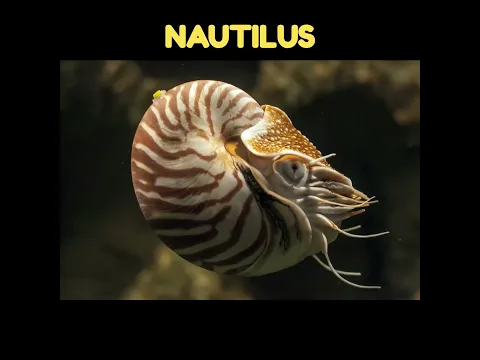
The Nautilus belauensis is a true marvel of nature. It has a spiral shell that not only provides protection but also helps with buoyancy, allowing it to move vertically through the water much like a submarine.
These animals have quite peculiar eyes, without solid lenses, which gives them limited vision. To compensate for this deficiency, nautiluses rely on highly developed olfactory senses to locate food and mates.
With nine known species, nautiluses still hold many mysteries for scientists. Their ability to live at extreme depths and their resistance over millions of years continue to intrigue researchers, who see them as an important piece in the study of marine evolution.
Why is the Discovery of This Rare Animal Important?
In addition to being fascinating in itself, the discovery of the ‘living fossil’ highlights the urgency of understanding and protecting these unique creatures. Nautilus populations are declining, threatened by overfishing, climate change, and the destruction of marine habitats. Despite this, there are still no specific regulations to protect the six living species of nautiluses.
The discovery has reignited the debate about the need to preserve marine biodiversity, especially in remote and unexplored areas like Palau. Researchers believe that studying the Nautilus belauensis could reveal valuable information about evolution and help create conservation strategies to protect this species and many others.
The Fascination with Ancient Creatures
This rare animal also reminds us of how much there is still to discover in the oceans. Although we have explored space more than the depths of the seas, it is at the bottom of the ocean that many of the most fascinating creatures — such as nautiluses — continue to live.
In addition to its scientific importance, the ‘living fossil’ enchants with its symbolism. It is a reminder of the resilience of life and how creatures from the past continue to coexist with us, defying the laws of evolution and surviving in an ever-changing world.
What Does the Future Hold for the ‘Living Fossil’?
The discovery of Nautilus belauensis has reignited hopes that we may preserve and learn more about these creatures. However, for this to happen, conservation efforts need to be strengthened. Protecting marine habitats and regulating the fishing of rare species are essential steps to ensure that these living relics continue to exist.
In the meantime, researchers continue to study nautiluses and seek ways to protect not only these creatures but also the ecosystems they inhabit. After all, preserving the past is essential to ensure the future of biodiversity.
Finding a ‘living fossil’ like Nautilus belauensis is like opening a window to the past. It is a rare opportunity to understand how life on Earth has evolved and to appreciate the wonders that still inhabit our planet. But more than that, it is a reminder that conservation is not just an option, but a necessity.








Fascinante.