






 Portuguese
  Spanish
  5 min of reading
  0 comments


The American startup Venus Aerospace says that its hypersonic rotating detonation engine can take the Stargazer aircraft to Mach 9, crossing the planet in just over an hour. But the flight that made history in May 2025 only approached the speed of sound, showing that the promise is still in the prototype stage.
The headline is breathtaking: a new hypersonic engine that promises to outclass conventional jet engines, fly at Mach 9, and cross oceans in just over an hour. The technology behind this bold claim is rotating detonation, and leading the project is Venus Aerospace, a startup based in Houston, United States, that dreams of taking passengers at speeds that today only missiles reach.
However, there is a detail that separates the promise from reality. The flight that the company celebrated as historic, conducted on May 14, 2025, did not even come close to Mach 9. According to Live Science, the test device only approached the speed of sound, meaning it was still in the subsonic range. The hypersonic engine that will equip the Stargazer exists, but the leap to the promised speed is gigantic.
What the rotating detonation engine promises
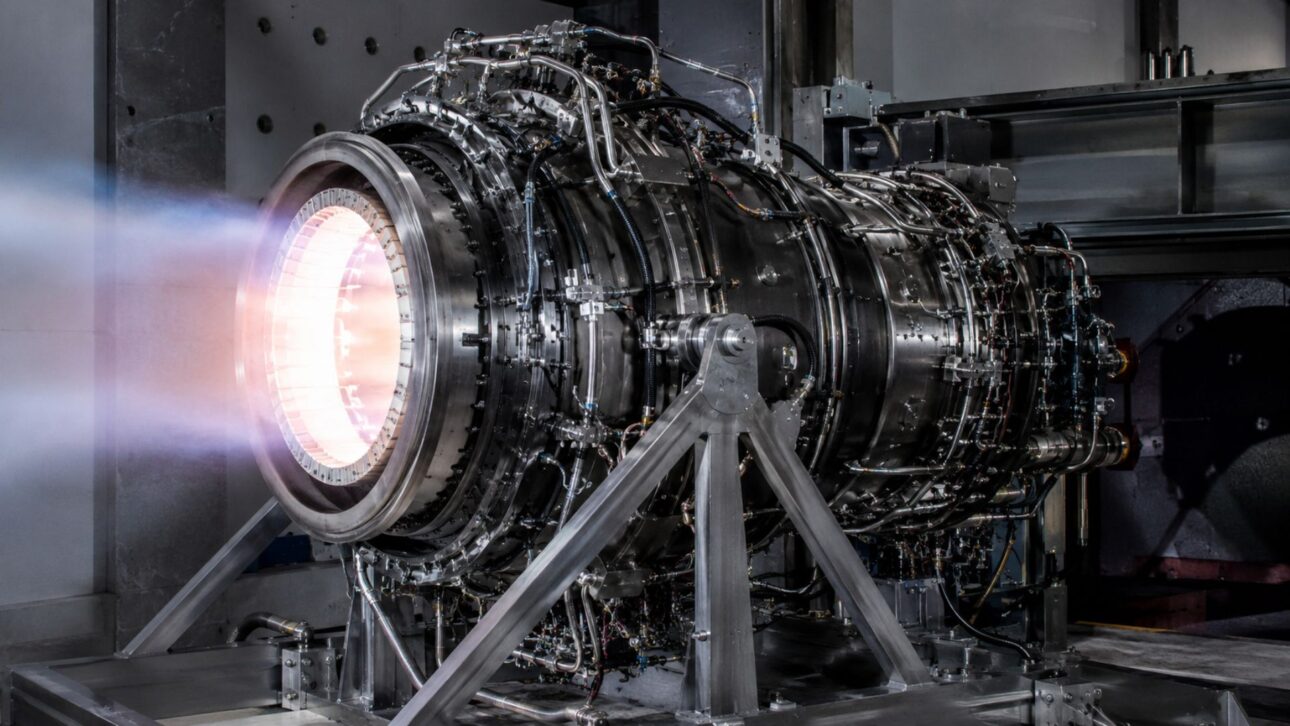
Instead of the continuous and relatively stable combustion of common engines, the so-called RDRE, an acronym in English for rotating detonation rocket engine, generates thrust from a continuous detonation wave that circulates within a ring-shaped chamber, as detailed by Olhar Digital.
-
Brazilian student creates a cheap formula that makes plants grow up to 90% faster and wins an award in a global scientific competition.

-
Europe unveils armored tank with remote turret, 1,500 horsepower, and 120-millimeter cannon

-
Old hard drives may hide neodymium, dysprosium, praseodymium, and terbium, and a United States company is expanding its network with a new 93,000-square-foot facility to recover rare earths used in electric cars, artificial intelligence, defense, and renewable energy.

-
Giant crane lifts up to 3,000 tons, requires special logistics to reach the site, and can transform 18-hour operations into just 3 hours, speeding up the hoisting of oil platforms, refineries, and plants in giant industrial projects.




This architecture has a practical advantage that explains the enthusiasm. By working with higher pressure, the hypersonic engine delivers more thrust while consuming less fuel, and it also eliminates the need for rotating parts subjected to extreme heat and pressure that limit traditional jets. It is this efficiency that, in theory, paves the way for flight at speeds that previously seemed impossible for a passenger aircraft.
The ultimate target is the Stargazer, the plane that Venus Aerospace wants to take to Mach 9, about 11,000 kilometers per hour. At this speed, trips that currently take an entire day would be reduced to just over an hour. For now, the model closest to becoming a reality is the Stargazer M4, a reusable version designed for Mach 4, still far from the headline-grabbing number, but already far beyond any current commercial airplane.
Why detonation changes the game
To understand the magnitude of the bet, it’s worth breaking down the difference between detonating and burning. Conventional engines use deflagration, a combustion that progresses at subsonic speed and is considered stable and predictable. Rotating detonation, on the other hand, is a continuous and self-sustaining explosion that propagates through supersonic shock waves within the engine’s ring.
The gain lies precisely in this controlled violence. When the explosion is mastered in the right way, it yields more energy with less propellant, which for a hypersonic engine means carrying less weight and flying further. The concept is not new on paper, but turning it into an engine that works reliably is what Venus Aerospace claims to have started to prove.
There is also an engineering trick in the Stargazer design. The idea is to combine the rotating detonation rocket with a ramjet, an engine that uses the air itself as an oxidizer at high speed. Thus, during part of the flight, the aircraft saves the oxidizer it carries on board, reserving this precious resource for the phases where the rocket is indispensable. It’s a marriage of technologies designed to stretch every kilogram of fuel to the maximum.
The twist: the historic flight was at Mach 0.9


Here, excitement meets reality. The test on May 14, 2025, conducted at Spaceport America in New Mexico, was indeed a milestone, as it was the first flight of a rotating detonation engine in the United States, according to Olhar Digital. The leadership of Venus Aerospace itself treated the achievement as a game-changer.
“This is the moment we’ve been working towards for the past five years,” celebrated Sassie Duggleby, the CEO of the company. The co-founder and CTO, Andrew Duggleby, reinforced the sentiment by saying, “we’ve built an engine that not only works but operates reliably.” The statements show pride, and rightly so, because making this type of engine fly is already difficult.
The problem is the distance between this flight and the promise. The device barely surpassed the speed of sound, while the Stargazer needs to reach Mach 9 to fulfill what the headline promises. In other words, the hypersonic engine has taken its first step, but the most difficult steps are still to come, precisely those that separate a subsonic prototype from an aircraft that crosses the planet in an hour.
Why the dream is still far away
Hypersonic passenger flight is an old dream that has frustrated too many people. The Concorde, a symbol of the supersonic era, flew for decades and was retired due to cost and noise, and no commercial successor has taken off since then. Jumping from supersonic to hypersonic, above Mach 5, multiplies the challenges of heat, noise, and materials.
Therefore, the story of Venus Aerospace needs to be read with enthusiasm and caution in equal measure. The technology of rotary detonation is real and has just proven that it flies, which in itself is remarkable. But transforming a test that approached the speed of sound into a Mach 9 Stargazer full of passengers is a journey of years, with engineering obstacles that no one has completely solved to this day.
In the end, what exists is a powerful promise supported by a first concrete result, not a plane ready for boarding. The hypersonic engine from Venus Aerospace could indeed reshape the aviation of the future, but for now, the future is still many Machs away.
The story of the hypersonic engine of rotary detonation from Venus Aerospace is a perfect portrait of cutting-edge innovation: a giant promise, Mach 9 and the world in an hour, rooted in a first flight that barely surpassed the speed of sound. The Stargazer exists on paper and the engine exists on the bench, but hypersonic passenger aviation is still more expectation than a purchased ticket.
And you, do you believe you will live to board a Mach 9 plane, or do you think this promise will remain a prototype like so many others? Share your thoughts in the comments.







Be the first to react!