






 Portuguese
  Spanish
 5 min of reading
  0 comments


New Monorail Project Promises to Revolutionize Mobility in São Paulo by Connecting Congonhas Airport to the Metro with Autonomous Technology and Unprecedented International Investment.
After establishing itself as a leader in the Brazilian automotive sector with the production and sale of electric vehicles, the Chinese manufacturer BYD now aims to consolidate itself in Brazil’s rail segment, also taking on one of São Paulo’s most emblematic and awaited transport projects, the 17-Gold Line of the monorail.
BYD, which has been operating in the rail segment for years with projects in China and other countries, has taken on the project to supply the trains and systems two years ago, initiating a new cycle for the venture.
The initiative represents a significant bet on technology, innovation, and urban mobility, promising to transform the journey between Congonhas Airport and the São Paulo metro network with autonomous trains, meaning trains that do not require a driver on board.
-
Brazilian Joins Homeownership Consortium, Faces Decade of Dual Payments Totaling $141,000, Surpassing Traditional Mortgage

-
Land Rover to Halt Production in July, Putting 371 Jobs at Risk, as Chinese Automaker Negotiates to Convert Factory to 100,000 Vehicles Annually by 2027

-
Mexican Pest Threatens U.S. Cattle Herds at Historic Lows, Potentially Boosting Brazilian Beef Exports as Burger Prices Soar

-
Brazilian Freight Bill Progresses in Congress with $5,000 Minimum Wage, 70% Advance Payment, and Fines Up to $1 Million, as Agriculture and Industry Warn of Rising Costs and Legal Uncertainty


Expansion of BYD in Brazilian Rail Transport
Recently, the president of the São Paulo Metro Company (Metrô), Julio Castiglioni, announced that the commercial operation of the 17-Gold Line is expected to begin in the first quarter of 2026.
According to him, all trains should be operational by September of the same year.
ViaMobilidade, currently responsible for Lines 8-Diamond and 9-Emerald, will also be the operator of the new monorail, consolidating its presence in the management of metropolitan rail transport in the city.
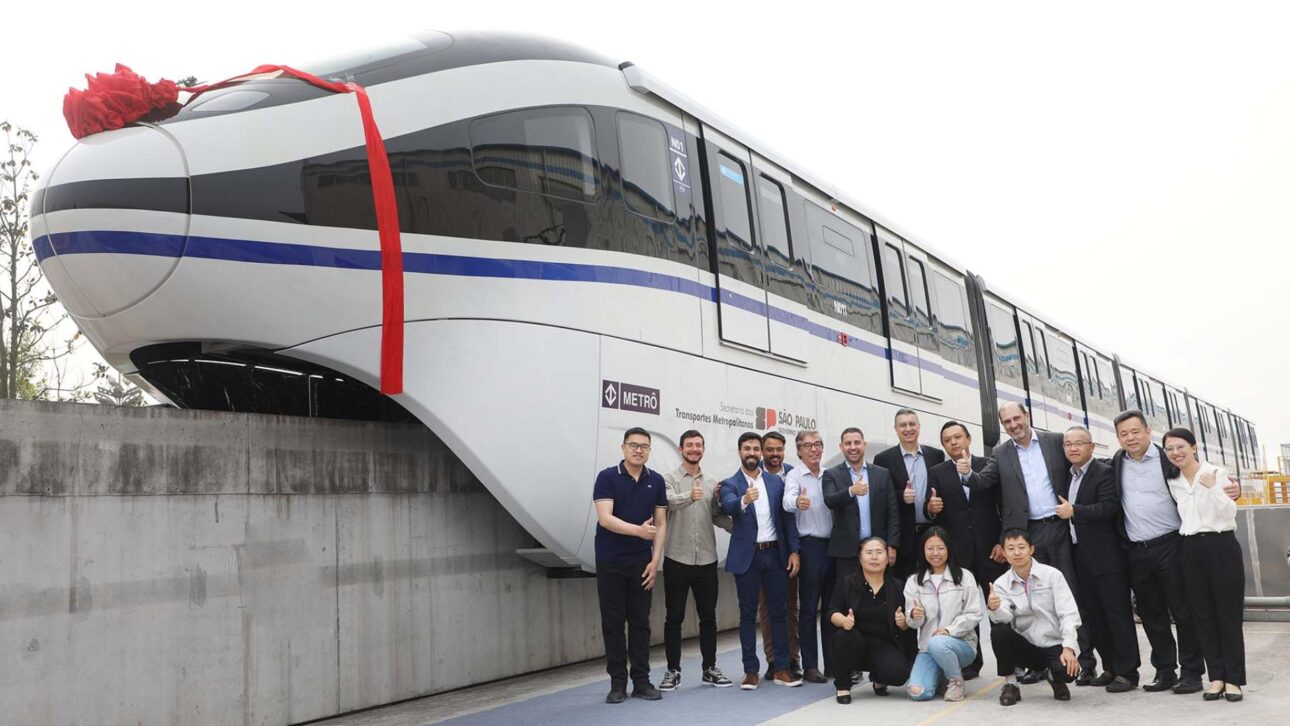
BYD SkyRail, the company’s division focused on rail systems, has already begun manufacturing trains in Shenzhen, China.
BYD already has two trains in the yard – one of them was delivered in October 2024 – and two more trains are at the port of Santos waiting to be brought to the Água Espraiada yard.
The first units are expected to land in Brazil in 2025, marking a new phase for a project that has already faced more than a decade of delays, legal disputes, and stoppages.
Since its conception in 2010, the monorail was presented as a mobility solution for the 2014 World Cup, but over the years, the schedule has undergone successive revisions.
Now, with BYD’s technological and financial investment, the outlook appears more favorable for the completion of the project.
Details and Investments of the 17-Gold Line
With a total estimated investment of R$ 5.8 billion, the 17-Gold Line will span 6.7 kilometers and feature eight stations, connecting neighborhoods in the south zone to Congonhas Airport and promoting direct integration with the 5-Purple Line of the São Paulo Metro and the 9-Emerald Line of the Paulista Company of Metropolitan Trains (CPTM).
The project adopts the SkyRail concept, an elevated monorail system with fully automated operation.
According to BYD, the technology employed utilizes advanced signaling and control systems, providing greater efficiency and safety for the operation of autonomous trains.
Overcoming Delays and BYD’s Role in the Monorail
The announcement of the resumption and new delivery estimate comes in a context of intense demands from the population and the government.
Since 2014, the progress of the project has been interrupted several times due to contractual deadlocks, changes in contractors, and technical challenges.
The entry of BYD, which already has experience in railway projects in Chinese cities and other countries, brings a new level of expectation for the completion of the venture.
According to official information, the SkyRail is already operating in cities like Shenzhen, contributing to reducing traffic congestion and emissions of pollutants.
BYD’s role in supplying the trains, along with the implementation of automation systems, was highlighted by Julio Castiglioni.
“We believe that BYD’s technological expertise will allow us to deliver to the population a modern and efficient solution, with a lower risk of further delays”, stated the president of the São Paulo Metro during the announcement.
The expectation is that the 17-Gold Line will revolutionize access to Congonhas Airport, one of the busiest in the country, facilitating direct connections with rail public transport and expanding options for passengers and residents in the area.
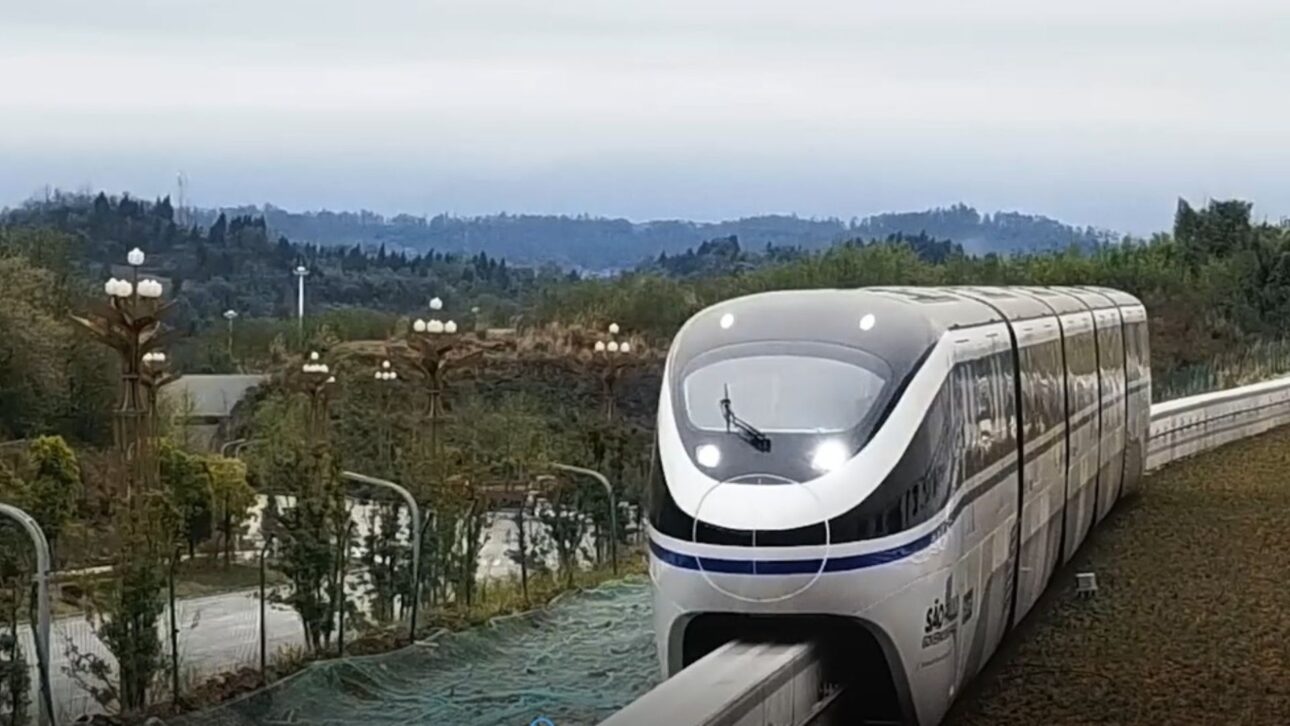
SkyRail Technology: Innovation and Future Impact
In addition to its direct impact on urban mobility, the project represents an important step towards consolidating Brazil as a strategic market for BYD, which already dominates the bus and electric vehicle sector in the country.
The start of operations of the autonomous monorail, scheduled to take place before the 2026 municipal elections, also carries strong political symbolism, as it meets a historical demand of the population of São Paulo for integration and efficiency in public transport.
Regarding the onboard technology, SkyRail stands out for its use of artificial intelligence, state-of-the-art sensors, and real-time monitoring systems.
According to mobility experts, these innovations can reduce operational costs and increase passenger safety, in addition to making the system more flexible for future expansions.
The automated monorail does not require human operators, being controlled by command centers that monitor the entire operation remotely.
The new phase of construction plans to complete the priority stations and maneuvering yards by 2025, with gradual delivery of the trains between the end of this year and the first half of 2026.
The São Paulo government maintains the goal of inaugurating commercial service in March 2026, benefiting mainly residents of the south zone, airport workers, and tourists using the airport terminal.





-

-

3 people reacted to this.