Portuguese
  Spanish


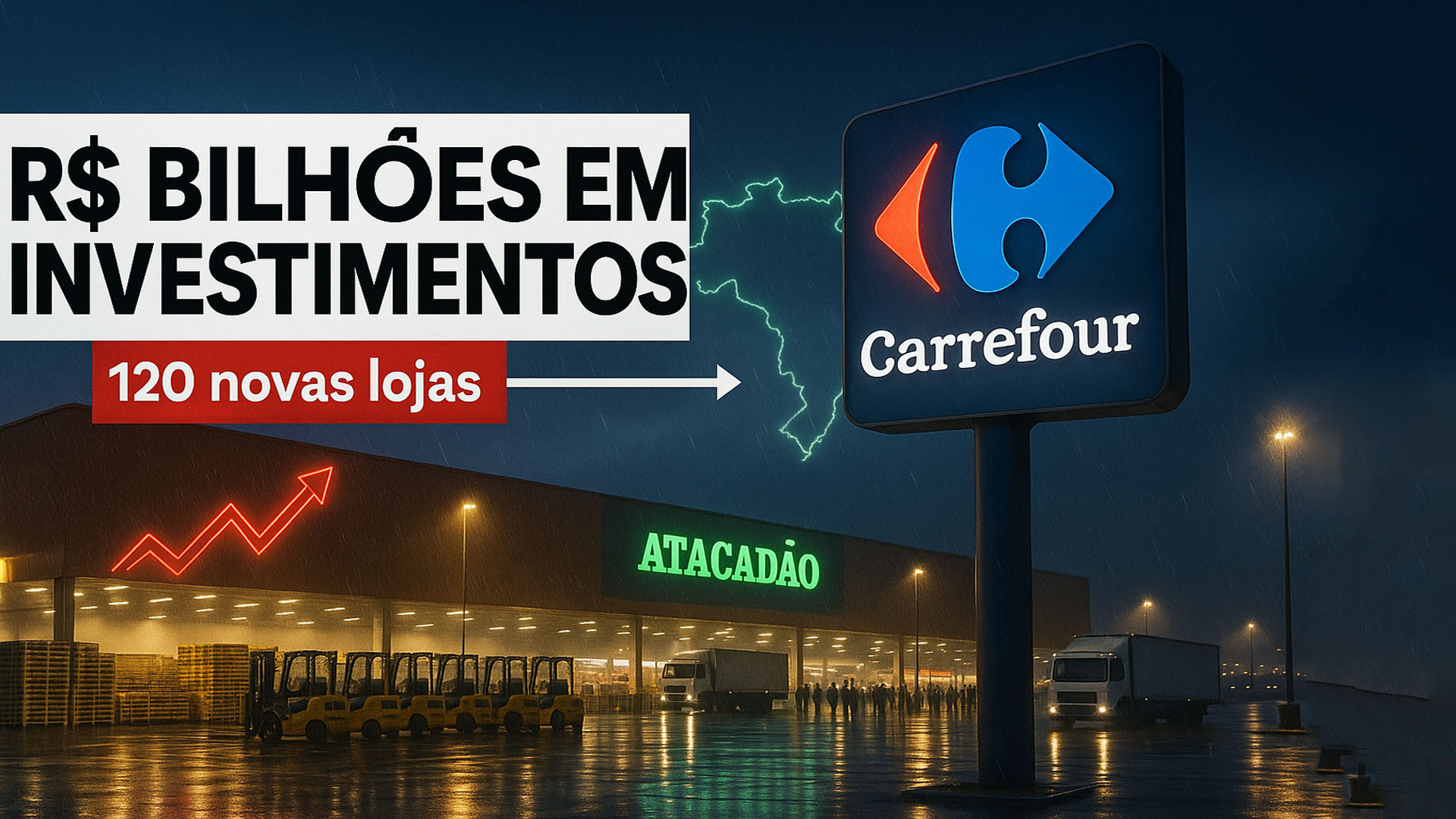


President of Carrefour Brazil, Pablo Lorenzo, Presents Ambitious Growth Plan in Cash-and-Carry Format, with Investments That May Exceed R$ 8 Billion and Depend on the National Economic Context.
The Carrefour Brazil has outlined an aggressive expansion strategy that foresees the opening of 120 new Atacadão units over the next five years. The project entails an investment of over R$ 8 billion and solidifies the cash-and-carry format as the main growth engine for the group in the country.
Pablo Lorenzo, who took over as president of Carrefour Brazil and Latin America in July 2025, leads the initiative. The Argentine executive has over three decades of experience with the group and a history of expansion in different markets.
The magnitude of the financial investment, however, is contingent upon macroeconomic factors. The investment in new units is expected to exceed 8 billion reais and “will depend on the interest rate and the level of consumption,” as stated by the president during the strategic presentation.
-
Controversial 6-day Workweek Elimination in Brazil Faces Economic Criticism Over Productivity Claims

-
Itaú to Refund Customers After 14 Years of Unauthorized Credit Card Charges; Agreement Includes No Interest or Adjustments, Deadline by 2028, with Potential Impact of Up to $6.5 Billion

-
Brazilian Company Grows from Bartering Soap for Food to Producing 30 Million Units Monthly, Challenges Global Giants with $100 Million Revenue and Expands into Premium Cosmetics
-
Petrobras and Engeko’s New Investment Plan Promises Billions and Thousands of Jobs, Capturing Market Attention


Atacadão Consolidates as a Priority for the Group in Brazil
Atacadão operated 380 self-service stores and 34 delivery wholesale units by the end of March 2025, totaling 414 units. The brand is present in all Brazilian states and the Federal District, ensuring national coverage.
The cash-and-carry format combines two distinct business models. It serves both end consumers and small and medium-sized merchants, focusing on high-turnover products and a competitive pricing policy. The structure allows for lean operations and reduced costs.
By 2027, the retailer plans to open 100 units and reach a total of 470 stores, according to CEO Marco Oliveira’s information to EXAME. The schedule anticipates eight openings in the current second half, with the remaining 92 stores distributed between 2025 and 2026.
The growth strategy prioritizes territorial consolidation. In percentage terms, 80% of the plan involves consolidation, opening a second or third store in that locality. The remaining 20% focuses on new markets, especially cities with up to 80,000 inhabitants that do not yet have network units.
Conversion of Hypermarkets Accelerates Expansion
A significant portion of the new stores will come from the transformation of existing units. There are 40 Carrefour stores eligible for conversion, a process that has already proven effective in previous expansions.
The acquisition of Grupo Big, purchased for R$ 7.5 billion in 2022, along with extraordinary costs arising from converting Big stores into Carrefour, Atacadão, and Sam’s Club, impacted the group’s results. Despite this, the converted units showed better performance than the traditional portfolio.
The conversion model allows for the utilization of existing infrastructure, reducing costs and implementation time. The strategy has proven particularly relevant after the incorporation of Grupo BIG’s operations.
Going Private Marks a Strategic Shift
In May 2025, Carrefour Brazil (CRFB3) definitively left the B3, concluding an eight-year trajectory in the Brazilian capital markets. The decision transformed the Brazilian operation into a wholly-owned subsidiary of the French parent company.
The closure of capital on the B3 provided relief to the company, according to President Pablo Lorenzo. The executive stated that the complexity of the Brazilian capital markets required excessive explanations on issues deemed irrelevant for operational management.
For Carrefour Brazil’s president, Stéphane Maquaire, exiting the stock market will allow the company to make decisions more swiftly and reduce internal process complexity. The private capital structure is expected to enable faster execution of strategies.
The operation offered minority shareholders three alternatives: to receive R$ 8.50 in cash per share, a combination of cash and receipts for shares of the French parent company, or full conversion into BDRs. Shareholders approved the proposal with 59% voting in favor and 41% against.
Differentiated Services Enhance Competitiveness
The company employs a strategy of including bakery, butchery, and deli services (the so-called PAFs) in most stores. Of the 372 existing units, 157 already offer these three types of services.
Including the PAFs aims to attract consumers from traditional retail. For every 120,000 tickets, 20% use the PAF, demonstrating the relevance of these services for the business model. Some units have further expanded their offerings, adding cafes, beauty salons, and food courts.
90% of the new stores in the expansion plan will feature conversion to photovoltaic energy. This measure aims to reduce operational costs, particularly due to the high energy consumption of the refrigeration equipment required for the PAFs.
The pricing policy also differentiates Atacadão in the market. All stores offer a discount starting from the third unit of a product, with prices 12% to 15% lower than traditional retail.
Global Restructuring Includes Sale of Operations in Argentina
While expanding in Brazil, Carrefour is moving in the opposite direction in other markets. The parent company of Carrefour in France has decided to initiate the search for a potential buyer for its business in Argentina.
In July 2025, Carrefour announced the sale of its 700 stores in Argentina. The operation is part of a global restructuring aimed at concentrating investments in prioritized markets: France, Spain, and Brazil.
Deutsche Bank was hired to assess the business and identify potential buyers. The estimated value of the proposals ranges between US$ 800 million and US$ 1.5 billion, below the initial evaluation of up to US$ 2 billion.
Deutsche Bank received seven offers to purchase Carrefour Argentina, including local groups like Coto, Cencosud, and Francisco de Narváez, as well as international investment funds. The negotiations are advancing to detailed asset audit phase.
The exit reflects challenges faced by multinationals in unstable economic environments. The strategy of focusing on more secure markets aims to reduce risks and increase the global profitability of the company.
Brazil Remains a Strategic Market
The new CEO of Carrefour in Brazil takes over an operation with over 1,000 stores, employing 130,000 people and serving 60 million consumers per month. The company has a total area of 3.1 million square meters in the country.
In the first quarter of 2025 alone, the group recorded R$ 28.8 billion in consolidated sales. These figures reinforce the importance of the Brazilian market for Carrefour’s global strategy.
The company is also investing in digital channelization, with e-commerce accounting for 9.3% of sales in 2025. The expansion of services in stores further strengthens competitiveness in the B2C channel.
The Atacadão expansion plan represents a significant bet on the cash-and-carry format, which continues to show growth in the Brazilian market. Territorial consolidation and the conversion of hypermarkets allow for accelerated advancement while utilizing existing infrastructure.
And you, do you believe that the cash-and-carry format will continue to dominate Brazilian retail or will traditional supermarkets find ways to regain space? Leave your opinion in the comments and share your experience with this shopping model that mixes wholesale and retail!