






 Portuguese
  4 min of reading
  0 comments


Excavations in Mostine uncovered an ancient Roman rural property, with press, stone channels, mosaics, coins, and supply indications linked to the city of Salona
An archaeological discovery in Split, Croatia, revealed beneath the soil of the Mostine region a Roman rural complex about 2,000 years old. The structure was identified during preventive excavations near a modern commercial area and has since drawn attention for combining residential and agricultural remains in the same property. The complex was interpreted as an ancient villa rustica, a rural model used in the Roman Empire to combine housing, production, and administration of large productive areas.
The property was located a few kilometers from Salona, the ancient capital of Roman Dalmatia, now associated with the region of Solin. This proximity reinforces the connection between the productive countryside and the urban center, as Salona depended on food, wine, olive oil, and other products to sustain its political, administrative, and commercial activity. The find also indicates that Mostine was part of a regional supply network connected to the ports and routes of Dalmatia.
Rural structures reveal the productive function of the ancient Roman property
The work began as a routine archaeological check before the expansion of a commercial area, but soon revealed thick walls, internal divisions, and clear signs of prolonged use. Coins from different periods, ceramic fragments, and glass pieces indicate continuous occupation, with renovations and adaptations made over several centuries. This pattern shows that the complex followed the political and economic changes of the region.
-
Neymar’s Family Sells 300,000 Bottles of Wine Before Launch, Aims for $20 Million Revenue in First Year

-
Cambridge Introduces 25m² Modular Homes to Bridge the Gap from Shelters to Permanent Housing
-
Facing high costs and limited expertise in Brazil, couple builds 27 m² tiny home on wheels for $36,000 using online resources.

-
Tired of High Rent in Portland, Newlyweds Buy 37m² Tiny House with 36 Cabinets, King-Size Bed, and Loft Office, Paving Way to Financial Freedom



The Roman villa rustica designated rural properties aimed at organized agricultural production. In Mostine, archaeologists identified large rooms, channels carved in stone, a cistern for water storage, and structures related to food processing. These elements, spread over hundreds of square meters, reinforce the interpretation that the site functioned as a significant productive unit.
Olive oil system shows how the complex supplied the region
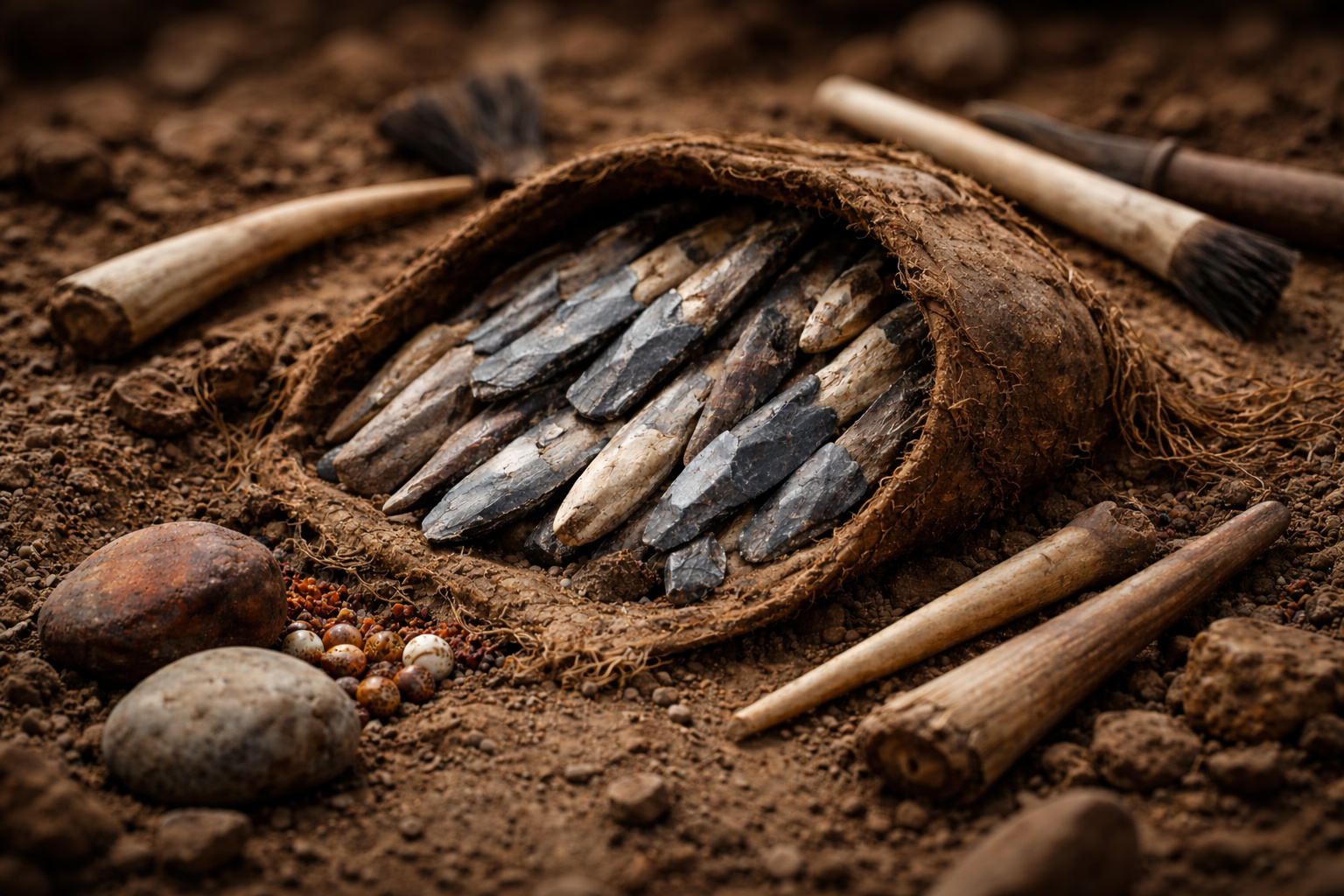
Among the most important finds is the torcular, a typical press used in olive oil extraction during the Roman period. The equipment appears associated with stone channels that directed the liquid to smaller basins, as well as floors prepared for drainage. This structure reinforces the property’s function as an olive processing center to supply Salona and other Dalmatian localities.
Production followed standardized steps in the Roman world, from harvesting in nearby olive groves to storage in large ceramic containers. At the Mostine site, fragments of amphorae and decantation tanks suggest a capacity exceeding local consumption. Therefore, the olive oil produced there likely circulated through urban centers, port areas, and regional trade routes.
Connection with Salona increased the economic importance of the villa
Salona was the capital of Roman Dalmatia and functioned as a political, administrative, and commercial center of great reach. The city featured walls, baths, an amphitheater, a theater, and an intense road network. This growth required a constant flow of products from the countryside, especially food, olive oil, and wine.
The findings at Mostine reinforce this link between countryside and city by revealing a well-organized property connected to wide commercial networks. Coins from different centuries, multicolored mosaic tesserae, decorative glass, and kitchen ceramics indicate a stable agricultural unit. These remnants also suggest the presence of a wealthy owner, connected to the regional economy and Adriatic trade.
Mosaics, coins, and ceramics reveal Roman daily life
Fragments of mosaics indicate decorated environments used for reception and social representation of the owner. Common ceramics, kitchen vessels, fine glass, and coins point to dietary practices, circulation of goods, presence of specialized workers, and constant administration. These elements help to understand how the rural elite and workers lived in a productive area of the Roman Empire.
The team responsible for the excavations faced challenges such as flood control and protection of fixed structures amid modern urban expansion. Part of the walls and installations was covered with geotextile and a layer of gravel, a preventive archaeology measure used to preserve heritage. Thus, the ancient villa rustica producing olive oil continues to provide data on work, trade, and ways of life in one of the most active regions of the Roman world.
To what extent should expanding cities adapt works to preserve remnants capable of explaining the past?




Be the first to react!