






 Portuguese
  Spanish


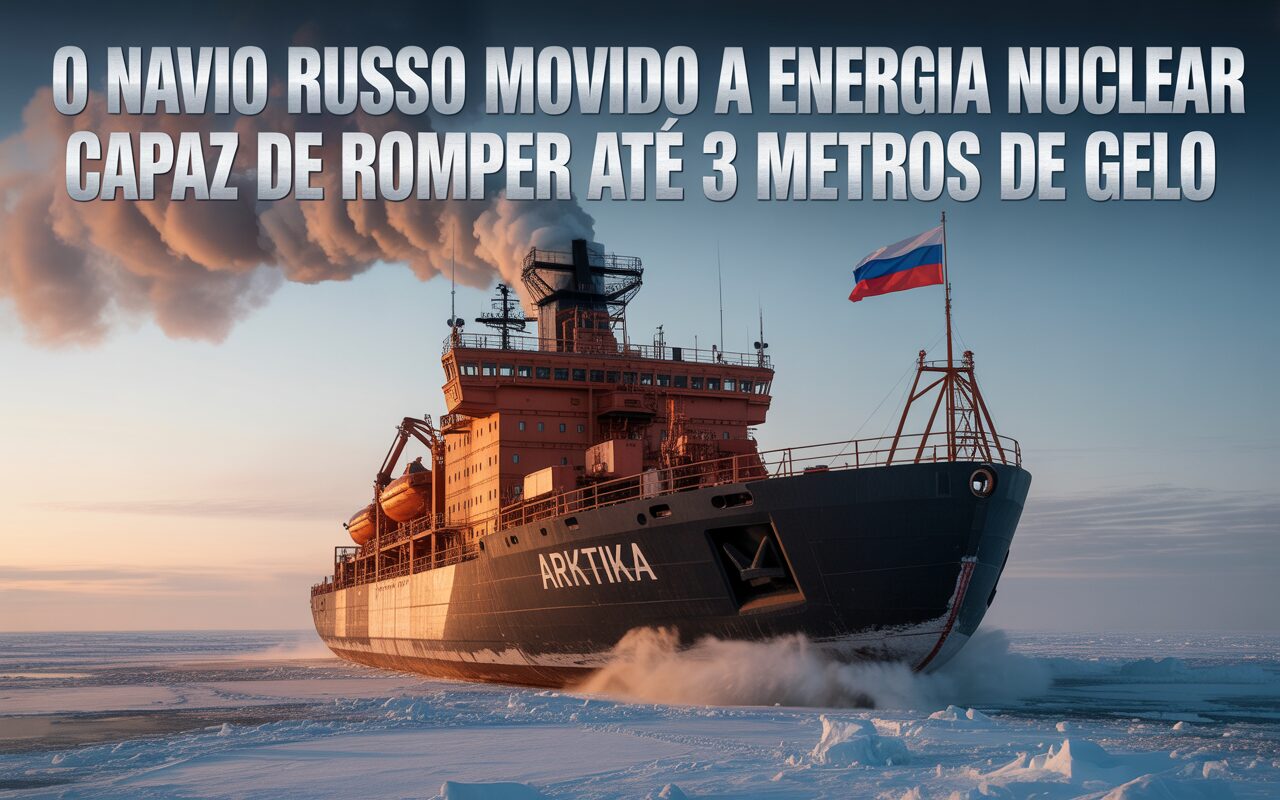

Arktika, Russian Nuclear-Powered Ship, Was The First Icebreaker To Reach The North Pole, Crossing Ice Layers Up To 3 Meters Thick.
The Arktika, Russian nuclear-powered ship, made history in global navigation by becoming the first surface vessel to reach the North Pole in 1977. Built by the then Soviet Union, the icebreaker was designed to operate in Arctic regions with ice layers up to 3 meters thick, opening commercial and scientific routes in areas where conventional navigation was impossible.
The achievement represented a technological advancement for Russia, which was investing in strategic routes in the northern part of the planet. With the capacity to operate for months without refueling, the Arktika became a symbol of the country’s industrial and scientific capabilities, as well as expanding Russian presence in a geographically remote and resource-rich region.
In addition to breaking ice, the Russian ship served as a floating laboratory, enabling meteorological, oceanographic, and geopolitical research in the Arctic. Equipped with two nuclear reactors, its autonomy and robustness ushered in a new era in shipbuilding aimed at extreme operations. To this day, the name Arktika represents a milestone in the development of nuclear-powered icebreakers.
-
North Korean Fiasco: Launch of the Largest Warship Ends in Sinking

-
While giant ships still burn heavy fuel and the maritime sector races against climate targets, Maersk and Vale are starting to bet on ethanol as a new route to reduce emissions at sea.

-
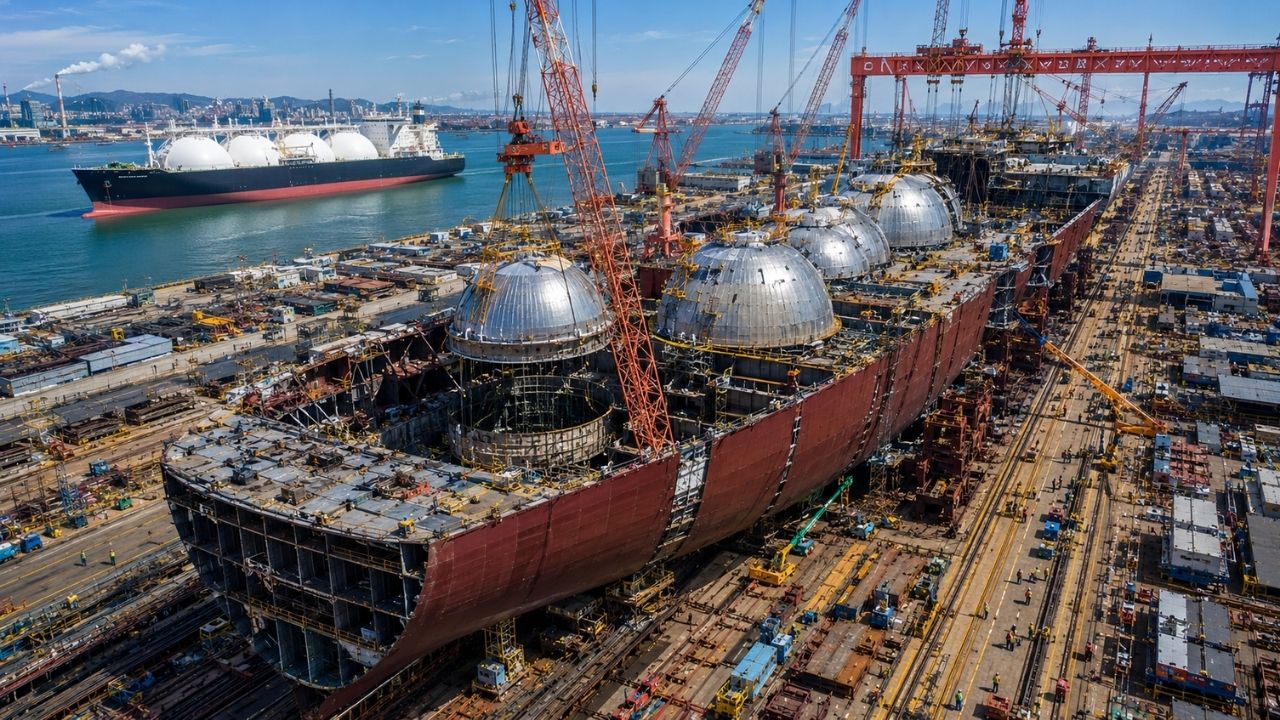
China begins construction of the world’s largest LNG ship, a 344-meter giant capable of supplying 4.7 million homes for a month, carrying 271,000 m³ of gas, and placing QatarEnergy in the largest naval order ever recorded in world history.
-
China is designing a container ship with a thorium nuclear reactor that will operate for 40 years without refueling, and the 25,000-container giant from Jiangnan Shipyard will cross oceans without emitting carbon in an industry that burns 300 million tons of fuel per year.



The Russian Ship Developed To Conquer Arctic Ice
The Arktika was built by the Soviet Union at the Baltic shipyard in Leningrad (now Saint Petersburg) and launched in 1972. The vessel was designed to ensure maritime traffic in the Arctic, a strategic route for transporting goods and exploring natural resources in remote areas of Russia.
Powered by two OK-900A nuclear reactors, the Russian ship has practically unlimited operational autonomy, able to remain at sea for months without the need for refueling. This feature allows the Arktika to operate on prolonged missions in areas where access would be impossible for conventional ships.
Capacity To Break Ice Up To 3 Meters Thick
The design of the Arktika allows the hull to withstand great pressures and distribute the weight of the vessel over the ice, breaking layers up to 3 meters thick. The technique used is based on buoyancy: the ship climbs onto the ice and uses its own weight to break it, clearing a path for other vessels.
This capability made the Arktika a key player in the expansion of commercial navigation in the Arctic, facilitating the creation of maritime corridors along the Northern Sea Route, which links the Atlantic Ocean to the Pacific through the frozen waters of northern Russia.
First Mission To The North Pole
On August 17, 1977, the Arktika reached the geographic North Pole, becoming the first ship in history to attain this point while navigating through frozen waters. Onboard were scientists, engineers, and officers of the Soviet Navy. The achievement was celebrated as a technological milestone for the Soviet Union during the Cold War.
The mission to the North Pole had scientific, strategic, and symbolic objectives. In addition to proving the Russian ship’s capabilities, the expedition collected data on polar ice, weather conditions, and ocean currents. The results served as a basis for developing new routes and more modern versions of the ship.
Technical Characteristics Of The Russian Arktika Ship
The original Arktika measures 148 meters in length, 30 meters in width, and has a displacement of about 23 thousand tons. It can reach speeds of up to 20 knots (approximately 37 km/h) in open waters and maintain constant navigation in frozen areas with ice up to 2.5 meters thick, being able to force thicker passages at reduced speed.
The propulsion is provided by four steam turbines powered by the nuclear energy generated by the reactors. The ship also features navigation and communication systems developed to operate in extreme latitudes, where magnetic interference and the absence of satellites make conventional navigation difficult.
Arktika Birthed A New Generation Of Icebreakers
The success of the ship inspired the construction of a series of similar nuclear vessels, with improvements in efficiency, safety, and ice-breaking capacity. Russia’s fleet of nuclear-powered icebreakers continues to be the only one in the world operating with this technology on a large scale.
In 2020, a new generation of ships with the same name – Arktika, of the LK-60Ya class – was launched to gradually replace the older models. With more power and greater operating capacity in thick ice, the new icebreakers reinforce Russia’s strategic role in the Arctic.
Preserved As Historical Heritage
The use of nuclear-powered icebreakers strengthens Russia’s presence in the Arctic, a region that holds large reserves of natural gas, oil, and other minerals. Additionally, the gradual thaw caused by climate change has extended the navigability period of the Northern Sea Route, making it increasingly attractive for international trade.
In this context, the original Arktika remains a symbol of Russian industrial and scientific capability. Its construction and operation showed the world that it was possible to economically explore regions once considered inaccessible.
The original ship was retired from service in 2008, after more than 30 years of operation. Since then, it has undergone decommissioning and decontamination processes. There are initiatives to turn the Arktika into a floating museum, preserving its history as part of the naval legacy of the former Soviet Union and present-day Russia.










A mãe Rússia deveria entrar numa parceria com a China no Atlântico norte. O mar ártico é crucial para a defesa sino-russia.
Se é energia nuclear, por que diabos tem uma chaminé na foto queimando carvão???? É nuclear ou a carvão?
Os russos devem ter saudade da União Soviética, eram respeitados como potência. Bom artigo.