Portuguese
  Spanish


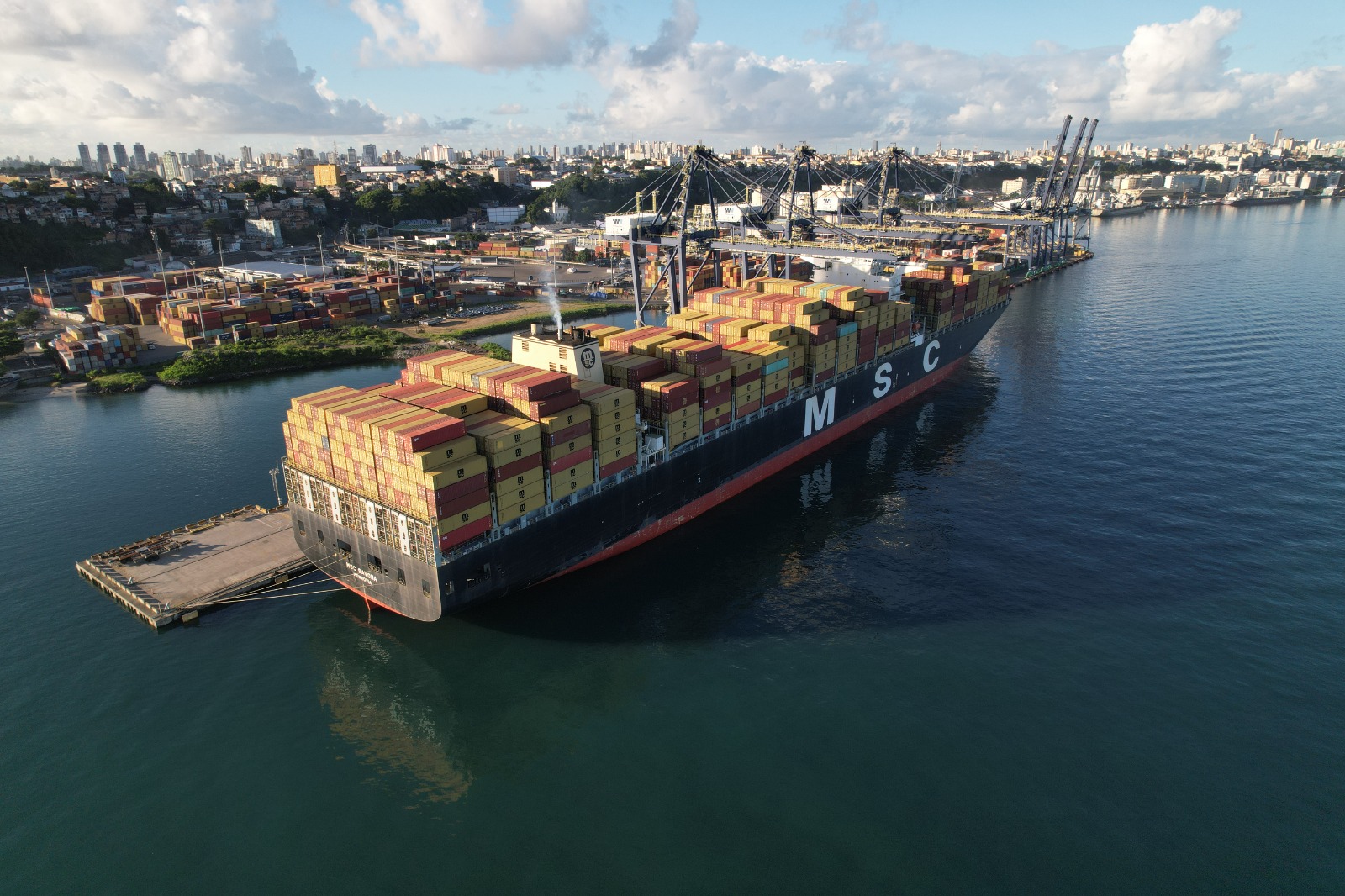

Vessel from China traveled 17,000 km to Salvador with the first structures of the Salvador-Itaparica Bridge, a mega project of 12.4 km.
The arrival of a ship from China at the Port of Salvador on May 18, 2026 marked the concrete beginning of one of the largest infrastructure projects in Brazil. The vessel departed from the Port of Shanghai on March 30, traveled approximately 17,000 kilometers carrying more than 800 tons of equipment, and brought the first structures to be used in the construction of the Salvador-Itaparica Bridge, a project that envisions a crossing of 12.4 kilometers over the sea in the Bay of All Saints. According to the Government of Bahia, the cargo was distributed in 44 containers and is valued at approximately US$ 3.5 million, equivalent to more than R$ 17 million at the current exchange rate.
The unloading represents a symbolic milestone because, for the first time in decades of political and technical discussions, materials directly intended for the construction of the bridge have effectively arrived in the state. The shipment includes about 1,550 components, including Bailey beams, metal structures, support bolts, and locking pins that will be used in the first operational platforms of the project.
Cargo left China and crossed almost half the planet to reach the Bay of All Saints
According to information released by the Government of Bahia and local media, the ship departed from Shanghai, one of the largest port powers in the world, and sailed for almost two months until reaching Salvador.
-
Global Shipping Faces Shortage of Certified Maritime Officers, Salaries in the U.S. Can Exceed $100,000 Annually

-
The FLIP: A 108-Meter Ocean Laboratory That Stood Vertically for 60 Years, Dismantled in 2023
-
North Korean Fiasco: Launch of the Largest Warship Ends in Sinking

-
While giant ships still burn heavy fuel and the maritime sector races against climate targets, Maersk and Vale are starting to bet on ethanol as a new route to reduce emissions at sea.



The maritime route of approximately 17,000 kilometers drew attention for the volume of the logistical operation and the strategic importance of the transported cargo.

The unloaded materials are part of the initial structure necessary for the implementation of the yards and temporary platforms that will allow the progress of the works over the water.
The state government reported that part of the cargo will go to Maragogipe, where one of the main operational yards will be installed, while another part will be destined for Vera Cruz, on Itaparica Island.
The governor of Bahia, Jerônimo Rodrigues, was at the port to oversee the arrival of the material and stated that the logistical mobilization represents a new phase of the project. The state management announced that the physical interventions are expected to begin as early as the beginning of June 2026.
Mega project promises to create the largest bridge over the sea in Latin America with 12.4 kilometers
The Salvador-Itaparica Bridge has been considered for years as one of the most ambitious infrastructure projects in Brazil. Once completed, the structure is expected to become the largest bridge over a body of water in Latin America, directly connecting Salvador to the Island of Itaparica with a 12.4-kilometer crossing.
The project is part of an even larger road system, which includes urban accesses, viaducts, tunnels, and road connections in Itaparica.
The proposal aims to reduce logistical distances between Salvador and the interior of Bahia, as well as profoundly alter the economic flow of the metropolitan region and the Recôncavo Baiano.

According to studies released by the state government, the bridge is expected to directly benefit about 10 million people and create thousands of jobs during its construction. The official expectation is to generate approximately 7,000 direct and indirect jobs throughout the project.
Unprecedented technology in Brazil promises to reduce vessels and accelerate construction at sea
One of the highlights pointed out by the Bahia government is the use of a temporary platform considered unprecedented in Brazil.
This system has already been applied in major international projects and will serve as an operational base for the circulation of workers, heavy machinery, and equipment along the future service fronts over the water.


According to the Civil House of Bahia, the technology could reduce by almost 70% the need for support vessels during the execution of the bridge. This should decrease the intense maritime movement in the Bay of All Saints and increase the logistical efficiency of the construction.
In addition to the parts unloaded by the ship coming from China, the mobilization includes the arrival of a 60-ton crane at the São Roque do Paraguaçu site and the shipment of approximately 3,900 tons of steel pipes, a volume equivalent to about 400 trucks. These materials will be used in the initial structures of the work platform in water.
Project involves Chinese infrastructure giants and may change Bahia’s logistics
The work will be carried out by the Concessionária Ponte Salvador-Itaparica, formed by the Chinese groups China Communications Construction Company (CCCC) and China Railway Construction Corporation (CRCC), companies that operate in large infrastructure projects in different parts of the world.
The direct involvement of Chinese groups helps explain the origin of the materials and the international logistics set up for the start of operations. The participation of foreign companies also reinforces the geopolitical and economic weight of the project, considered strategic for the development of Bahia.
Logistics and infrastructure experts point out that the bridge could reduce transportation costs, accelerate road connections, and expand economic integration between Salvador, the Recôncavo, and regions in southern and western Bahia. The system could also alter the current role of the ferry crossing between Salvador and Itaparica.
Crossing may alter tourism, transportation, and urban expansion in dozens of municipalities
In addition to engineering, the project draws attention due to the expected regional impact. The state government states that more than 40 municipalities may benefit directly or indirectly from the new road connection.
The official expectation is that the bridge will facilitate movement between Salvador and important federal highways, including BR-101, BR-116, and BR-242. This may shorten land trips and alter commercial routes currently used in the state.

There is also an expectation of real estate expansion, tourism growth, and increased investments in areas close to Ilha de Itaparica and the Recôncavo Baiano. However, the topic remains surrounded by debates involving environmental impacts, project costs, and urban changes caused by the work.
Arrival of the ship marks the transition between decades of promise and the physical start of construction
The Salvador-Itaparica crossing has been discussed for decades and has gone through different phases of studies, revisions, and political negotiations.
The arrival of the vessel with equipment from China has been treated by the Bahia government as the first major physical milestone of the project’s operational phase.
After years in which the bridge existed only in announcements, geological studies, and technical projections, the unloading of more than 800 tons of metal structures at the Port of Salvador represents the moment when the mega-project finally begins to take real shape in the Bay of All Saints.