






 Portuguese
  Spanish


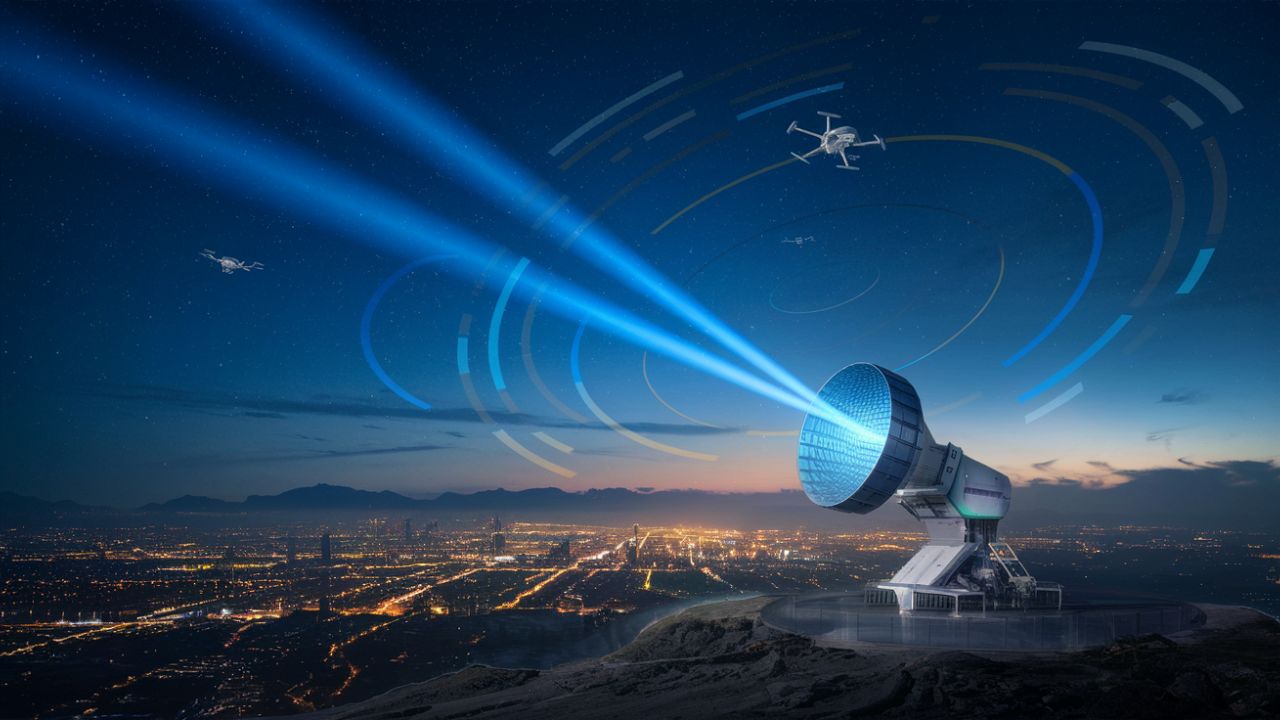
Capable of Generating Electromagnetic Pulses of Over One Gigawatt, China’s Energy Weapon Uses Advanced Microwave Technology to Hit Multiple Targets with Precision, Redefining Global Military Balance.
A technology so powerful that it can imitate the force of a nuclear explosion but without physical destruction. This is now a reality thanks to China’s energy weapon. In recent tests, this high-power microwave (HPM) weapon overcame a technical challenge that once seemed impossible: surviving the intensity of its own electromagnetic pulses.
But what makes this innovation so important? To start, we’re talking about a tool that can redefine the global military balance. Let’s understand how this technology works, its importance, and what it means on the international stage.
What Is China’s Energy Weapon?

China’s energy weapon uses powerful electromagnetic pulses to disrupt or destroy electronic systems. Think of it as a kind of “forced blackout”, but with surgical precision. While traditional weapons rely on physical explosions, this technology targets electronic components directly, making it incredibly efficient against drones, satellites, and even defense systems.
-
Chile’s Plan for a 20,000 km Undersea Cable to Hong Kong Halted by U.S. Pressure, Highlighting the Silent Data Control Battle in Latin America

-
In Somaliland’s Desert, Greenhouse Uses Sun and Seawater to Grow Lettuce, Cucumbers, and Tomatoes Without Rain: 1-Hectare Project Cools Crops, Desalinates Water, and Converts Brine into Commercial Salt
-
Trump Unveils $400 Million Boeing 747 Donated by Qatar as Temporary Air Force One Amid Boeing Delays, Sparking Debate on National Security, Costs, and Foreign Influence
-
Chinese Company Unveils Robotic Toilet That Comes to You, Featuring Lidar Sensors, Voice Command, Bidet, Hot Air Drying, UV Light, and Self-Cleaning Waste Disposal




What sets this Chinese weapon apart from others is the use of phased array transmission. Instead of rotating antennas, the system distributes energy precisely to multiple channels simultaneously. This allows for multiple target engagement without the need for repositioning, making the operation more agile and effective.
Pulses Comparable to Nuclear Explosions
The pulses generated by this Chinese weapon have a power that can exceed one gigawatt. To give you an idea, it’s like concentrating the energy of a small town into a single shot. This capability allows for the disabling of electronic systems on a large scale without causing physical collateral damage.
One of the biggest challenges was preventing the weapon itself from being destroyed by the intensity of the generated pulses. The solution found by researchers was to stabilize and distribute the energy uniformly, something that once seemed impossible. This advancement opens doors to new possibilities in the field of energy weapons.
The Technology Behind the Innovation
This technology allows energy to be focused precisely, significantly increasing its range and the damage it causes. It’s like replacing a regular light bulb with a high-power laser: more energy concentrated at the right point.
Another major advancement was the precise conversion of electromagnetic waves into a stable state. This prevents energy dispersion and ensures that the pulses achieve the maximum efficiency possible.
Global Context and Strategic Implications
The United States has already announced plans to deploy HPM weapons in the Indo-Pacific, targeting China’s strategic assets. This technological race demonstrates the importance of this innovation for the balance of power in the region.
The introduction of this weapon could redefine military strategies in the area, destabilizing defense systems and altering the balance among the involved powers.
Future of China’s Energy Weapon
Although the weapon is still in the testing phase, its accelerated development indicates that it may be deployed in real-world scenarios in the coming years. This raises questions about how it will be used and what the consequences will be.
With great power comes great responsibility. The use of weapons like this raises ethical debates and concerns about the impact on civilians and critical infrastructures.


-

-

3 people reacted to this.