






 Portuguese
  Spanish


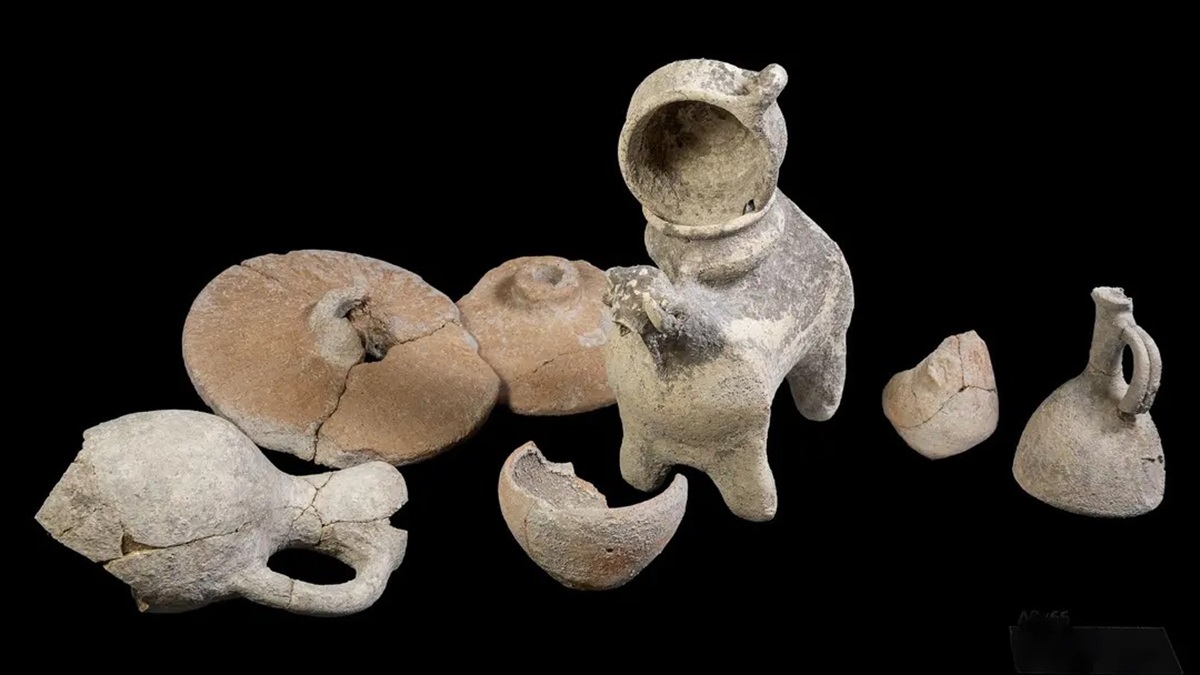
Found Near Tel Megiddo, in Northern Israel, the 5,000-Year-Old Wine Press Proves That the Production of the Beverage Was Tied to Ceremonies and Cananean Urbanization
Archaeologists in Israel have discovered the oldest wine press ever found in a Cananean settlement, providing direct evidence that wine production played an essential role in the emergence of the first cities. The discovery, made near Tel Megiddo in the north of the country, confirms that the first urban inhabitants consumed wine and associated it with rituals and daily life.
The Israel Antiquities Authority (IAA) announced in a Facebook post that the excavated site was occupied by a Cananean cult prior to the arrival of the Israelites. According to the excavation director, Barak Tzin, the press is a “unique” find, as it shows that wine and ritual were deeply connected to the beginnings of urban civilization.
Found Amid Construction of a Highway
The excavation took place in the Jezreel Valley during the construction of a new highway funded by Netivei Israel. The archaeological survey, conducted by the IAA, covered an area of over 1.2 kilometers. During the excavations, researchers found the most important artifact of the site: a wine press dating back approximately 5,000 years, considered one of the oldest ever located in Israel.
-
BYD’s Giant Ship Docks in Southern Brazil with 7,216 Electric and Hybrid Cars, Marking the Largest Automotive Operation at the Port in 2026 and Bringing First-Half Total to Nearly 15,500 Vehicles

-
Cuba Implements Sweeping Economic Reforms, Legalizes Holdings and Corporations, Allows Foreign Investment in Private Companies, and Lifts Employee Limits After Over 60 Years
-
8-Year-Old Entrepreneur from Brazil Builds Poultry Business with 80 Birds, Aspires to Study Agronomy at Leading University
-
Couple Transforms School Bus into Mobile Home with Full Bathroom Using YouTube Tutorials, Invests $50,000




The excavation directors, Dr. Amir Golani and Barak Tzin, highlighted that the press is “one of the very few known from such an ancient period, when urbanization began in our region.”
They explained that while wine presses are relatively common in the country, dating them is a significant challenge. Until now, only indirect evidence suggested that wine was produced five millennia ago.
With this discovery, archaeologists claim to have “irrefutable proof” of primitive wine production in the region.
Relics of an Ancient Cananean Culture
In addition to the press, researchers found ruins of residential buildings and objects related to the religious practices of a popular Cananean cult dating back around 3,300 years.
Among the finds were a model of a sanctuary made of pottery, ceremonial utensils in the shape of animals, and a set of surprisingly intact ritual vessels.
These artifacts generally appear only in fragments, which makes it difficult to understand how they were used together. The fact that they were preserved allowed archaeologists to gain a more complete view of the spiritual practices of the period.
Indications of Rituals Outside the City
The ritual vessels were aligned with a large temple area visible from a distance, suggesting that Cananean worship also took place outside the urban center. This may indicate that local farmers, who lived nearby, participated in ceremonies without needing to enter the fortified city.
Researchers emphasized that Megiddo has been excavated for over a century and remains one of the key sites for studying ancient urbanism and Cananean religious practices. The new excavations, carried out to the east of the mound (tel), revealed an unknown part of the urban structure, connecting the walled city to activities occurring around it.
Wine and Ritual in the Cradle of Cities
According to archaeologists, the rock-hewn wine press provides a clear link between the onset of urbanization and wine production in the region 5,000 years ago. The offerings dating back 3,300 years demonstrate the continuity of libation rituals and popular worship over the centuries.
These discoveries indicate that wine was not just a beverage, but a central element in the spiritual and social life of ancient Cananean communities, connecting religious practices, agriculture, and the very development of the first cities.




-

-

-

-

6 people reacted to this.