Portuguese
  Spanish



With investments exceeding US$ 14 billion and a strategy based on desalination, renewable energy, and major water infrastructure projects, the African country seeks to tackle the effects of climate change and reduce its dependence on rainfall in one of the regions most vulnerable to water scarcity on the planet.
As the world faces increasingly severe impacts of climate change, the search for solutions to ensure water supply has become a strategic priority for several countries. Among them, Morocco stands out as one of the most ambitious examples today by betting on seawater desalination as a central tool to address water scarcity.
According to information released by CNN, the Moroccan government intends to obtain about 60% of all its drinking water from the ocean by 2030. The initiative is part of a broad national plan that seeks to increase water security, strengthen agriculture, and prepare the country for a future marked by more frequent droughts and higher temperatures.
The strategy gained even more relevance after the country faced one of the worst droughts in its recent history. Although the government declared in January the end of a drought period that lasted seven years, thanks to heavy rains recorded during the winter, the authorities consider that the water crisis has ceased to be an exceptional event to become a permanent reality.
-
Rural Worker Spotted “Flying” on a Drone in Brazil

-
Turkish Cave Suggests Neanderthals and Homo Sapiens Shared Cultural Traditions for Millennia; Discovery Unveils Similar Tools, Hunting Techniques, and Shells at a Major Prehistoric Site
-
Burkina Faso Bans NGOs from Photographing Vulnerable People Without Consent and Outlaws Fundraising Campaigns Exploiting Suffering
-
Giant Earthworms up to 2 Meters Long Secretly Sustain Fertility in the Amazon Rainforest




For Morocco’s Minister of Equipment and Water, Nizar Baraka, relying exclusively on rainfall and reservoirs is no longer sufficient in the face of the structural transformation observed in the region’s climate cycle.
Morocco wants to transform the Atlantic into a source of drinking water
The Moroccan plan consists of using water from the Atlantic Ocean to supply coastal cities and part of the agricultural sector, while water stored in dams and reservoirs will continue to be directed to inland regions more vulnerable to drought.
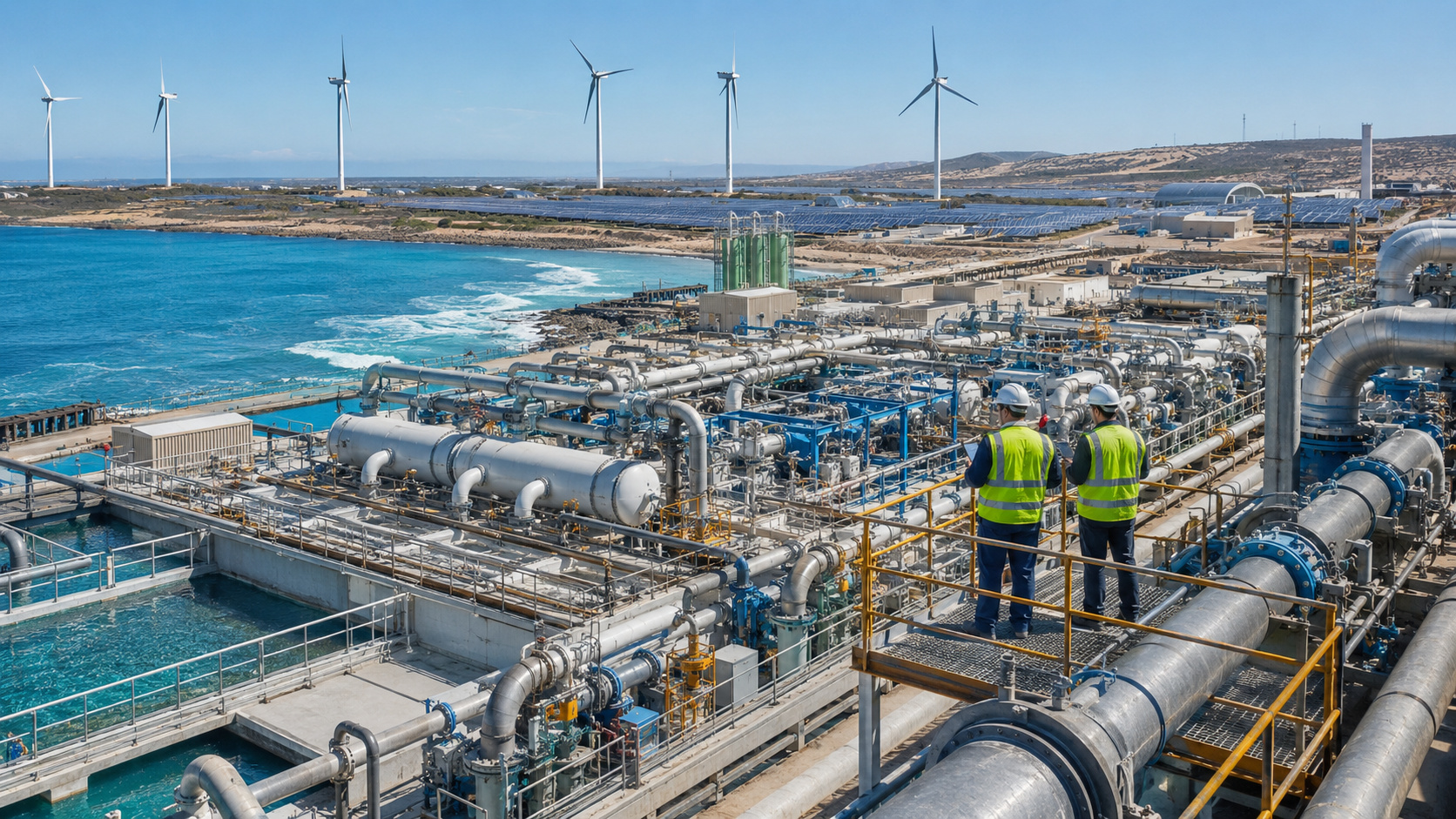
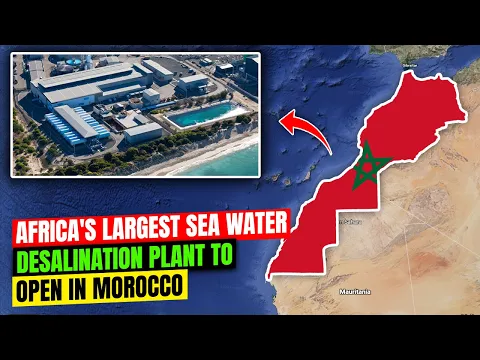
At the center of this strategy is a gigantic desalination plant under construction approximately 40 kilometers south of Casablanca.
Valued at about US$ 650 million, the project is expected to become the largest desalination plant in Africa and, according to its developers, the largest facility in the world powered entirely by renewable energy sources.
The electricity used will be supplied by a wind farm with a capacity of 360 megawatts located in Western Sahara. The first phase of the project is scheduled to start operation in February 2027, while the second phase is expected to be completed in August 2028.
When it reaches its maximum capacity, the plant will be able to supply approximately 79 billion gallons of potable water per year. The volume will be enough to supply about 7.5 million people in the Casablanca region, in addition to irrigating approximately 20,000 acres of agricultural areas.
The project is part of a much larger program. Currently, Morocco already operates 17 desalination plants responsible for producing about 108 billion gallons of water per year, a volume nine times higher than recorded in 2021. Another 11 units are under construction or in the planning phase.
In addition to the plants, the country is also investing in the construction of dams, reuse of wastewater, and the creation of a wide network of pipelines known as “water highways,” intended to transport water surpluses from wetter regions to drier areas.

Renewable energy seeks to reduce costs and environmental impacts
Although desalination is considered a promising solution for arid regions, the technology still faces significant challenges.
Most modern facilities use the seawater reverse osmosis process, known internationally by the acronym SWRO. In this system, high-pressure pumps force water through special membranes that remove salt and other impurities.
The main problem is the high energy consumption. In many countries, plants operate using fossil fuels, which increases carbon emissions and generates environmental criticism.
To avoid this scenario, the Moroccan government decided to integrate the new projects with its solar and wind farms. The measure seeks to reduce operational costs over time and significantly decrease the carbon footprint associated with potable water production.
In 2024, just over a quarter of the electricity consumed in the country was already from renewable sources.
However, the environmental issue is not limited to energy consumption alone.
The process generates large amounts of brine, a highly concentrated mixture of salt and chemical residues that remains after the freshwater is extracted. For every gallon produced, between one and one and a half gallons of brine can be generated.
Experts warn that improper disposal of this material can cause significant damage to marine ecosystems, reducing oxygen levels and affecting species essential for the balance of the oceans.
The new Casablanca plant will feature a discharge system designed to dilute the brine before its release into the sea, reducing the environmental risks associated with the operation.
Agriculture may be the main beneficiary — but there are challenges
The agricultural sector is responsible for approximately 87% of water consumption in Morocco and employs nearly a third of the national workforce.
During the seven years of drought, cereal production halved in various regions, causing significant economic losses and increased rural unemployment.
In this context, desalination emerges as an alternative to ensure the water supply for strategic agricultural areas.
In the Souss-Massa region, responsible for about 85% of Moroccan fruit and vegetable exports, the Chtouka Aït Baha plant already supplies approximately 1,500 farmers.
The impact has been significant. Local farmers report expanded production and increased exports thanks to the continuous supply of desalinated water.
Despite this, experts warn that costs remain high.
Youssef Brouziyne, regional representative for the Middle East and North Africa at the International Water Management Institute (IWMI), told CNN that desalination can still cost between 1.5 and 4 times more than traditional freshwater sources.
According to him, the technology works especially well for high-value crops, such as fruits and vegetables intended for export. However, for staple crops like wheat and cereals, costs still pose a significant obstacle.
For this reason, experts advocate for targeted subsidies, hybrid systems that combine different water sources, and continuous investments in technological innovation to expand access for small producers.
Moroccan model sparks interest across Africa
Morocco’s experience has attracted the attention of several African countries facing similar challenges.
During the World Water Congress held in Marrakech last December, government representatives argued that the integration of water security, energy security, and food production can serve as a reference for other nations.
The expansion of desalination is already visible in different parts of the continent. Algeria operates one of the largest desalination programs in the Mediterranean, while Egypt is rapidly expanding its installed capacity.
Senegal also recently signed a contract of approximately $800 million to build a new power plant powered by renewable energy near Dakar.
Countries like Namibia and South Africa have been using the technology for more than a decade and continue to develop smaller projects powered by solar energy.
Experts believe that the combination of reduced technological costs and the expansion of renewable energies could make desalination increasingly accessible in the coming years.
Nevertheless, challenges remain.
For Youssef Brouziyne, true water security does not depend solely on producing more water, but on the ability to generate economic resilience, environmental sustainability, and equitable access to available resources.
In other words, technology can represent an important part of the solution, but its success will depend on how governments, companies, and farmers manage to balance costs, environmental impacts, and social benefits.
In the face of advancing climate change and increasing pressure on global water resources, Morocco’s bet could become one of the world’s largest laboratories for the future of water management.
And you, do you believe that desalination could become a viable solution to tackle large-scale water scarcity in the coming decades?