Portuguese
  Spanish




Ambitious project in the Sahara generates energy for more than 1 million homes, but high costs, use of fossil fuels, and limitations of the electric grid hinder real impact
While deserts are seen as unproductive regions around the world, Morocco decided to bet big and transform the Sahara into one of the largest clean energy laboratories on the planet. However, despite the grandeur of the project, reality reveals a more complex scenario — where innovation coexists with structural challenges.
The information was disclosed by “DW” (Deutsche Welle), based on analyses and interviews with energy sector experts, revealing the behind-the-scenes and contradictions of the ambitious Moroccan plan.
Noor Ouarzazate: the solar mega-structure that impresses the world
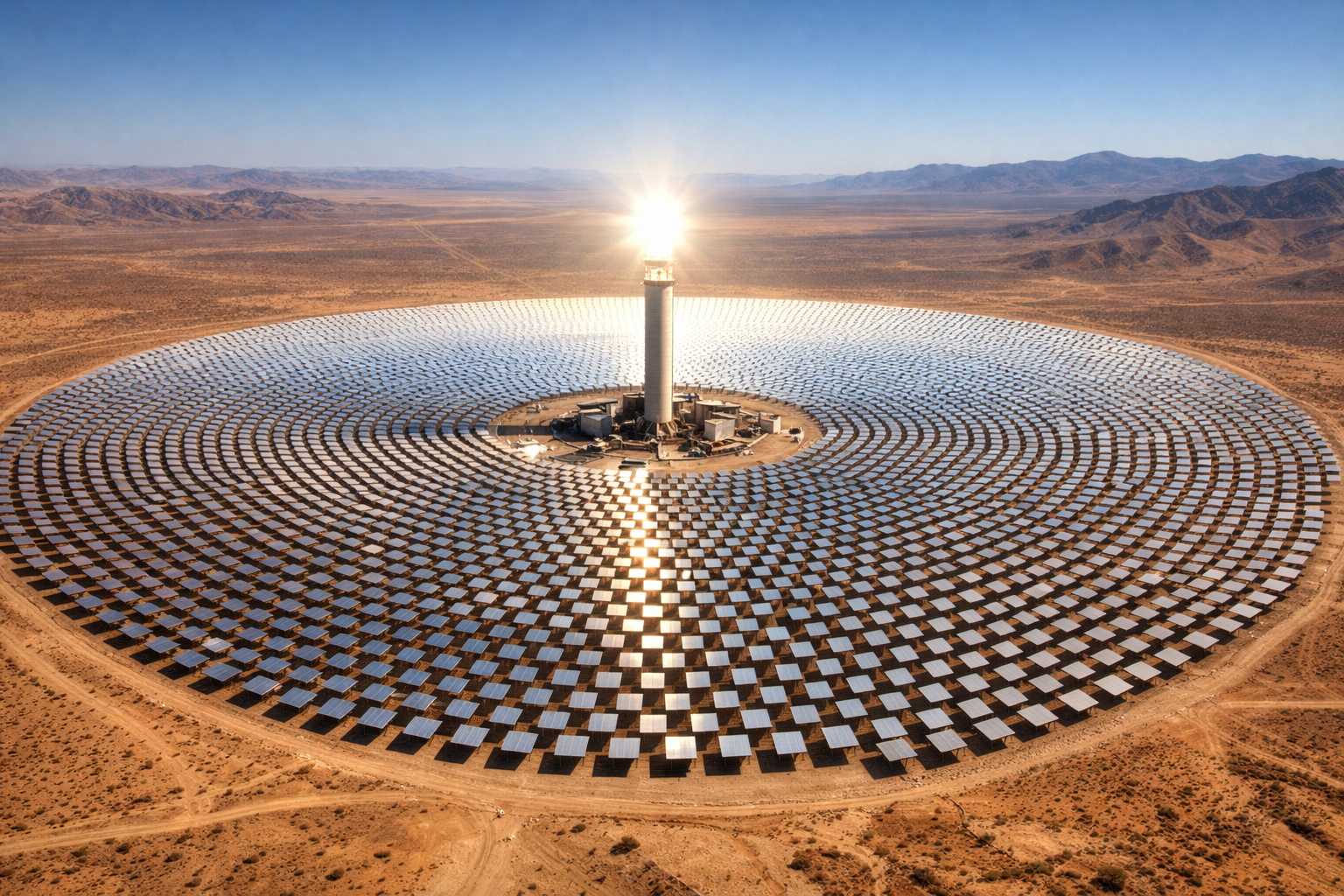
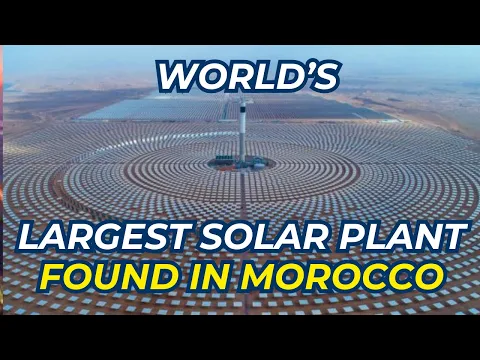
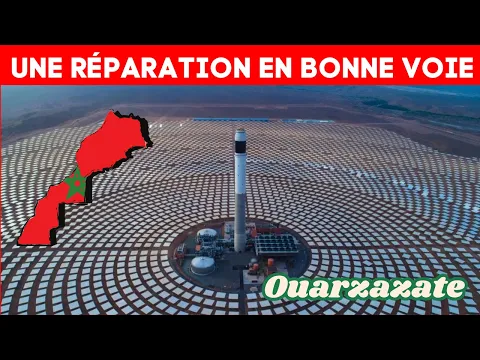
Located in the city of Ouarzazate, about 200 kilometers from Marrakech, at the entrance of the Sahara desert, the Noor Ouarzazate plant is today one of the largest solar complexes in the world.
-
Giant Robots Build Entire Neighborhood of 100 3D-Printed Homes in the U.S., Showcasing Technology’s Impact on Construction Industry

-
Helsinki Residents Receive Water That Travels 120 Kilometers Through a Hidden Rock Tunnel from a Lake Before Treatment

-
Brazil’s Sertão Region Nears Completion of Latin America’s Longest Artificial River, Transforming Water Access in Drought-Prone Ceará
-
Pre-mixed stabilized mortar set to revolutionize construction in 2026: extends usability to 36 or 72 hours, boosts productivity, and minimizes waste in building projects.



Built on a plateau surrounded by the Atlas Mountains, the structure occupies about 500 hectares (approximately 1,200 acres) and has the capacity to supply more than 1 million homes.
Unlike traditional solar plants, Noor uses concentrated solar power technology. There are about 2 million giant mirrors that reflect sunlight to a receiver located at the top of a 247-meter tall tower.
In this process, the generated heat reaches an impressive 600°C, melting special salts that store thermal energy. This allows electricity to be generated even after sunset — an important advancement compared to conventional systems.

High energy costs and dependence on fossil fuels still dominate
Despite all this innovation, the direct impact on the lives of the population is still limited. In Ouarzazate, for example, many residents continue to depend on butane gas, not solar energy.
Moreover, electricity remains expensive. On average, Moroccan families spend about US$110 per month, within an average income of approximately US$550 monthly — a significant burden, especially in a hot country where temperatures easily exceed 40°C in the summer.
“`htmlThis scenario is directly linked to a structural problem: the country still heavily depends on fossil fuels. According to experts, about 48% of greenhouse gas emissions related to energy come from coal, oil, and gas-based generation.
Another critical point is that Morocco imports about 90% of the fossil fuels it consumes, which increases costs and makes the system vulnerable to fluctuations in the international market.
Limited power grid hinders the advancement of renewable energies
In addition to external dependence, another significant obstacle lies in the infrastructure. Although the country already has installed capacity to generate up to 46% of its electricity from renewable sources, in practice, this number is much lower.
This happens because the power grid still cannot fully integrate the energy produced by projects like Noor. In other words, even with high production, part of the clean energy does not reach daily consumption.
Thus, experts point out that the country needs to invest not only in generation but also in:
- expansion of the power grid
- energy storage systems
- modernization of distribution
Without this, the advancement of renewable energies remains limited.
Ambitious goals place Morocco among leaders in energy transition
Still, the country continues with bold plans. Morocco aims to generate:
- 52% of electricity from renewable sources by 2030
- 70% of clean energy capacity by 2050
Additionally, there is a commitment to completely eliminate the use of coal by 2040.
Currently, the Noor complex is just one piece of a larger plan, which includes about two dozen solar, wind, and hydro megaprojects already built, along with dozens in development.
Criticism: cost, environmental impact, and little local inclusion
On the other hand, the model also faces criticism. Researchers and organizations point out that megaprojects like Noor may not be the most efficient solution for all contexts.
Among the main concerns are:
- high water consumption to clean the mirrors “`
- use of land that was previously utilized by local farmers
- little participation from communities in the process
- limited benefits for local residents
Additionally, there are reports from residents claiming that the heat generated by solar concentration may have impacted the local temperature.
Another point raised is that decentralized solutions — such as solar panels on the roofs of houses, businesses, and farms — could yield faster and more accessible results.
A global experiment that exposes real challenges of clean energy
In this context, the Noor complex represents something greater than a power plant: it has become a true global experiment.
On one hand, it proves that it is possible to generate clean energy on a large scale even in extreme regions. On the other hand, it reveals that the energy transition involves challenges that are much deeper than just building large projects.
Therefore, the case of Morocco shows that the future of energy depends not only on technology but also on infrastructure, planning, and social inclusion.