Portuguese
  Spanish


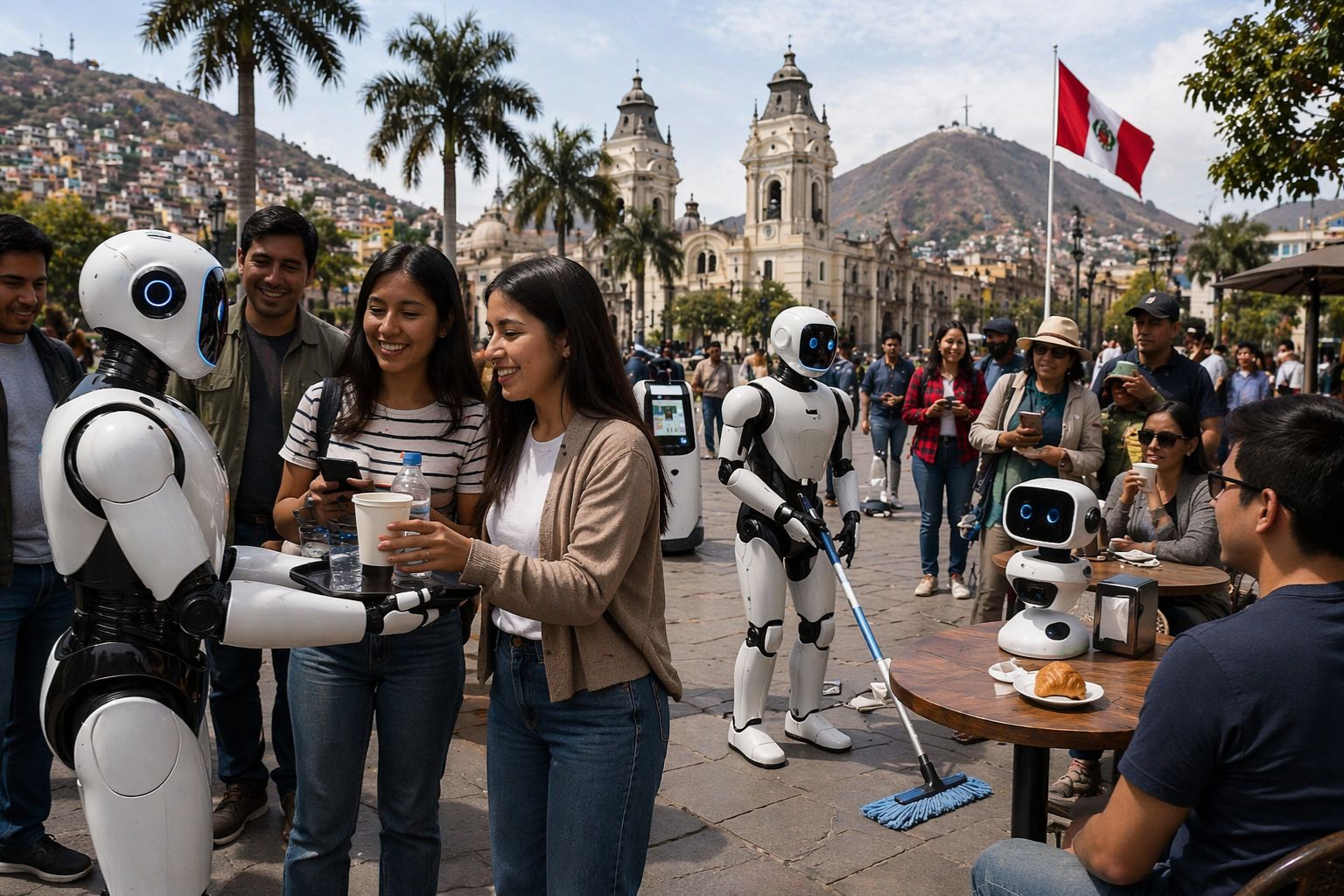

Chinese robots are already operating in Peru in areas such as entertainment, education, industry, and security. Glexo, the first robotics company in the country, has an office in Shenzhen and a Peruvian technical team that adapts Chinese technology to the local market. The robots cost between US$ 4 thousand and US$ 150 thousand and include humanoids that dance, speak, and quadrupedal robotic dogs for risk areas.
Chinese robots are becoming part of everyday life in Peru in a way that no one predicted a few years ago. Glexo, the first robotics company in the country, imports cutting-edge technology from Shenzhen, China, and adapts it to the Peruvian market with an entirely local technical team. The Chinese robots arriving in Peru include humanoids like the Glex One, which dances, walks, and speaks, and the Expertis, described as the company’s most intelligent humanoid robot, as well as quadrupedal robotic dogs designed to enter places where humans cannot access. Prices range from US$ 4 thousand to US$ 150 thousand, and so far the company is working with rentals for entertainment and technology exhibitions, but the demand for practical applications is growing.
What started as curiosity has turned into necessity. Robotics in Peru is advancing rapidly, and the public acceptance that was once marked by fear is transforming into fascination, according to the operators of Glexo themselves. “We work to democratize technology and make it accessible,” said the Expertis robot in a demonstration for CGTN, summarizing in programmed language what its human creators are trying to do in practice: to take Chinese robots beyond technology fairs and integrate them into the real functioning of industries, schools, and emergency services in Peru.
Who are the Chinese robots that are already operating in Peru

Glexo has brought to Peru a diverse line of Chinese robots that serve different functions. The Glex One is a humanoid robot that dances, walks, and talks, designed to create an emotional connection with the audience and demonstrate that robotics is not only functional but can also be engaging. On the streets of Lima, the Glex One has attracted attention for performing dance steps that resonate with Peruvian culture, an intentional strategy to reduce the initial resistance many people feel towards humanoid machines.
-
She spent 73 years breathing inside an iron lung, survived the aftereffects of polio, and became the last woman in the United States dependent on the equipment before dying at 78 years old.

-
Brazilian students created a $1 filter using pine bark, cotton, and 3D-printed parts to clean cassava wastewater, reduce the toxicity of a hazardous waste, and transform contaminated water into biofertilizer.

-
Astronaut from Artemis II steps down after mission to the Moon and decision surprises after a record of 406,771 km, a historic 10-day journey, and an unprecedented achievement for Canada.

-
A fossil kept for years in a small museum in Montreal concealed 450-million-year-old soft tissue, a discovery that has only happened once before in history.


The Expertis is the most advanced model. Presented as the most intelligent humanoid robot from Glexo, it is capable of maintaining contextual conversations, answering questions, and interacting with audiences autonomously. In addition to humanoids, the company operates quadruped robotic dogs, which go far beyond mimicking a pet: these Chinese robots are designed to access dangerous or inaccessible locations for humans, becoming useful in industry, security, and natural disaster response, a field particularly relevant for Peru, a country frequently hit by earthquakes and landslides.
How Glexo connects Chinese technology to the Peruvian market

Glexo is the first robotics company in Peru and operates with a model that combines Chinese technology with local knowledge. The company maintains an office in Shenzhen, China, which serves as a technical and logistical center, from where it imports Chinese components and robots that are adapted to the needs of the Peruvian market. The difference is that the entire team of robotics specialists at Glexo is Peruvian, forming a new generation of professionals who master Chinese technology and apply it in a Latin American context.
This operational model is strategic. Instead of relying entirely on Chinese technicians for maintenance and customization, Glexo invests in training Peruvians who can operate, program, and adapt Chinese robots without needing constant international support. The company is incorporating cutting-edge technology into local manufacturing projects and processes, creating a robotics ecosystem that can become self-sufficient as the Peruvian market grows and demands more practical applications.
From entertainment to tool: how Chinese robots are changing roles in Peru
So far, most of Glexo’s revenue comes from renting Chinese robots for entertainment and technology exhibitions. Companies hire humanoid robots for corporate events, fairs, and public demonstrations, where the ability to dance, speak, and interact with the audience creates a visual and media impact that justifies the investment. It is a functional business model, but it represents only the surface of the potential that Chinese robots offer.
The transition to industrial and security applications has already begun. Quadruped robotic dogs demonstrate that companies are starting to use machines with artificial intelligence to enter spaces where humans cannot access, from inspections in mines to recognizing areas affected by natural disasters. For a country like Peru, where mining is one of the main economic sectors and where earthquakes occur with concerning frequency, Chinese robots capable of operating in hostile environments represent more than innovation: they represent safety.
What has changed in the perception of Peruvians about Chinese robots
The reaction of the Peruvian public to Chinese robots has undergone a transformation that Glexo operators have closely monitored. The initial fear that many people felt towards humanoid machines is fading as the population better understands how robots work and realizes that they are tools designed to help, not to indiscriminately replace human labor. Constant exposure at public events and media coverage have contributed to this change in perception.
The dance has surprisingly been one of the most effective factors in this transformation. When a humanoid robot performs steps that people recognize, the emotional barrier between machine and human drastically reduces, and what was strange becomes familiar. “In Peru, if you want to make an impact, it’s good to know some dance steps,” summarizes the CGTN report, encapsulating a cultural reality that Glexo has been able to explore: in a country where dance is an identity expression, dancing Chinese robots are more accepted than Chinese robots that only work.
What the arrival of Chinese robots in Peru means for Latin America
Glexo’s operation in Peru is a case study for all of Latin America. If Chinese robots can integrate into the daily life of a country with an emerging economy and limited technological infrastructure, the same model can be replicated in Colombia, Ecuador, Bolivia, and other countries in the region that face similar challenges in mining, security, education, and response to natural disasters.
The trend is irreversible. As the market grows and public acceptance increases, Chinese robots will cease to be a novelty and become common tools in Peru, just as smartphones and transportation apps made the same transition in a few years. The difference is that this time, the transformation does not come from an app on a cell phone screen, but from a machine that dances, speaks, and enters places where you cannot go. And when a $4,000 Chinese robot solves a problem that would cost millions in human labor, curiosity is no longer curiosity. It is necessity.
Chinese robots are already operating in Peru in entertainment, industry, and security. Do you think Brazil should adopt Chinese robots as well? Would you feel fear or fascination? Leave your opinion in the comments.