






 Portuguese
  Spanish


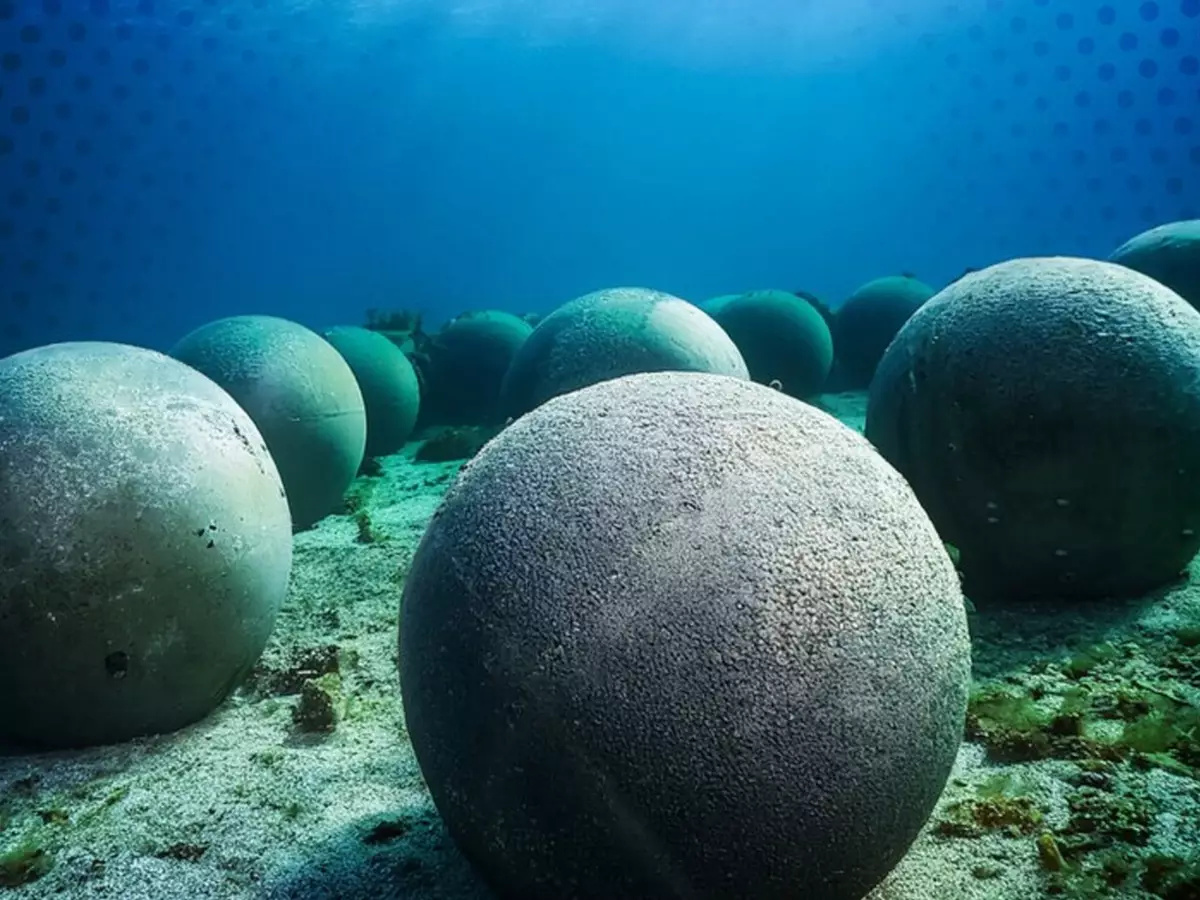


An Experiment on the Coast of the United States Tests a Floating Spherical Device That Seeks to Transform Wave Motion Into Electricity, Reigniting the Debate About the Potential of Ocean Energy and the Technical Challenges to Make It Viable at Scale.
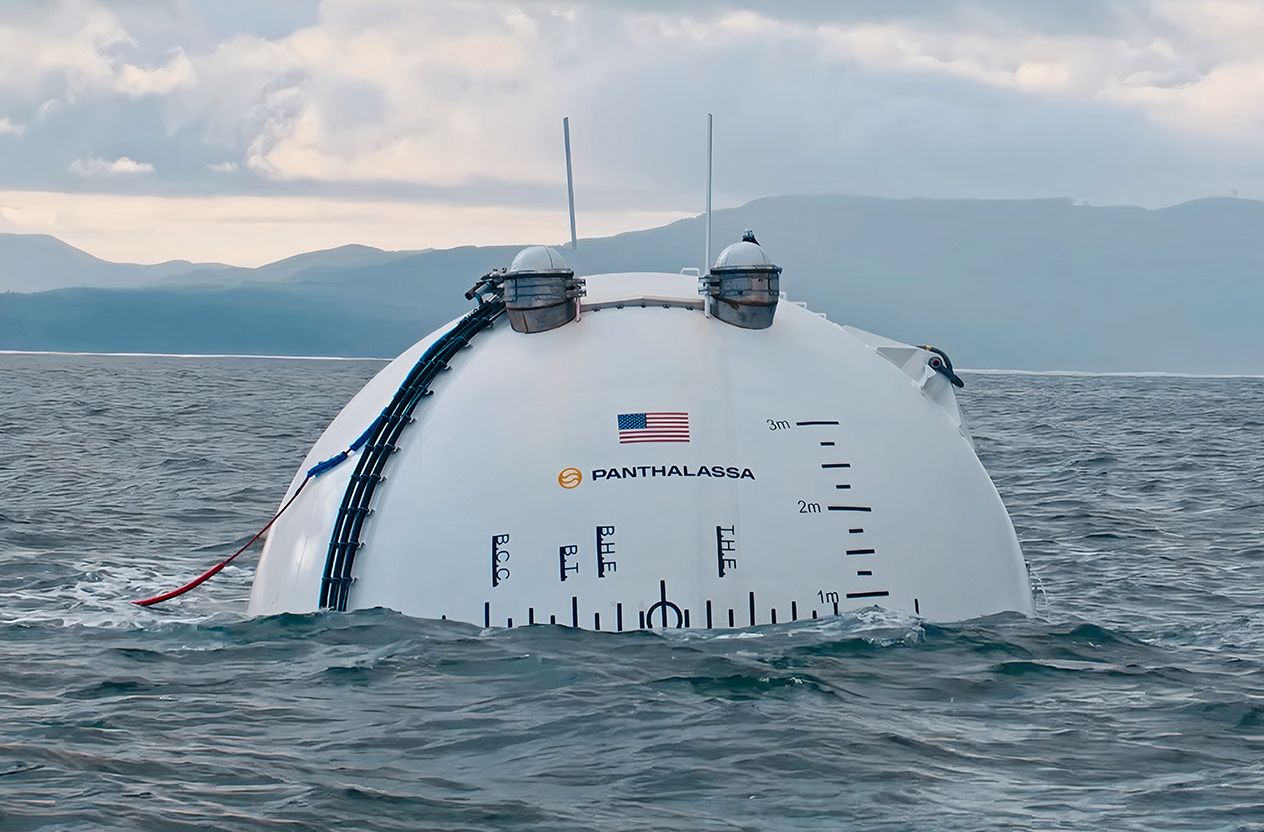
A prototype in the shape of a sphere, with dimensions similar to those of a small building, was recently tested on the coast of Washington State, United States, as part of a project that seeks to transform the motion of ocean waves into electricity.
According to the Opnei Primre website, the device, called Ocean-2, was developed by the Portland-based startup Panthalassa, and has undergone a testing phase in Puget Sound and areas near the Strait of Juan de Fuca.
The initiative is part of a broader context of research aimed at diversifying renewable energy sources.
-
Brazilian scientists are simultaneously advancing two research projects on clean hydrogen and driving solutions that could transform the energy matrix, enhance industrial competitiveness, and accelerate large-scale emission reduction targets.

-
Advancement in renewable energy: A R$ 150 million project launched by Petrobras and Finep aims to create state-of-the-art electrolyzers for green hydrogen, strengthening national research and preparing Brazil to compete in a billion-dollar energy market.
-
Illiterate or semi-literate grandmothers were trained to repair solar systems, open rural workshops, and light up homes that still depended on kerosene.
-
The world has bet on green hydrogen as the fuel of the future, but now faces the side effect: producing 1 kilogram requires about 9 liters of ultrapure water, and the largest projects on the planet are precisely in the driest regions of the Earth, where water is already scarce for people.




Unlike previous wave energy projects that relied on rigid structures and faced difficulties operating for long periods in the marine environment, the Ocean-2 was designed to follow the natural movement of the ocean during operation.
Instead of resisting the force of the waves, the device floats and uses the vertical displacement of water as the basis for energy generation.
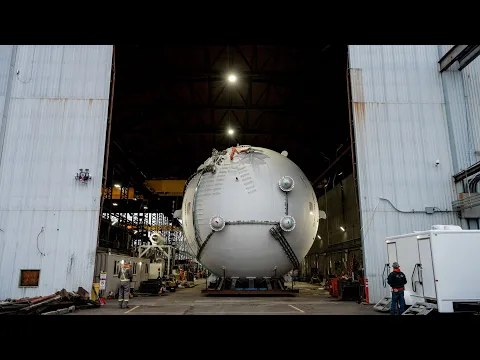

According to the developers, this approach aims to reduce mechanical wear and extend the equipment’s lifespan, one of the main historical challenges of this type of technology. See how it works in the video below:
How the Spherical Device Tested at Sea Works
The Ocean-2 consists of a spherical upper section, approximately 10 meters in diameter, connected to an elongated tubular structure.
During the tests, the equipment was seen alternating positions: it remains lying down when being transported or turned off and takes a vertical position when entering operation in the sea.
In an interview with a local broadcaster, Panthalassa’s co-founder, Garth Sheldon-Coulson, stated that the testing period aimed to evaluate not only electricity generation but also auxiliary systems such as satellite communication and remote monitoring, necessary for continuous operation in an ocean environment.
According to the report, the prototype remained at sea for approximately three weeks before returning to Portland for technical adjustments.
The company describes the project as an attempt to explore the ocean as a renewable energy source, highlighting the potential of the resource for large-scale energy applications.
The information released so far indicates that the Ocean-2 is still in experimental phase, without commercial operation.
Wave Energy and the Historical Barriers to the Technology
Wave energy, obtained from the motion of the waves, is identified by researchers in the field as a renewable source with relevant potential, especially in coastal areas where maritime activity is constant.
Despite this, the commercial development of this technology has advanced more slowly than other renewable sources, such as solar and wind.
Among the factors cited by experts are high installation costs, the difficulty of maintenance in open sea, and damage caused by storms, corrosion, and mechanical impacts.
These obstacles have led to the abandonment of various projects over the last few decades, even in countries with extensive coastlines.
In this context, initiatives like Ocean-2 seek to address these barriers with new engineering solutions.
The use of composite materials and flexible hydraulic systems is presented by the company as an alternative to improve the adaptation of the equipment to sea conditions.
What Initial Tests Indicate So Far
So far, there has been no public disclosure of independent technical reports that fully detail the performance of the Ocean-2 in the open sea.
Information gathered in institutional materials and public records on wave energy projects indicates that during tests in Puget Sound, the prototype reportedly achieved generation peaks of up to 50 kilowatts in favorable conditions.
This type of data is used in the sector as an initial indication of functioning but does not, by itself, allow for an assessment of the economic viability or reliability of the system in the long term.
Experts often emphasize that factors such as generation reliability, resistance to extreme events, and maintenance costs are crucial for the commercial adoption of the technology.
The co-founder of Panthalassa also stated in the same interview that the project took into account environmental concerns, including the risk of interference with marine life.
According to him, the design of the equipment sought to minimize the possibility of animals becoming trapped in the structure, although broader environmental studies depend on specific analyses and local regulatory requirements.
What the Energy Generated in the Ocean Can Be Used For
One of the most direct applications of wave energy is the provision of renewable electricity for coastal regions, provided there is adequate infrastructure for connection with electrical grids on land.
Additionally, the project is also cited by the company as potentially complementary to other renewable sources, such as solar and wind.
Another possibility mentioned by Sheldon-Coulson involves using the captured energy for fuel production in the ocean itself.
According to him, in a previous prototype called Ocean-1, the team was able to produce hydrogen on board through the separation of water, a process known as electrolysis.
This type of application is discussed in the sector as an alternative for transporting energy generated far from shore, although it still faces technical and economic challenges.
For now, the Ocean-2 remains classified as a prototype in the testing phase.
The company reported that, after adjustments from the initial phase, it is working on the development of a new version called Ocean-3, which is expected to undergo new testing in approximately one year, according to the disclosed timeline.
A Sector in Development and Without a Dominant Model
Energy generation from the sea encompasses different technological approaches and still does not present a consolidated standard.
The variety of projects being tested reflects a sector under construction, where companies and research centers seek solutions capable of operating stably in adverse conditions.
In the case of Ocean-2, attention has also turned to the equipment due to its unusual appearance and the testing location.
The scenario has sparked curiosity among residents and social media users observing a large floating structure in well-known areas along the coast of Washington.
From this curiosity, local reports identified the object as part of a renewable energy experiment.
The continuation of the project will depend on conducting new testing campaigns, with more detailed data on performance, costs, and environmental impacts.







Insistiré que hemos desaprovechado el agua del mar y los océanos, Lo que están haciendo en USA con esto, es una positiva demostración del aprovechamiento del mar, sus olas son energía
¿Porque creáis “fotos” con IA, de cualquier cosa?,
Estáis consiguiendo que los lectores no confíen, en absoluto, en este tipo de artículos.
Otra treta. Como la “energía eólica” ???! Tal vez espionaje. A los gringos ni los buenos dias, si no te asomas a la ventana.