Portuguese
  Spanish


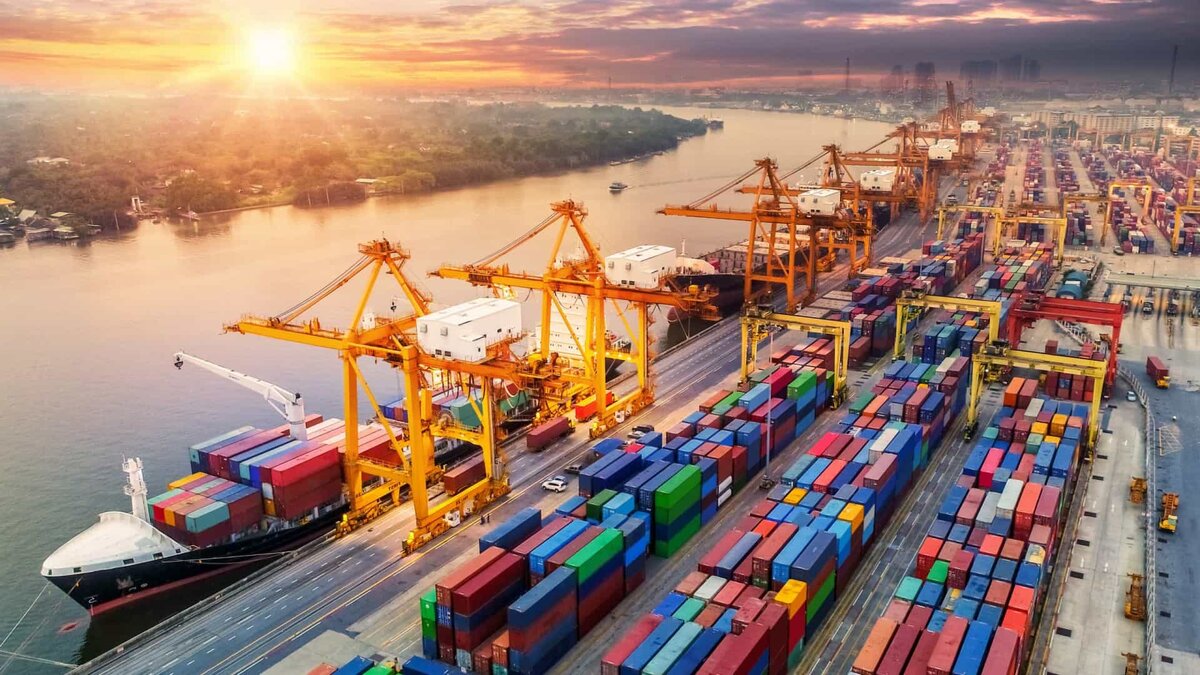

The Organization ABTP Now Questions The TCU About The Possible Participation Of Shipping Companies Such As Maersk And MSC In The Privatization Auction Of Brazilian Ports And The Negative Impacts That A Possible Acquisition May Cause To The National Market.
With a scenario of privatization of national ports becoming increasingly imminent this Tuesday (21/06), the major current discussion in the port sector is the possible participation of shipping companies, such as Maersk and MSC, in the privatization auction of the national complexes. This debate was initiated by ABTP (Brazilian Association of Port Terminals), which brought its defense of its positions to the TCU (Federal Court of Accounts) and the Ministry of Infrastructure and is now seeking to prevent this participation.
TCU And The Ministry Of Infrastructure Are Questioned About The Impacts Of The Participation Of Shipping Companies In The Privatization Auction Of National Ports By ABTP
After the concession of Companhia Docas do Espírito Santo, Codesa, the Ministry of Infrastructure is preparing, along with the National Agency of Waterway Transport (Antaq), to continue the privatization of Brazilian ports over the coming years.
With the privatization model already planned by the ministry and the preparations for the concession auction, the agencies in the port sector are beginning to question the irregularities in the process.
-
They exchanged the idea of a large house for a 35 m² warehouse, spent US$ 12,000 on the structure, and created a tiny house in Colorado with space to live and work.

-
While modern cities rely on pumps and electricity, in Iran, ancient tunnels carried water through the desert using only slope and gravity.
-
Instead of sending families far from the city, a project in Chile intentionally created incomplete houses on expensive urban land and left technical space for each to grow.
-
General Motors Replaces Over a Thousand Workers with 50 Cobots at Electric Vehicle Plant, UAW Union Criticizes Move Amid Industry’s Automation Push


Among them, ABTP has now raised a significant and important issue that may be caused by the participation of shipping companies in the auction, the concentration of cargo handling operations in the hands of large companies such as Maersk and MSC.
Thus, the association took its question to the TCU and the Ministry of Infrastructure, seeking measures so that these companies cannot have the opportunity to acquire Brazilian ports during the privatization auction of the complexes.
Maersk is a Danish business conglomerate and has activities across a wide variety of business sectors, mainly in transportation and energy, in addition to a focus on maritime transport. MSC is a company based in Switzerland that operates in the cruise ship sector and in the cargo transport segment.
Both companies are giants in the international port sector and have sufficient resources to acquire Brazilian ports in the privatization process, but ABTP warns of a possible concentration of operations in the hands of industry giants.
Participation Of Shipping Companies In The Privatization Auction Of Brazilian Ports May Impact The Competitiveness Of The National Port Sector, Says ABTP
Among the issues that may be caused by the participation of shipping companies in the auction of Brazilian ports, ABTP’s CEO, Jesualdo Silva, highlights: “The indiscriminate and unregulated participation of economic groups operating in container maritime transport, the so-called shipowners, in the bidding processes may, in the medium and long term, lead to increased freight rates, reduce the routes for moving Brazilian cargo, and cause an increase in the cost of other links in the logistics chain due to anti-competitive practices.”
Thus, there could be a market concentration in the hands of these large shipping companies, which already have a strong presence in the national territory and could further concentrate operations around their interests.
As such, the movement of cargo could be directed directly to the terminals of these companies, thus decreasing competitiveness in the Brazilian port sector and contributing to a monopolization of goods transport in the country.
Furthermore, for Jesualdo Silva, the so-called “self-preferencing,” the preference for their own terminals, may lead to cargo being shipped to ports further away from the production site, among other imbalances in the country’s port sector, contributing to a retraction of the strong economic expansion that has been occurring in Brazil.