Portuguese
  Spanish


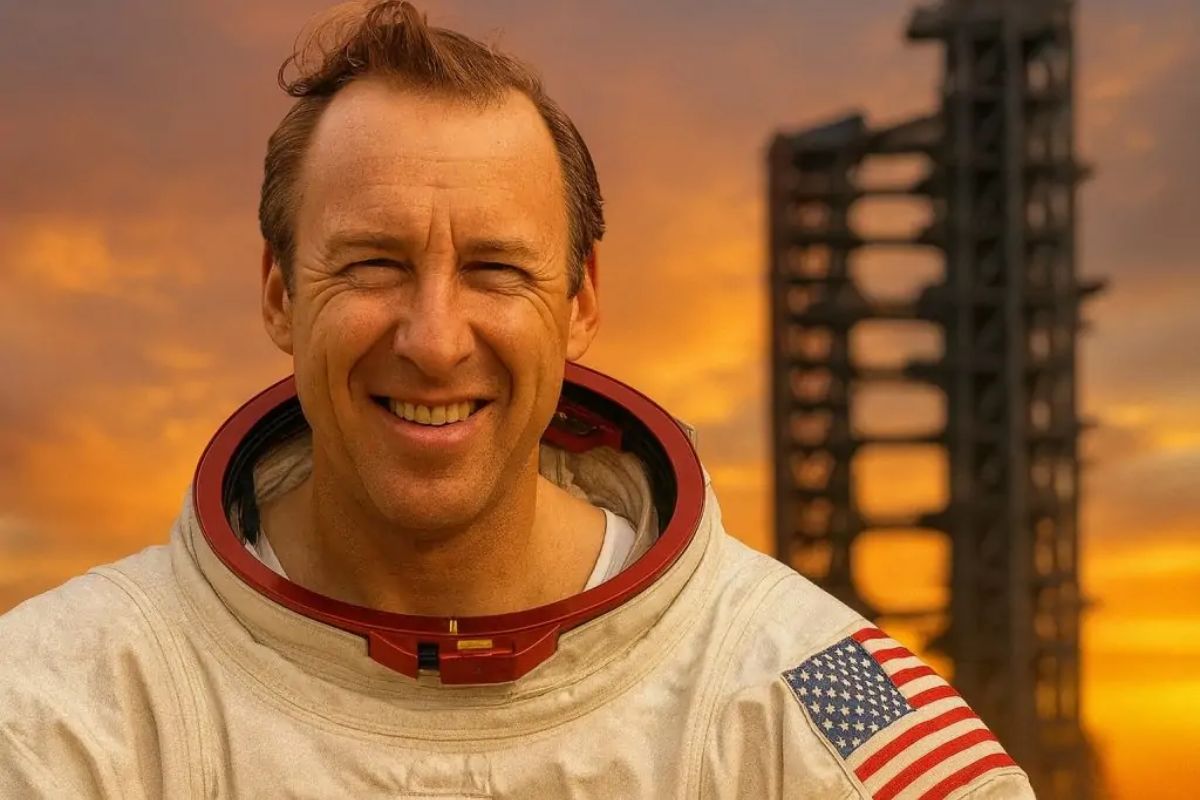

Astronaut Became Known for Leading the Mission That Survived a Major Failure in Space and Returned Safely to Earth
The legendary astronaut Jim Lovell, commander of the Apollo 13 mission, passed away at the age of 97 in Lake Forest, Illinois, NASA reported on Thursday (8). Recognized for his decisive action during one of the most critical operations in the history of space exploration, Lovell turned a potential disaster into an example of resilience and teamwork.
The Apollo 13 mission, launched in 1970, was supposed to be the third to land on the Moon. However, an explosion in an oxygen tank forced the crew to abandon the objective and fight for their own survival. Under Lovell’s leadership, the safe return to Earth entered the history books as one of NASA’s greatest victories in the face of a crisis.
The Mission That Almost Ended in Tragedy
On the third day of the Apollo 13 flight, a explosion in the service module compromised vital systems of power, oxygen, and water. Pilot Jack Swigert reported the incident to the Houston control center with the famous phrase: “Okay, Houston, we’ve had a problem here”. Lovell then confirmed that it was a serious loss of oxygen.
-
Danish Resident Discovers Six Viking Gold Bracelets Weighing 762.5 Grams, Third Largest Gold Treasure in Denmark

-
Over 200 Cities in Southern Brazil on Storm Alert as Cyclone Near Uruguay Brings Heavy Rain, Hail, and Winds Up to 100 km/h

-
Archaeologists Discover 2,300-Year-Old Beer in Sealed Bronze Vessel from Ancient Chinese Tomb
-
35,000-Year-Old Saber-Toothed Tiger Cub Found Intact in Siberian Permafrost, Whiskers, Claws, and Skin Preserved Since the Ice Age




With the lunar landing ruled out, the crew consisting of Lovell, Swigert, and Fred Haise was transferred to the lunar module Aquarius, used as a survival capsule. For days, they faced intense cold, water rationing, and the need to manually correct the spacecraft’s trajectory to ensure re-entry into the Earth’s atmosphere.
The Safe Return and the Impact on NASA
On April 17, 1970, after completing a full orbit around the Moon, Apollo 13 landed in the Pacific Ocean. Although it did not achieve its initial goal, the mission became a case study in crisis management, proving the team’s adaptability and the importance of astronaut training.
Lovell was already a veteran before Apollo 13, having participated in the Gemini 7, Gemini 12, and Apollo 8 missions, the latter being the first to orbit the Moon. He also served as backup commander for Apollo 11, which took Neil Armstrong to the lunar surface.
The Legacy of Jim Lovell
More than a hero of space exploration, Lovell became a symbol of leadership under pressure. His story was immortalized in the film “Apollo 13” (1995), starring Tom Hanks, which helped popularize the famous phrase “Houston, we had a problem.”
Throughout his career, he received numerous honors and contributed to inspiring generations of scientists, engineers, and astronomy enthusiasts. NASA itself stated that his “unwavering courage and ability to lead were crucial in transforming a crisis into a triumph.”
And you, do you believe that Apollo 13 was the greatest example of overcoming adversity in NASA’s history? Or did other missions face equally grand challenges? Leave your opinion in the comments.