Portuguese
  Spanish


The Spanish mountaineer Carlos Soria, aged 86, reached the summit of Manaslu (8,163 m) in Nepal, making history as the oldest person to climb an 8,000-meter mountain. The record came 50 years after he missed the summit in the 1975 Spanish expedition.
An 86-year-old man has just redefined what is possible in high-altitude mountaineering. On September 26, 2025, the Spaniard Carlos Soria reached the top of Manaslu in Nepal, becoming the oldest person in history to reach the summit of an 8,000-meter mountain. The feat was reported by the specialized website Explorersweb.
The number that defines the record is age. At 86, Soria surpassed the previous mark held by the Japanese Yuichiro Miura, who had climbed Everest at 81 in 2013. The achievement on Manaslu rewrote the age limit for one of the most extreme activities that exist.
The mountain also holds special significance for him. It was on Manaslu that, in 1975, the mountaineer participated in the first Spanish expedition to reach the summit of an 8,000, but on that occasion, he was not part of the group that reached the top. Half a century later, he returned to the same giant to write his name in history.
-
World’s Fastest Tractor, the JCB Fastrac Two, Hits Nearly 247.5 km/h with Over 1,000 Horsepower

-
Brazil Secures Spot in International Mathematical Olympiad as Students Excel in One of the World’s Most Competitive Selections, Highlighting Growth in STEM Education Among Young Talents
-
June 2026 Heatwave in France Depletes “Blanc de Meudon” as Residents Use Chalk Powder to Cool Homes by 3 to 7°C Without Air Conditioning

-
Frustrated by delays, Brazilian entrepreneur builds toll road in 3 days to avoid 23 km detour.




Carlos Soria’s record on Manaslu
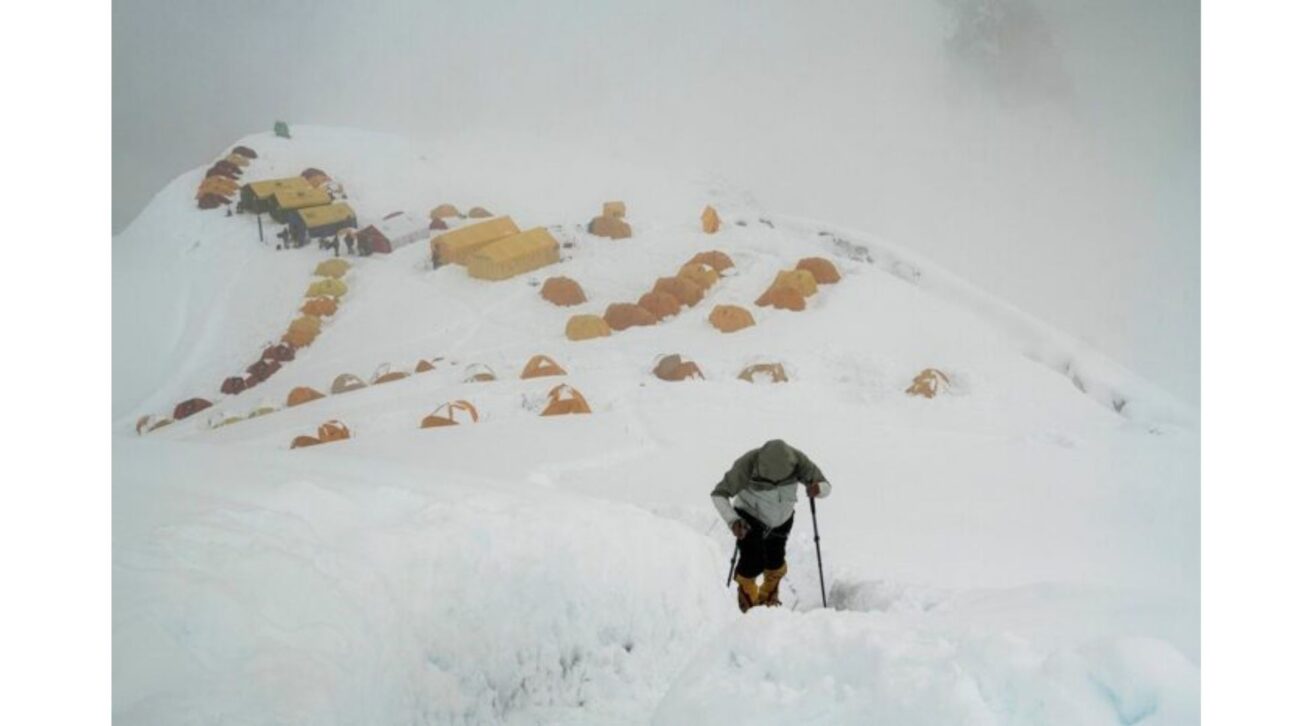
The achievement took place at the end of September 2025. According to Explorersweb, the group departed from Camp 3 and reached the summit of Manaslu around 5:30 in the morning, with Carlos Soria entering the books as the oldest person to step on the top of an 8,000-meter mountain. Manaslu, at 8,163 meters, is the eighth highest mountain on the planet.
The previous record had historical weight. It belonged to the Japanese Yuichiro Miura, who had reached the summit of Everest at 81 in 2013, a mark recognized as the oldest person to climb an 8,000. By reaching the top at 86, Soria pushed this limit five years further, something impressive in a range where each year takes a huge toll on the body.
An important clarification is needed to understand the feat. This was not the first time Carlos Soria reached the summit of Manaslu: he had already climbed the mountain in 2010, at the age of 71, and at that time without using supplemental oxygen. Therefore, what changed in 2025 was not reaching the peak, but doing so at the oldest age ever recorded.
For the sport, the mark has reference value. Age records in 8,000-meter mountaineering are rare and difficult to beat because few people reach this altitude and even fewer at this stage of life. Soria’s name now becomes the benchmark that future older mountaineers will try to surpass.
The Return to Manaslu, 50 Years After 1975
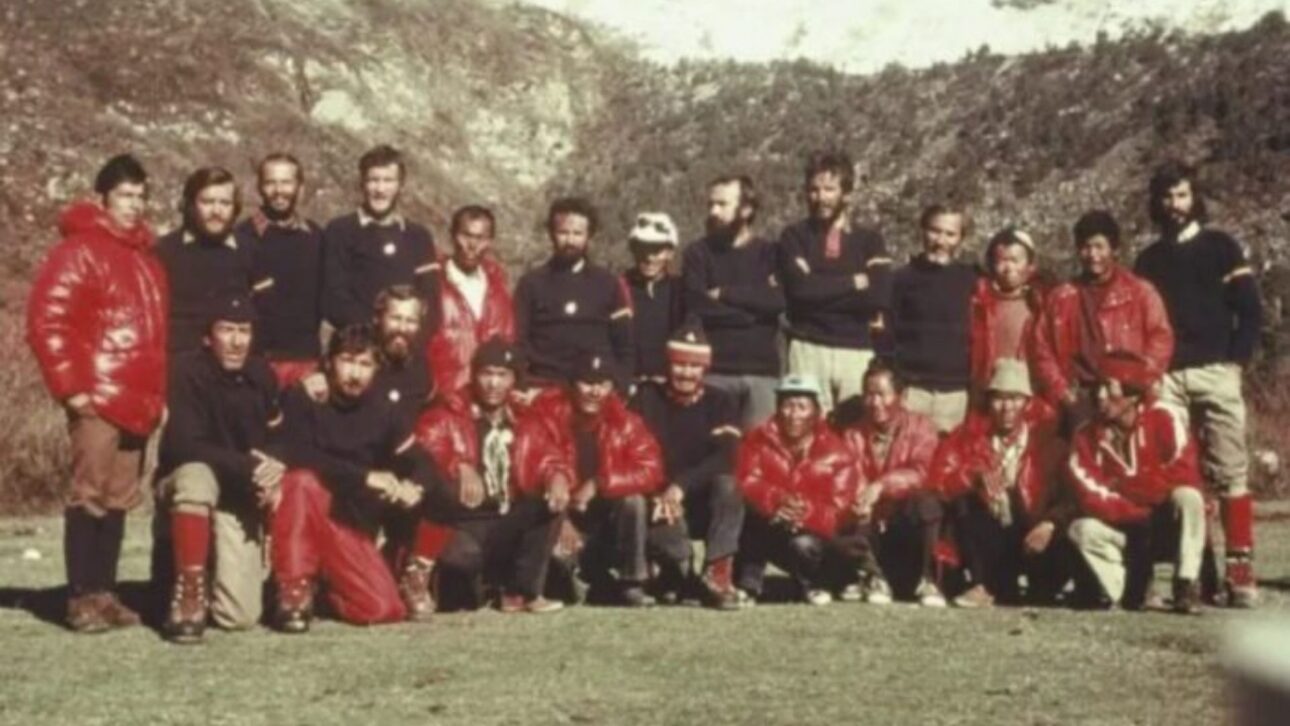
Soria’s story with Manaslu began half a century ago. In 1975, he was part of the first Spanish expedition to put someone on the summit of an 8,000-meter mountain, precisely Manaslu. However, in that historic expedition, Carlos Soria was not part of the group that reached the top, missing out on the summit.
The 2025 climb was conceived as a celebration. According to Explorersweb, the expedition marked the 50th anniversary of that pioneering achievement in Spanish mountaineering, and Soria’s return to Manaslu had the symbolism of closing a cycle that began in 1975. Returning to the same mountain five decades later would already be remarkable in itself.
However, it is necessary to separate the symbolic from the factual. The 50-year hook refers to the anniversary of the 1975 expedition, not to the idea that the mountaineer would finally have conquered a summit that eluded him his entire life, as he climbed Manaslu in 2010. What connects the two ends is his long and affectionate relationship with this mountain in Nepal.
This bond helps explain the motivation. For a mountaineer who dedicated his life to the world’s highest mountains, returning to the stage of a landmark in Spanish history, moreover to break a world record, is a perfect closure. The mountain that once left him out became the place of his greatest achievement.
Who is Carlos Soria, the Record-Breaking Mountaineer
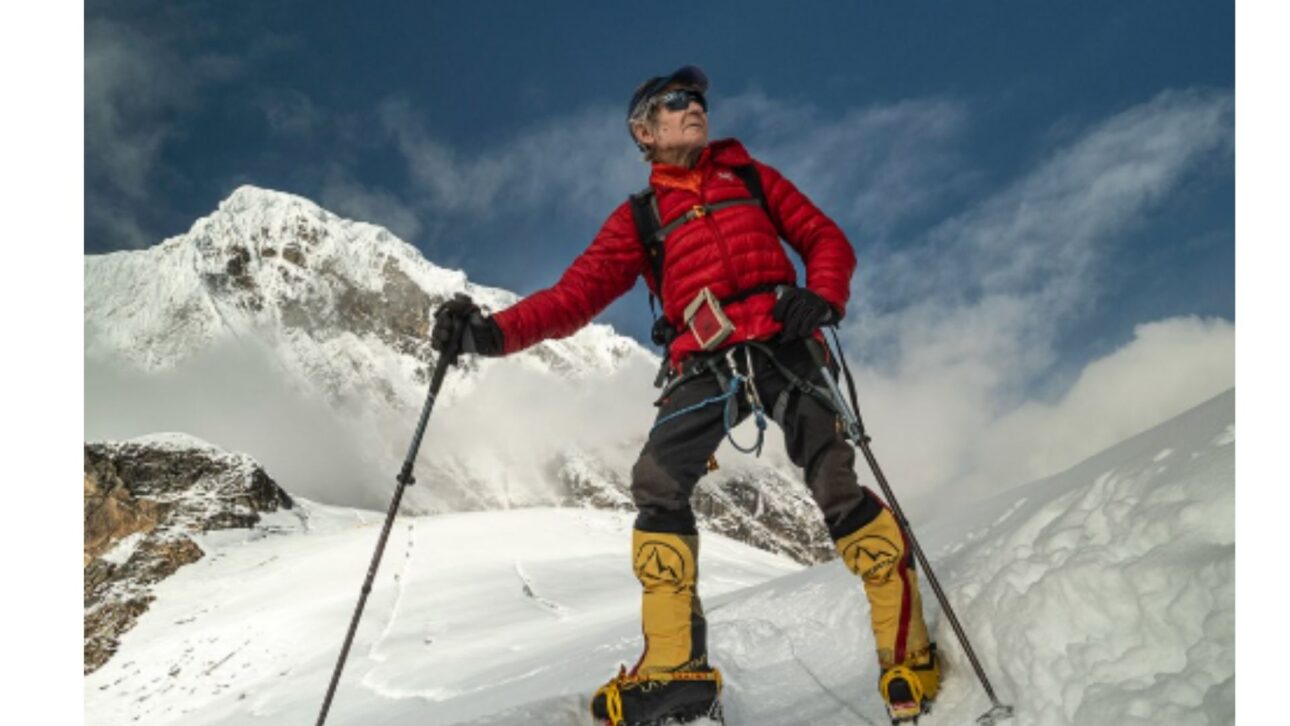
Carlos Soria is not a newcomer to altitude feats. Born in 1939, in Spain, he built one of the most impressive careers in global mountaineering, with the peculiarity of having done most of his major climbs after the age of 60. It is a unique case of longevity in the sport.
His relationship with the 8,000-meter mountains began relatively late. Carlos Soria climbed his first 8,000, the Nanga Parbat, at 51 years old, and from there he never stopped. Determined to climb all 14 peaks over 8,000 meters on the planet, he turned each expedition into a new chance to break age limits.
The numbers of his career are impressive. Soria has reached the summit of 12 of the 14 highest mountains in the world, most of them between his 60s and early 80s. According to Explorersweb, he is the only person to climb ten 8,000-meter peaks after the age of 60, an unparalleled feat in mountaineering.
The list of age records he has broken is enormous. Carlos Soria was the oldest person to reach the summit of mountains like K2 at 65, Makalu at 69, Manaslu itself at 71, Kangchenjunga at 75, and Annapurna at 77. The Manaslu at 86 is the latest chapter in this collection.
How does an 86-year-old man climb 8,000 meters?

The answer begins long before the mountain. Reaching 8,000 meters requires months of physical preparation, and Soria is known for his discipline in training. According to Explorersweb, even in his 80s he maintains a rigorous conditioning routine, treating high-altitude mountaineering as a job that depends on consistency.
The path to this record involved overcoming serious health issues. In previous years, Carlos Soria underwent knee replacement surgery and suffered a serious accident on Dhaulagiri, another 8,000-meter mountain. Instead of giving up, he dedicated himself to rehabilitation and, according to Explorersweb, did not skip a single day of training.
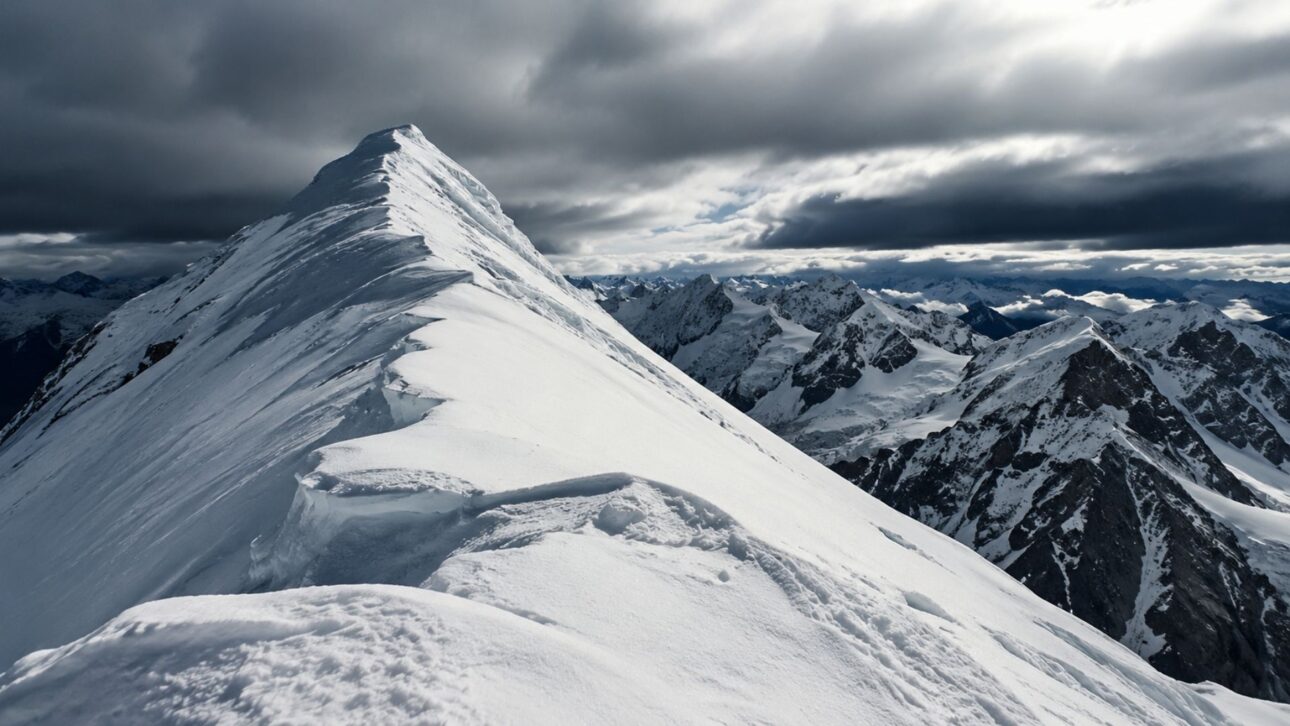
The climb itself follows a strategy of patience. Expeditions to 8,000 meters are done in stages, with the setting up of increasingly higher camps and ascents and descents that help the body get used to the lack of oxygen. This acclimatization process is what makes it possible, even at 86 years old, to withstand the extreme environment of the high altitudes of Nepal.
Teamwork is also part of the equation. Expeditions to mountains like Manaslu usually involve guides and sherpas, the experienced local mountaineers of Nepal, who help fix ropes, set up camps, and carry equipment. This support does not diminish the merit of Carlos Soria, but shows that reaching the summit of an 8,000 is almost always a collective effort, especially at 86 years old.
Even so, the human factor is decisive. Above 8,000 meters, the body wears out quickly and any detail can become a life risk, which makes Soria’s experience and mental preparation a differential. Decades of mountain experience have taught him to read the weather, pace his effort, and make decisions that keep a mountaineer alive where mistakes are unforgiving.
What are the 8,000 meters and why are they so dangerous
There are only 14 mountains this high in the entire world. All 14 are located in Asia, in the Himalayan range and the neighboring Karakoram, divided among countries like Nepal, China, Pakistan, and India. Climbing all of them is the ultimate dream for many mountaineers, and few manage to complete the list.
The altitude above 8,000 meters even has a grim nickname. Mountaineers call it the “death zone,” because there the air is so thin that the human body begins to deteriorate, even at rest. The amount of oxygen is a fraction of what exists at sea level, and staying too long in this zone can be fatal.
The dangers go far beyond the lack of air. Extreme cold, violent winds, sudden storms, avalanches, and ice crevasses make each ascent to an 8,000 a high-risk gamble. It is in this scenario that Carlos Soria‘s record gains dimension, because facing all this requires absolute preparation at any age, let alone at 86 years old.
For this reason, the Manaslu is not just any mountain. Although it is considered one of the more “accessible” 8,000-meter peaks, it has caused many deaths throughout history and remains a serious challenge even for experienced climbers. Reaching its summit continues to be a respected achievement in the world of mountaineering.
Climbing all 14, then, is the feat of a select club. The first to accomplish this was the Italian Reinhold Messner, who completed the list in 1986, and since then, few people have repeated the feat. It is in this exclusive panorama that Carlos Soria‘s quest for the 14 summits fits, pursued over more than three decades of expeditions.
The summits that Carlos Soria still lacks
Even with the record, Soria’s mission is not complete. Of the planet’s 14 8,000-meter mountains, he still lacks two to complete the collection, including Dhaulagiri, the site of the accident that took him out of action years ago. Completing the 14 remains the great goal of his career.
These remaining summits are a kind of open account. Carlos Soria has attempted these mountains more than once, without success, partly due to weather conditions and the risks involved. For a mountaineer who has already done so much, it is precisely these missing peaks that keep him returning to Nepal and the Himalayas.
Persistence is his trademark. Instead of treating failed attempts as failures, Soria tends to view them as a natural part of high-altitude mountaineering, where the mountain does not always allow the ascent. Each new expedition is a chance to try again, with the same method of meticulous preparation.
The recent record on Manaslu serves as fuel. Showing that he is still capable of reaching 8,000 meters at 86 years old reinforces the idea that, as long as there is preparation and health, it is worth continuing to try. The story of Carlos Soria remains, therefore, open, awaiting the next chapters.
Why the record matters for the sport
Soria’s mark challenges the notion of limits. For a long time, it was thought that the body simply could not withstand extreme altitudes at an advanced age, and each new record of his pushes this boundary further. The case becomes a subject of interest for doctors and sports scientists.
The phenomenon connects to a broader trend. In various sports, master athletes, in their 60s, 70s, and 80s, have been achieving results once considered impossible, thanks to advances in training, nutrition, and recovery. Carlos Soria‘s mountaineering is perhaps the most radical example of this movement.
There is also a message about preparation, not magic. What the record shows is not that age no longer matters, but that method, discipline, and proper guidance allow one to go far beyond the expected. The feat on Manaslu is the result of decades of experience combined with serious preparation.
For the public, the inspiration is based on facts. More than a beautiful phrase, Soria’s journey is a set of concrete and verifiable achievements, from K2 at 65 to Manaslu at 86. It is this real history that gives strength to his name and transforms him into a global reference in high-altitude mountaineering.
What does this have to do with Brazil
Brazil does not have 8,000-meter mountains, but it does have its Himalayan climbers. The highest point in the country, Pico da Neblina, is close to 3,000 meters, well below the giants of Nepal. Even so, Brazilian mountaineers have faced the Himalayas and taken the country’s flag to the highest altitudes in the world.
There are important milestones in this history. In 1995, Waldemar Niclevicz and Mozart Catão became the first Brazilians to reach the summit of Everest, paving the way for a generation of national climbers. Since then, other Brazilians have ventured into 8,000-meter mountains, showing that interest in high-altitude mountaineering also exists here.
The case of Carlos Soria also relates to another Brazilian theme: active aging. With a population that is living longer, the number of people practicing sports in their senior years is growing in Brazil, from running to hiking in mountains and parks. The example of the Spaniard reinforces, based on facts, that preparation and guidance can expand what is possible after 60.
Finally, there is encouragement for national mountaineering. Brazil has a growing scene of climbing and trekking, with destinations like Serra dos Órgãos, Pedra da Mina, and Pico da Neblina itself attracting adventurers. Stories like the record on Manaslu help popularize the sport and inspire those who dream of one day facing their own mountains.
And you, would you take on such a challenge?
The feat of Carlos Soria shows the power of preparation and persistence. At 86 years old, the Spanish mountaineer reached the summit of Manaslu in Nepal, becoming the oldest person in history to climb an 8,000-meter mountain, half a century after missing the summit in the 1975 expedition. A record born from decades of method, not luck.
And you, would you have the courage to face an 8,000-meter mountain, even much younger? Share in the comments what impresses you most about the story of Carlos Soria and if you believe that such records will still be surpassed in the future.