






 Portuguese
  Spanish


During the heatwave of June 2026, blanc de Meudon, a traditional chalk powder, became a craze in France and even sold out in stores. Spread on windows, it reflects the sun and helps lower the house temperature by several degrees without using a watt of air conditioning.
The most talked-about solution of the European summer did not come from technology, but from an old trick. With the heatwave that hit France in June 2026, residents rushed to buy blanc de Meudon, a cheap white powder that, when applied to windows, helps keep the house cool without air conditioning. The phenomenon was highlighted by the guide Sortir à Paris.
The demand was so high that the product disappeared from the shelves. According to the French press, blanc de Meudon ran out in several regions, in a movement that the channel France 3 called “système D,” the French slang for homemade and improvised solutions. June 2026 became, in the words of the report, the month of white on the windowpanes.
The logic is simple and well-known to craftsmen. Diluted in water and applied to glass, the powder forms a white layer that reflects much of the sunlight before it enters and heats the rooms. It is a form of thermal comfort that does not consume energy, requires no installation, and costs only a few euros. Next, understand what it is, how it works, and how to apply it.
-
Frustrated by delays, Brazilian entrepreneur builds toll road in 3 days to avoid 23 km detour.

-
Pomodoro Technique: World’s Most Popular Study Method Boosts Focus and Learning with 25-Minute Sessions and Short Breaks

-
World’s Oldest Liquid Wine Found in 2,000-Year-Old Roman Tomb in Spain, Contained in a 5-Liter Glass Urn with Submerged Human Bones

-
Mother from Brazil’s Maranhão Creates Lactose-Free Cookie for Daughter with Cerebral Palsy, Now Producing 10 Tons Annually and Exporting to Mexico




What is blanc de Meudon?
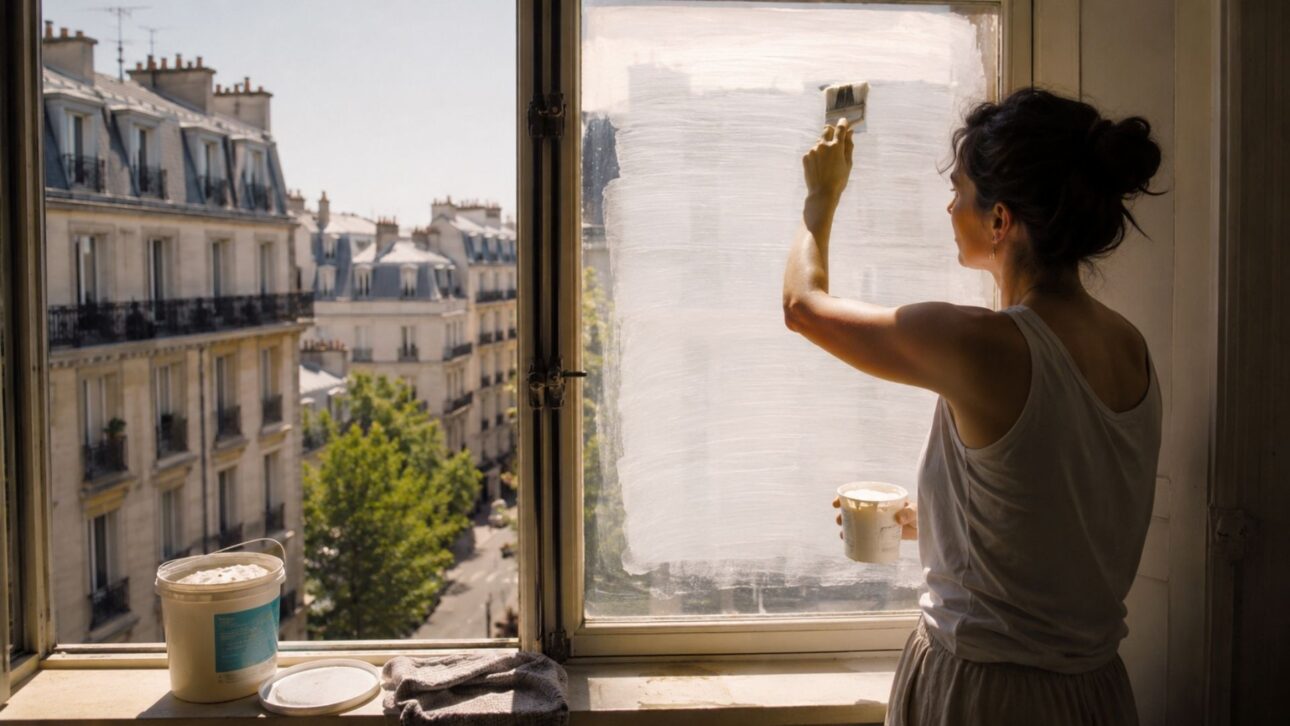
Behind the strange name is a very traditional material. The blanc de Meudon, also called Spanish white, is a very fine chalk powder, originally extracted from the ancient quarries of Meudon, in the Paris region. Its composition is basically natural: about 90% calcium carbonate, the same as lime and chalk, plus a fraction of clay.
The product was not born to withstand heat. For a long time, it was used to clean metals and silverware, polish, brighten shop windows, and even as a base for paints. It is a well-known product among artisans and residents of the Paris region, sold at a low price in hardware stores and drugstores.
The great virtue of the blanc de Meudon is being simple and cheap. Being made of calcium carbonate, it is natural, biodegradable, and does not harm glass or the environment. Not surprisingly, it became the unlikely star of recent heatwaves in France, when it comes to cooling the house at low cost.
The origin of the name lies in geography. Meudon is a city in the metropolitan area of Paris, and it was from its ancient limestone quarries that this fine white powder was extracted for centuries. Therefore, the material is so connected to the daily life of the French capital, where it has always been at the disposal of painters, glaziers, and housewives.
It is worth noting that the material has other names around the world. The same chalk mixture appears as Paris white or Spanish white, depending on the country and local tradition. Whatever the name, the idea is the same: a fine white powder, of mineral origin, easy to dilute in water and apply with a brush.
Why the blanc de Meudon ran out during the June 2026 heatwave
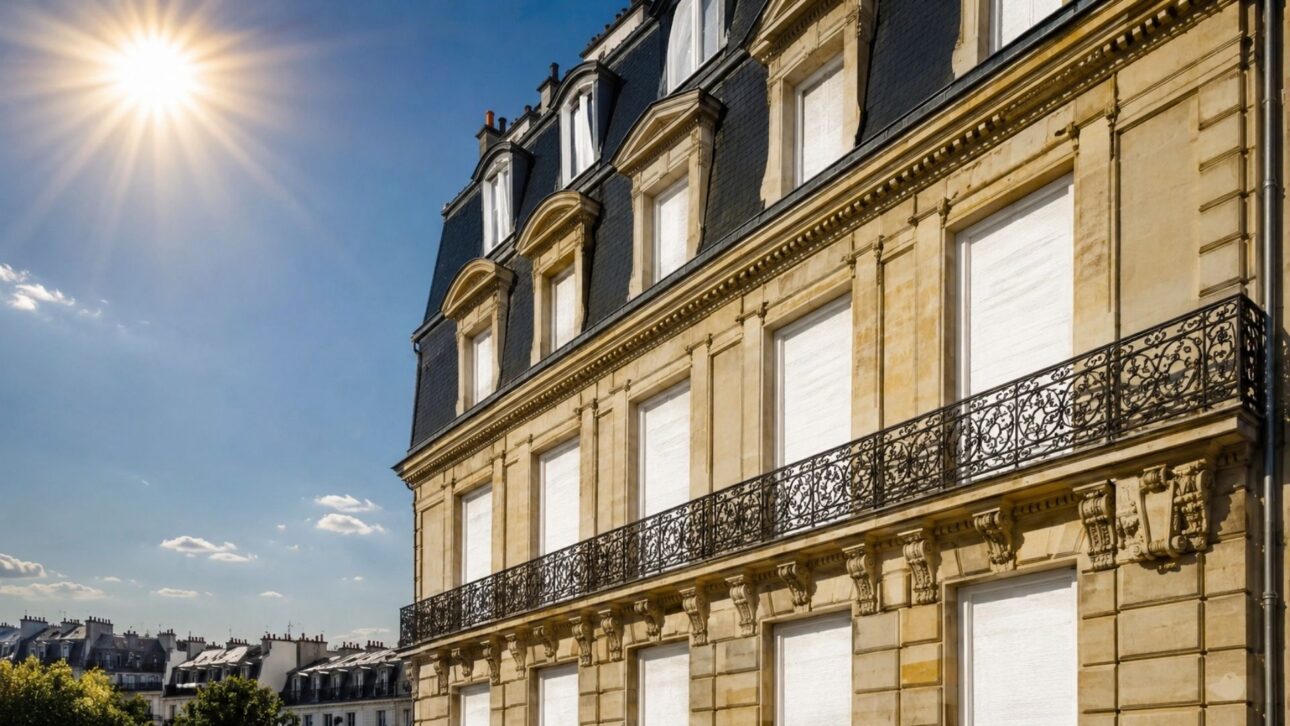
The trigger for the rush to the stores was the thermometer. In June 2026, a strong heatwave hit France, with high temperatures and many people in poorly insulated houses or under roofs that heat up quickly. Unable or unwilling to resort to air conditioning, residents sought cheap alternatives.
That’s when the old chalk powder came back into fashion. Driven by videos on social networks and reports, the blanc de Meudon became the tip of the moment to lower the internal temperature. Demand skyrocketed so quickly that, according to France 3, the product went out of stock in several locations.
The wave of searches was accompanied by other homemade solutions. The same French report pointed to a high demand for thermal blankets and lime, in a general improvisation movement against the heat. June 2026 was marked as the month when the French covered windows in white to survive the extreme temperatures.
This behavior says a lot about Europe’s relationship with heat. Accustomed to mild summers, many houses on the continent do not have air conditioning or good thermal insulation, which makes heatwaves especially difficult. Low-cost tricks, like blanc de Meudon, end up being an accessible solution in the face of an increasingly frequent problem.
How chalk powder on windows lowers the temperature
The explanation lies in a word from physics: albedo. Applied on windows, the blanc de Meudon creates a white, opaque layer that increases the albedo of the glass, meaning the surface’s ability to reflect light. Instead of letting the sun in and heating everything, the glass starts to reflect a good portion of the rays back outside.
The effect occurs before the heat enters the house. According to the portal SeLoger, the thin white layer works like a screen that reflects part of the solar radiation before it passes through the glass. Thus, the environment receives less energy from the sun, and the well-known greenhouse effect inside the room is reduced.
It is important to note that the application is done on the outside. Ideally, the blanc de Meudon should be applied to the external side of the glass to block the sun before it even touches the window. The more exposed to the sun the glass is, especially those facing the side with the most sunlight, the greater the benefit tends to be.
In essence, it is the same principle as light-colored surfaces. Whitewashed walls and roofs painted in light colors reflect the sun and heat up less than dark surfaces. The chalk powder on windows simply applies this logic to the most vulnerable point of the house against heat, which is usually the glass.
How many degrees can really be lowered?
Here it’s necessary to separate promise from reality. On social media, encouraging numbers circulate, from 5 to 10 degrees less, but experts urge caution. The real effect depends on several factors, such as the orientation of the window, the insulation of the house, and how quickly the resident applies the product before the heat arrives.
The more sober estimates speak of a few degrees. Sortir à Paris itself states that the gain is usually around 2 to 3 degrees on a window facing the sun and warns not to expect the same result as an air conditioner. Other sources mention slightly larger drops, so the realistic range is around a few degrees to up to about 7, depending on the situation.
It may seem small, but it makes a difference during a heat wave. During a temperature peak, lowering the environment by 3 to 5 degrees can be the difference between a suffocating night and a bearable one, especially in rooms under the roof. In poorly insulated houses, this relief tends to be even more noticeable.
The secret is to understand blanc de Meudon as prevention. It works best when applied early, before the sun beats down, keeping the heat outside. What it doesn’t do is actively cool: if the room is already hot, the white powder alone won’t chill the environment like a device would.
How to apply blanc de Meudon on windows, step by step
The preparation is quick and requires no skill. Simply dilute the powder in water until you get a milky mixture. A reference cited by SeLoger is to use about 100 grams of blanc de Meudon for 50 milliliters of water, adjusting until you reach an easy-to-spread consistency, similar to very liquid paint.
The application is done with a brush or sponge. With the mixture ready, apply a thin layer on the outer side of the glass, covering the area that receives sun. There’s no need to perfect the finish, as the goal is just to form the white veil that reflects the light. In a few minutes, the glass becomes whitish and ready to work against the heat.
Removal is as simple as application. When the heat wave passes, a damp sponge with water is usually enough to clean the glass. For more resistant marks, a little white vinegar can be added, avoiding metal spatulas that might scratch the surface.
This set of advantages explains the trick’s success. The blanc de Meudon is an immediate solution, without construction, without electricity, without permanent residue, and accessible to anyone. In an afternoon, you can treat the hottest windows of the house spending very little money.
The disadvantages no one mentions
Despite the enthusiasm, the method has clear limitations. The first is visual: by covering the glass, the blanc de Meudon makes the window opaque, blocks the view, and darkens the interior a bit. Those who like natural light and seeing the street need to weigh this inconvenience during the days of application.
The second disadvantage is low resistance to rain. Since the powder is only diluted in water, it cannot withstand a rain shower, which can wash away the layer and require reapplication. In regions with unstable weather, this means repeating the process several times throughout the hot season.
The third limitation is the most important to understand. The blanc de Meudon blocks the sun but does not cool the air already inside the house. In other words, it helps prevent the room from heating up, but it does not replace an air conditioner when the environment has already passed the point. It is a prevention tool, not a rescue.
Therefore, the ideal is to combine strategies. Use the powder on the windows, close curtains during peak hours, open the house at night to ventilate, and avoid devices that heat the environment to form a more effective set. Alone, the blanc de Meudon helps, but it is part of a larger recipe for thermal comfort.
Other cheap ways to cool the house without air conditioning
Chalk powder is just one of the low-cost options. Among the alternatives mentioned by SeLoger are reflective films for glass, which can block a large part of solar radiation and cost a bit more, but last longer. They work on the same logic of blocking the sun before it heats the house.
The right curtains also make a difference. Models of thermal or blackout curtains help to hold the heat at the windows for an affordable price. Closing them during the hottest times of the day, when the sun shines directly, significantly reduces heat entry without any energy expenditure.
The most efficient solution, however, is usually on the outside. Blinds, shutters, and external brises intercept radiation before it even reaches the glass, being more effective than any internal treatment. It’s no wonder that countries with hot climates invest in external shading on facades.
There is also the old habit of using the house to favor the climate. Ventilating during cool hours, creating cross air currents, keeping the sun out during the day, and using light colors on surfaces are measures that, combined, reduce dependence on air conditioning. The blanc de Meudon fits into this menu of simple solutions.
What this has to do with Brazil
For Brazil, the discussion is more than timely. The country faces increasingly strong heat waves, with temperature records in cities like São Paulo and Rio de Janeiro and consumption peaks that pressure the electrical system. As a large part of the population does not have air conditioning, cheap thermal comfort solutions gain enormous relevance.
And Brazil already has its own version of the idea. The traditional whitewashing, which covers walls with white lime, follows exactly the same principle of the albedo of the blanc de Meudon: light surfaces reflect the sun and heat up less. The whitewashed houses of the interior and the Northeast are, in a way, distant cousins of the French window trick.
The white roof technique goes in the same direction. Painting roofs white to reflect heat has already been adopted in popular neighborhoods in India and studied as a way to lower the internal temperature and ease the electricity bill. In Brazil, films for glass, light colors, and elements like the cobogó also help to shade and ventilate without spending energy.
These passive solutions gain importance precisely because of the electricity bill. On days of extreme heat, the mass use of air conditioning spikes consumption and puts pressure on the electrical system, as well as straining the budget of those who pay the bill. Techniques such as whitewashing, white roofs, cobogós, and brises help reduce this dependency, lowering the house temperature without increasing energy costs.
In the end, the French lesson serves as tropical inspiration. Faced with increasingly hot summers and an electrical grid under pressure, it’s worth reviving and spreading inexpensive tricks to cool the house. The case of blanc de Meudon shows that sometimes the answer to extreme heat lies in simple, old solutions accessible to everyone.
And you, would you apply chalk dust on the windows to escape the heat?
The blanc de Meudon fever in France shows how an old trick can become a trend during a heatwave. For a few euros, residents covered their windows with chalk dust, increased the glass albedo, and managed to lower several degrees inside the house without turning on the air conditioning, although with important limitations to understand.
And you, would you agree to paint the windows white to face extreme heat? Tell us in the comments if you already knew about blanc de Meudon or whitewashing, and what other tricks you use to cool the house without relying on air conditioning.


