






 Portuguese
  Spanish
  3 min of reading
  0 comments


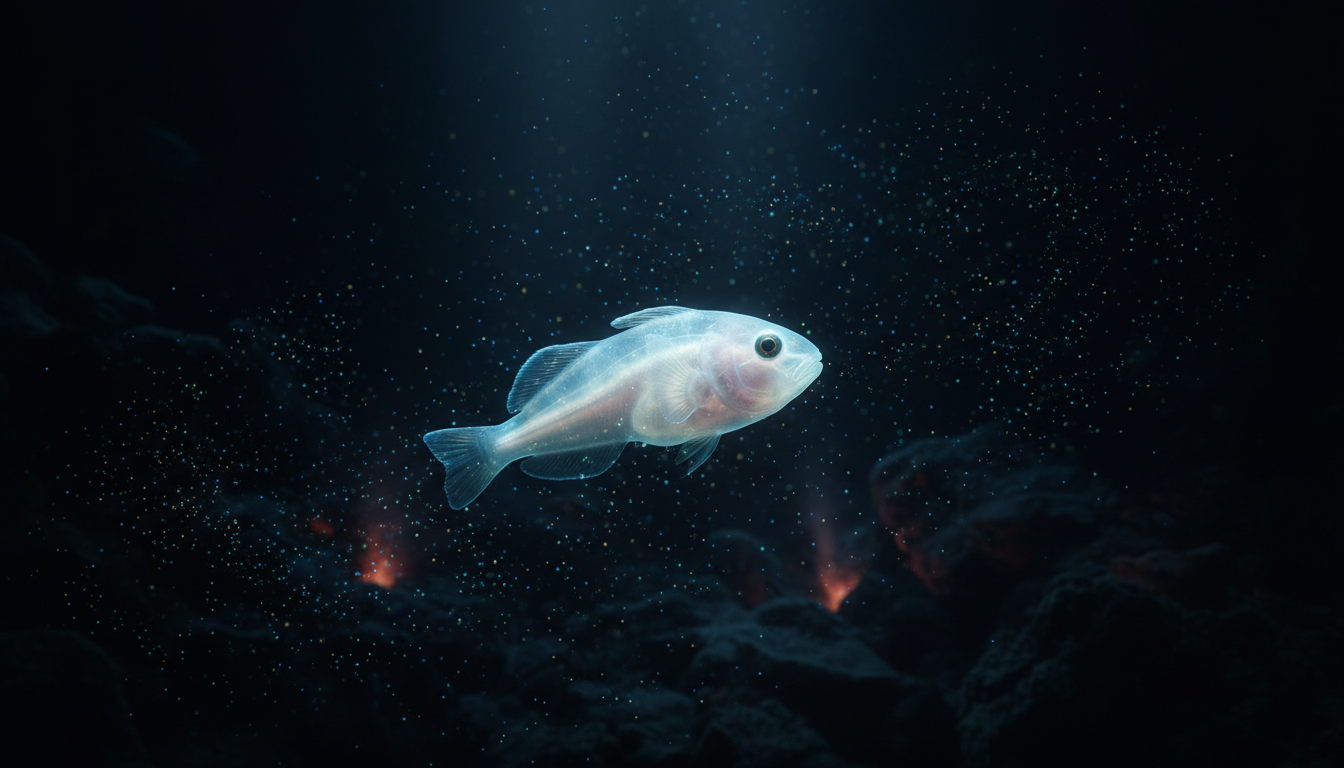
Pseudoliparis snailfish filmed in the Izu-Ogasawara Trench breaks previous record by 158 meters — cameras also captured a white, ghostly organism that defies biological classification
High-resolution cameras dove to a depth of 9,100 meters in the ocean trenches of Japan. What they recorded surprised even the most experienced scientists.
At 8,336 meters, the equipment filmed a Pseudoliparis snailfish swimming and feeding normally.
This is the new world record for observing a living fish. The previous record was 8,178 meters in the Mariana Trench.
-
Helicopter Drops 180 Tons of Sand and Gravel on Swedish River to Revive Ecosystem Damaged by Decades of Exploitation

-
Brazilian Company Launches Retro Smartphone with 48 MP Camera, T9 Keyboard, and Privacy Features for Social Media-Free Use

-
Self-Taught Chinese Farmer Builds 5-Ton Submarine from Scrap, Launches It in Anhui River
-
Invisible Induction Technology Enables Wireless Power for Blenders, Coffee Makers, and Air Fryers, Reducing Countertop Cables





The difference is 158 meters. It may seem small, but in the abyssal depths, every extra meter is an extreme challenge.
And that’s not all. Next to the fish, the cameras captured something unexpected: a white, ghostly creature of uncertain classification.

How the record was broken
The scientific team focused on the Izu-Ogasawara and Ryukyu trenches, south of Japan.
Autonomous cameras were sent to 9,100 meters. They withstand pressures of over 900 atmospheres.
The snailfish appeared at 8,336 meters. It was filmed in action — swimming and searching for food in the sediment.
The species belongs to the genus Pseudoliparis, of the family Liparidae. They are small, gelatinous, and translucent fish.
They do not have a swim bladder. The extreme pressure prevents this organ from functioning in the depths.
Their bodies are predominantly water. This makes them flexible enough to withstand absurd pressures.
The ghostly creature no one expected
Alongside the snailfish, the cameras recorded a white organism with a singular morphology, never before documented.
Scientists provisionally classified it as Animalia incerta sedis. In Latin, it means “animal of uncertain classification”.
The creature does not fit into any known zoological group. Its appearance is ghostly — white, gelatinous, and shapeless.
It could be a new species, a new genus, or even an entirely new family. Genetic analysis has yet to be conducted.
Discoveries like this show that the ocean floor holds more secrets than the surface of the Moon.

The numbers of the abyss
- Depth of the fish: 8,336 meters
- Previous record: 8,178 meters (Mariana Trench)
- Difference: 158 meters
- Cameras sent to: 9,100 meters
- Pressure at this depth: over 900 atmospheres
- Location: Izu-Ogasawara Trench, Japan
At 900 atmospheres, a human would be crushed instantly. Snailfish have evolved to thrive there.

Impressive record, but the deep ocean holds limitations
The record is visual, made by camera. No physical sample of the fish or the unknown creature was collected.
The classification of the creature as incerta sedis means it may take years before it is formally described.
The abyssal depths are the least explored environment on the planet. Each dive reveals never-before-seen species.
Information compiled from studies on expeditions in the ocean trenches of Japan and reports from O Cafezinho. The data may be updated with future analyses.





Be the first to react!