Portuguese
  Spanish


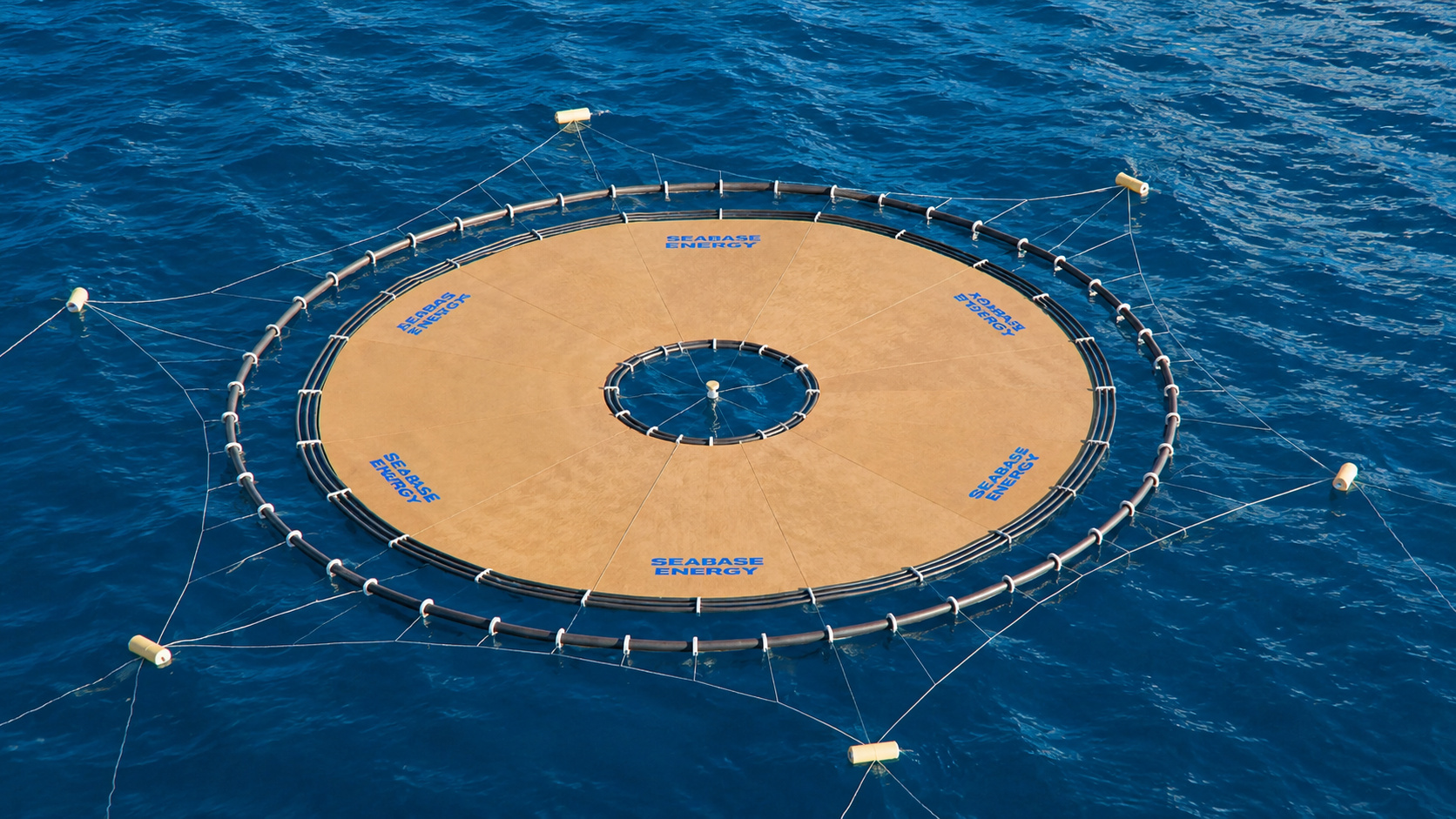

Startup develops underwater battery that uses ocean pressure and gravity to store renewable energy without dams, mountains, or lithium batteries.
Storing electricity produced by wind and sun remains one of the biggest challenges of the energy transition. While lithium batteries become expensive when they need to store large amounts of energy for many hours, an Italo-American startup decided to look elsewhere: the ocean floor. The company developed a system that uses the pressure of deep waters and the force of gravity to store electricity similarly to reversible hydroelectric plants, but without dams, mountains, or large reservoirs on land.
According to Business Wire, Sizable Energy has just raised $8 million to accelerate the development of the technology and install its first systems in open sea. The project bets on underwater modules capable of turning the ocean’s depth into a gigantic natural battery to store renewable energy.
The biggest challenge of renewable energy is not producing electricity
In recent years, solar and wind energy generation has grown rapidly worldwide. The problem is that these sources depend on natural conditions. When there is a lot of wind or strong sunlight, production can exceed the demand of the power grid. Conversely, during periods without wind or at night, the opposite happens.
-
Scientists create robotic bird that uses articulated wings to maintain balance, mimicking hawks and flying with stability where common drones fail.

-
U.S. university performs surgeries with remotely controlled humanoid robots
-
A 12-year-old boy from the municipal network of Canoas won gold in the Brazilian Mathematics Olympiad, earning the school’s first national medal in history and standing out in a competition that brought together more than 18 million students, demonstrating how public education can uncover hidden talents in Brazil.
-
Why did a company that was already earning US$ 1 million decide to completely change its strategy? The answer begins with used bottles, worms, and an unexpected decision.




According to Business Wire, expanding energy storage capacity is considered one of the main challenges for the expansion of renewable sources. Currently, most large-scale storage depends on reversible hydroelectric plants, which require large areas, complex works, and very specific geographical conditions. It was precisely to overcome these limitations that Sizable Energy’s proposal emerged.
The company turned the seabed into a kind of invisible hydroelectric plant
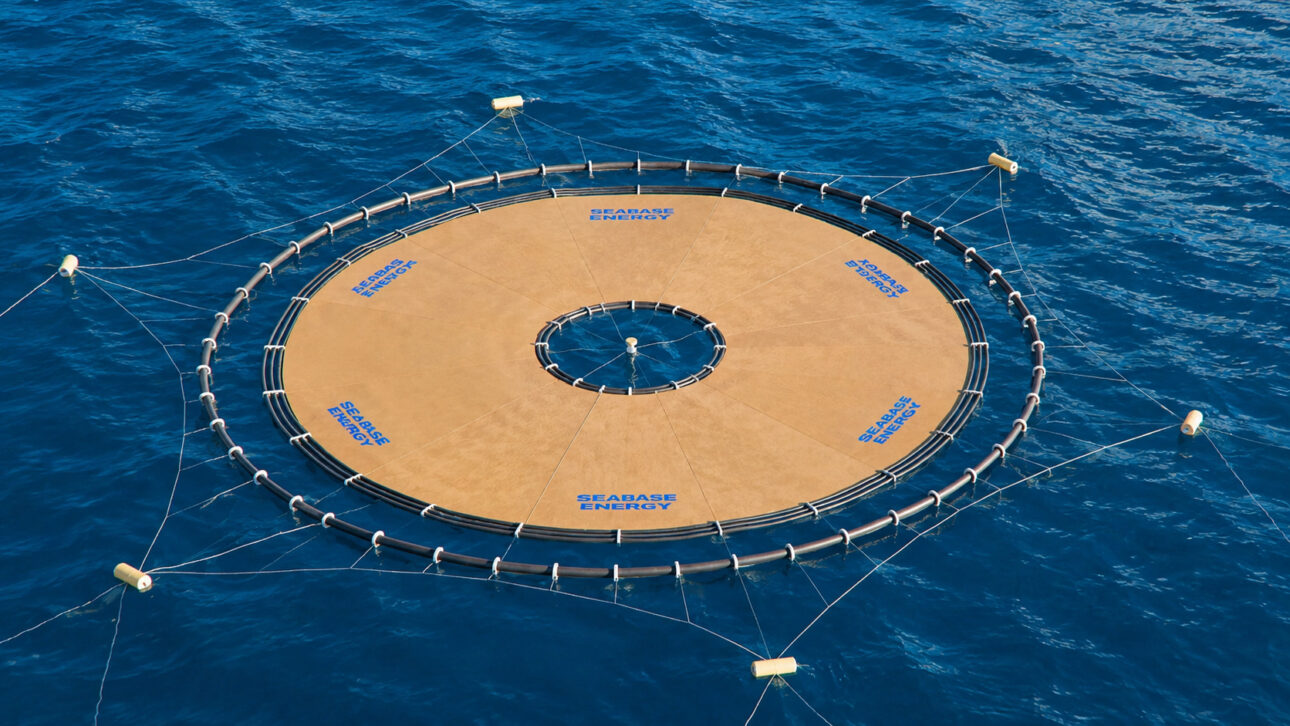
The principle used by the startup is not entirely new. For over a century, reversible hydroelectric plants have stored energy by pumping water to elevated reservoirs when there is an excess of electricity and releasing that water later to drive turbines. The difference is that Sizable has taken this concept to the ocean. According to the company, the system uses a floating reservoir connected to another installed in deep waters.
Between them circulates a specially prepared brine, denser than seawater. When there is an excess of electricity in the grid, pumps use this energy to move the brine through the system. When demand increases, the liquid returns driven by the pressure difference and gravity, moving turbines that generate electricity again. In practice, the ocean replaces the mountains used by conventional hydroelectric plants.
The depth of the sea is the main component of the battery
According to Sizable Energy, the efficiency of the system depends precisely on the enormous column of water existing above the underwater reservoirs. The greater the depth, the greater the pressure exerted on the system and the greater the amount of energy that can be stored.
Since the equipment can be installed in any region with deep waters, the company believes it will be possible to standardize the manufacturing of the modules and produce practically identical systems for different countries, something much more difficult in traditional hydroelectric plants, which need to be adapted to the characteristics of each mountain or valley. Another advantage is the low visual impact. Most of the structure remains submerged, leaving practically only the floating reservoir visible on the surface.
The technology has already started to leave the laboratory
According to Business Wire, Sizable Energy has already completed tests of the technology at MARIN, one of the world’s leading maritime engineering research centers, located in the Netherlands. After validation in a controlled environment, the company began implementing an open-sea test off the coast of Reggio Calabria, in southern Italy.
This phase aims to demonstrate that the system can operate continuously under real conditions of waves, ocean currents, and climate variations before the construction of a larger-scale demonstration unit. The company states that this gradual evolution reduces technical risks and allows for the improvement of both the installation and operation of the equipment before commercialization.
The proposal does not intend to replace all batteries
Sizable Energy itself acknowledges that its technology is not expected to completely replace other forms of energy storage. According to the company, chemical batteries remain more suitable for quick responses and short-term storage, while underwater systems can take on the role of storing large volumes of electricity for many hours or even days.
This feature makes the solution especially interesting for offshore wind farms, capable of producing large amounts of energy far from the mainland. Instead of wasting the surplus when demand is low, the electricity can be temporarily stored in the ocean itself and returned to the grid when needed.
A simple idea that can change energy storage
Sizable Energy’s proposal shows how a physical principle known for over a century can gain a completely different application. According to Business Wire, the company intends to transform the depths of the oceans into a permanent infrastructure for renewable energy storage, reducing the need for large dams and expanding the options available for increasingly clean energy-dependent electrical systems.
It will still be necessary to prove the economic and operational viability of the technology on a commercial scale, but the progress of the tests shows that the idea has already surpassed the purely conceptual phase. If the results are confirmed, the seabed could assume an unprecedented role in the global energy matrix: serving as a gigantic invisible battery, capable of storing electricity produced by wind and sun without resorting to rare metals, large reservoirs, or enormous land-based constructions.