






 Portuguese
  Spanish
  5 min of reading
  0 comments


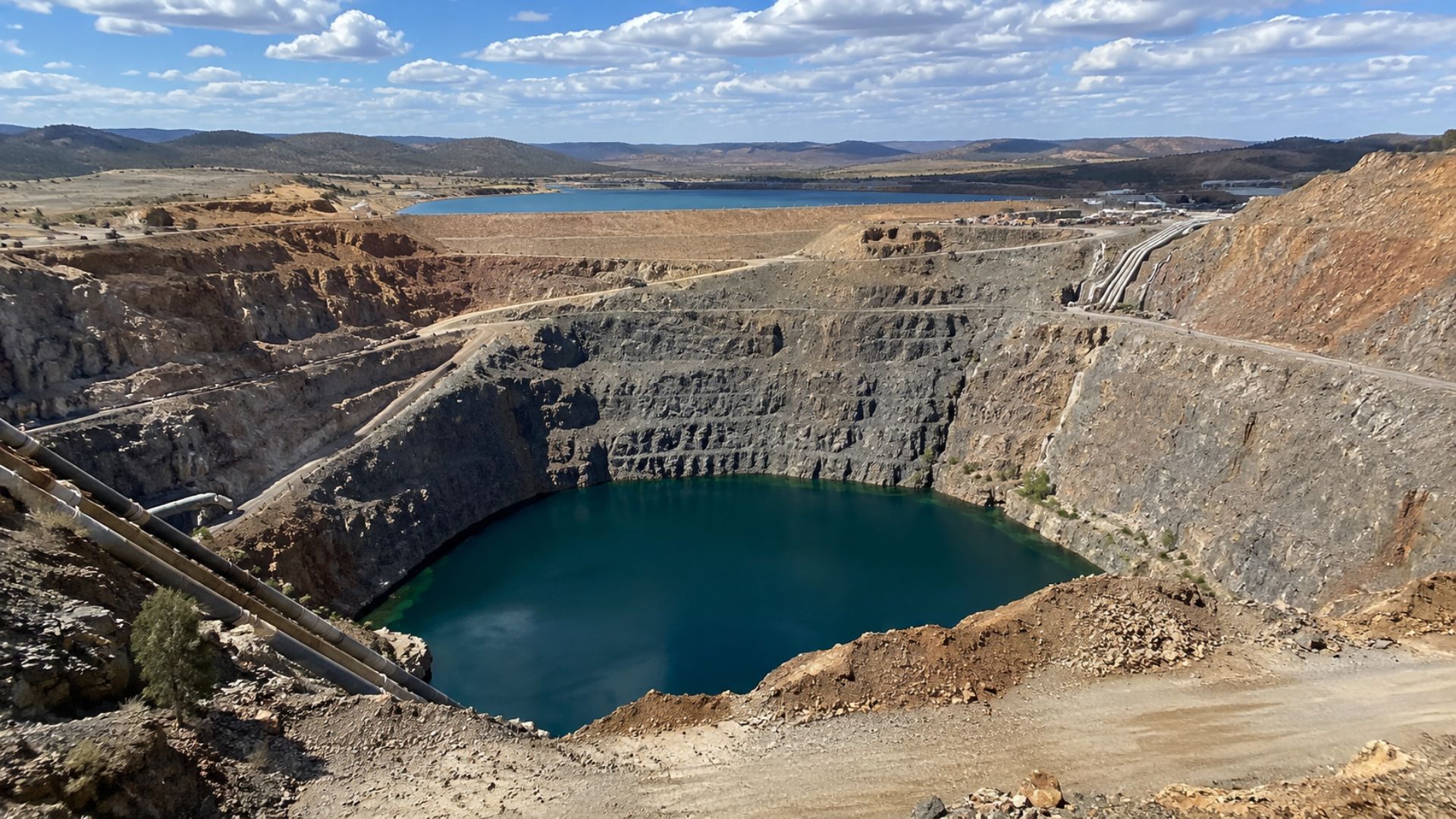
Australian project will reuse gold mine pit to store large-scale energy through a reversible hydroelectric system with underground tunnels, reservoirs at different levels, and a projected capacity to supply the electricity grid during peak demand hours.
An old open-pit gold mine in Queensland, Australia, is set to gain a new function in the coming years by being converted into a gigantic energy storage structure capable of storing up to **20 thousand megawatt-hours** and delivering up to **2,000 megawatts** to the electricity grid during peak demand periods.
Instead of remaining inactive after decades of mineral exploration, the pit left by mining will be repurposed by the Mount Rawdon Pumped Hydro project as the lower reservoir of a reversible hydroelectric power plant built to operate in a closed circuit.
During periods of higher electricity generation, especially with solar and wind energy, water will be pumped to an upper reservoir and will later return through underground tunnels to the turbines when the electrical system needs supply reinforcement.
-
NASA captured by satellite an underwater volcano erupting in the Bismarck Sea, in the Pacific, and now scientists are waiting to see if a new island will be born there in front of the cameras, a very rare phenomenon to witness live from space.

-
The Atacama Desert, the driest place on Earth, was covered in flowers and turned into a colorful carpet with more than 200 species in the phenomenon called “desert bloom,” when atypical rains awaken seeds that had remained dormant in the soil for many years.
-
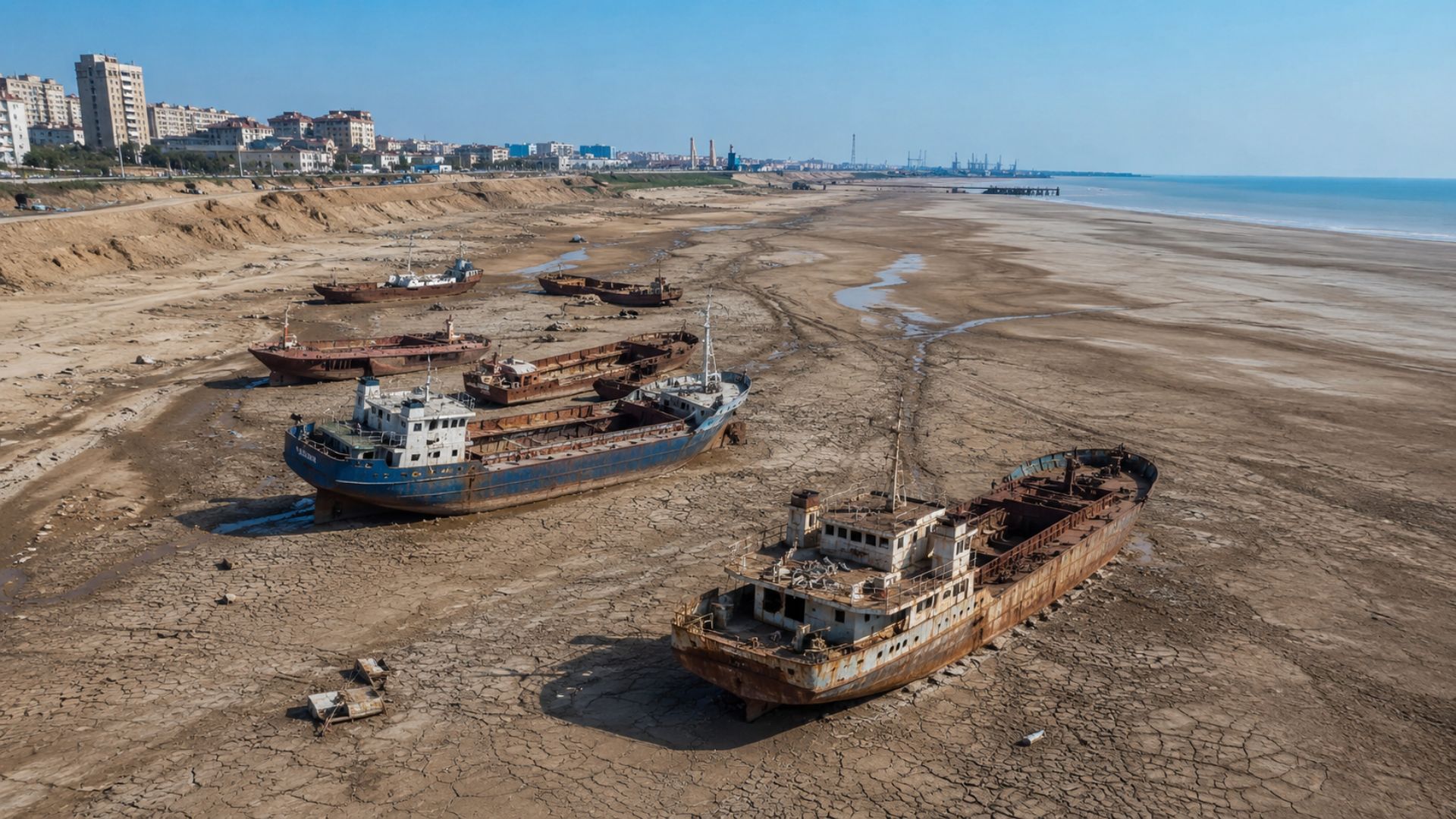
The Caspian Sea, the largest lake in the world, is drying up due to climate change and no one can stop the loss: evaporation could lower the level by up to 21 meters this century and turn ports in Kazakhstan, such as Aktau, into desert.
-
How Romania became Hitler’s “gas station,” supplying about half of the oil used by Nazi Germany, and surprised the world by abandoning the Axis in 1944, just when the fuel shortage was beginning to suffocate the Third Reich.



Located about 75 kilometers southwest of Bundaberg, near Mount Perry, the Mount Rawdon mine belongs to Evolution Mining and concluded its extraction phase in the 2025 fiscal year, after approximately 25 years of continuous activity in the region.
While the company maintains the processing of remaining stockpiles planned until the 2026 fiscal year, the site is beginning to be redesigned to take on a strategic role within the expansion of Australia’s energy infrastructure.
How the reversible hydroelectric power plant in an old gold mine works

The technology chosen for Mount Rawdon follows the model of reversible hydroelectric power plants, internationally known as pumped hydro, currently considered one of the main alternatives for large-scale energy storage.
Unlike traditional hydroelectric plants, which depend on the continuous flow of rivers, this type of system operates with two reservoirs positioned at different levels and equipment capable of alternating between water pumping and electricity generation.
Whenever there is surplus electricity in the system, especially during periods of strong solar or wind production, hydraulic pumps will transport water from the old mine pit to the upper reservoir built next to the operation.
During peak consumption hours, the process will occur in reverse, allowing water to return through underground tunnels to a powerhouse excavated in the rock, where turbines will transform the movement into electricity to supply the grid.
The planned structure includes an upper reservoir built in an area near the mine, repurposing the pit as a lower reservoir, hydraulic tunnels between the two levels, a substation, access roads, auxiliary systems, and a powerhouse excavated in the rock to house the generation equipment.
20,000 MWh capacity places project among the largest storage systems
With an estimated capacity of 20 gigawatt-hours, the undertaking was planned to act as a long-duration storage structure aimed at balancing the Australian electricity system during times of greater pressure on the grid.
In recent years, solutions of this type have gained relevance in countries that have rapidly increased the participation of intermittent renewable sources, whose generation depends directly on climatic conditions and the availability of wind and solar radiation.

In practice, Mount Rawdon is not expected to operate as a conventional continuous generation plant, but as a kind of energy reserve capable of accumulating electricity at certain times and returning it to the system when needed.
In addition to the projected scale, another factor that differentiates the undertaking is the reuse of an area already profoundly altered by mining, reducing part of the need to open new structures for the lower reservoir.
The project also stands out for reusing an area already profoundly altered by mining.
The existing pit reduces the need to open a new lower reservoir from scratch, although the work still depends on large-scale interventions, environmental licensing, and technical analysis by Australian authorities.
Gold mine in Queensland to be converted into energy infrastructure
The Mount Rawdon mine has been operated by Evolution Mining since 2011 and reached the end of active extraction after about a quarter-century of operation.
The proposal for conversion to energy storage was structured in partnership with ICA Partners, through Mt Rawdon Pumped Hydro Pty Ltd.
According to public information about the project, the initiative aims to be the first conversion of an operational gold mine in Australia into a pumped hydro generation and storage facility.
The proposal fits into a broader discussion about the use of former industrial areas in the energy transition.
The logic is to transform a mineral liability into electrical infrastructure.
Instead of limiting the area to traditional mine closure, the project seeks to give a new economic function to the land and the excavation left by extractive activity, maintaining part of the site’s industrial vocation.
Billion-dollar investment and job creation in Queensland
According to the Queensland government, the Mount Rawdon Pumped Hydro is associated with an estimated investment of 3.3 billion Australian dollars, a value that places the undertaking among the largest energy projects currently planned for the state.
Furthermore, the initiative received financial support from CleanCo Queensland, a state-owned company focused on clean energy expansion, which announced an investment of 50 million Australian dollars for the technical and structural development of the proposal.
Job creation estimates vary according to the project stage and the institutional documents released so far by the companies and authorities involved in the operation.
According to the project’s official website, construction could mobilize approximately 1,000 workers, while the operational phase is expected to maintain between 30 and 50 permanent positions related to the maintenance and operation of the structure.
Construction still depends on environmental and regulatory approvals.
Public documents indicate that the undertaking is undergoing an environmental impact assessment, a necessary step before any definitive progress towards construction, extensive hiring, and final schedule definition.
Mine reuse gains traction in the energy transition
The conversion of closed or end-of-life mines into energy storage systems has been analyzed in different countries because it combines existing infrastructure, large elevation differences, and industrial areas away from urban centers.
Still, each project depends on geology, water availability, grid connection, and economic viability.
In the case of Mount Rawdon, the main attraction lies in the combination of a deep pit, space for an upper reservoir, and proximity to regions with renewable expansion.
The proposal also takes advantage of Queensland’s search for storage alternatives to support the integration of new clean sources into the electricity system.
The facility, if approved and built, could function as a large-scale hydro battery.
The project does not eliminate the inherited impacts of mining, but redefines the use of the area by replacing gold extraction with infrastructure aimed at storage and electricity grid stability.





Be the first to react!