Portuguese
  Spanish


In Kenya, street vendor Jedidah Murugi built her own mushroom house, 15 m², using mushroom root panels from the company MycoTile, and spent only US$ 208 on the walls, compared to about US$ 1,000 she would pay with common brick.
Building a house for less than US$ 210 seems impossible, but that’s what a street vendor in Kenya did. Jedidah Murugi built her own 15 square meter house using panels made from mushroom root, and spent only about US$ 208 on the walls. With common brick, the same walls would cost around US$ 1,000, meaning she built for less than a quarter of the price.
The case was reported by the Associated Press, a news agency that visited the project. The panels came from MycoTile, a Kenyan company that transforms mycelium, the root-like part of the mushroom, into cheap building material. For Jedidah Murugi, what mattered was not the trendiness of the material, but the price that fit her budget.
US$ 208 on the walls, compared to US$ 1,000 for brick
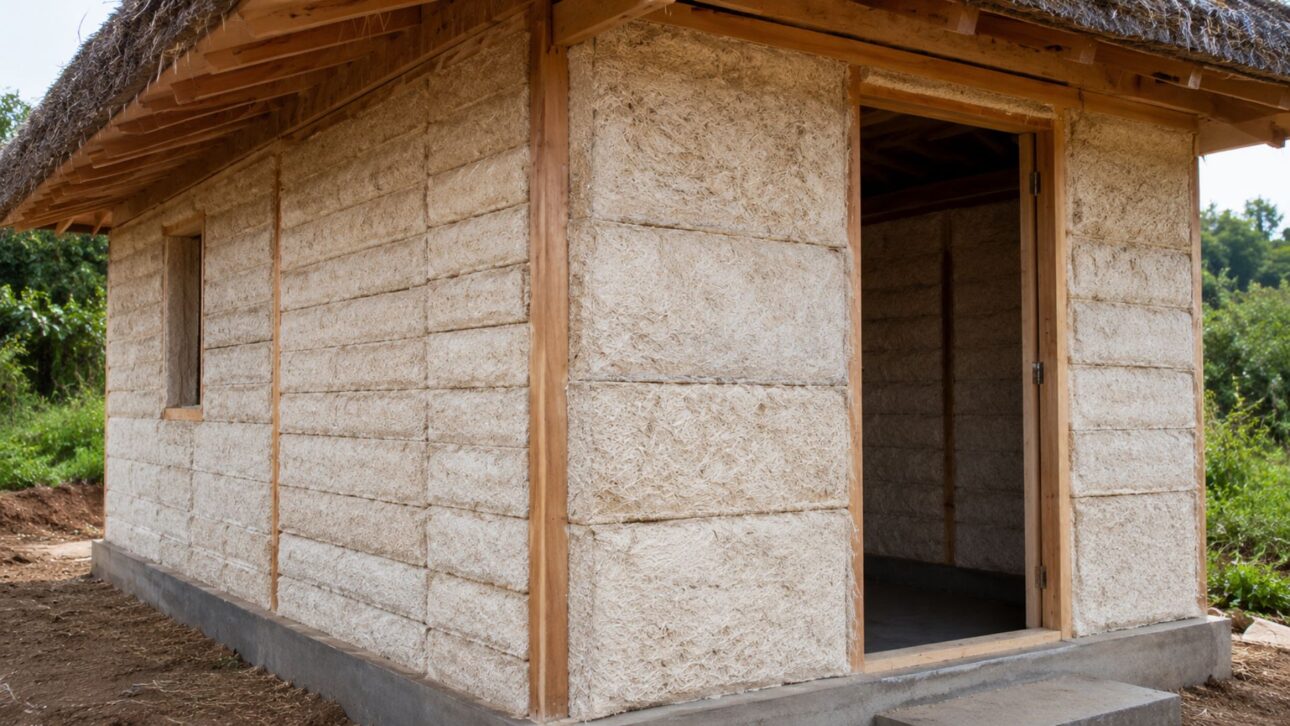
Jedidah Murugi spent about 26,880 Kenyan shillings, equivalent to about US$ 208, on the panels that raised the walls of her 15 square meter house.
-
Saudi Arabia’s $500 Billion Desert Ski Resort Project Canceled — What’s Left Tells a Bigger Story

-
At 42, She Left Greater Buenos Aires for a Mountain, Built a 30m² Hexagonal House with Adobe and Straw, and Now Constructs Homes for Other Families

-
Couple Transforms 1920s UK Cinema into Garden with 4-Meter Window After $450,000 Renovation
-
Cost of Installing Electric Fences in 2026: Price Per Meter and Factors Affecting Installation


To raise the same walls with common brick, she would have shelled out nearly US$ 1,000, almost five times more. The price difference is what makes the mushroom house a real alternative for those without much money.
It’s not sustainable luxury from a magazine, it’s real savings on the final bill. For a street vendor, this cost cut means the difference between having or not having her own home.
Who is Jedidah Murugi
Behind the achievement is an ordinary woman with a bold decision. Jedidah Murugi is a street vendor in Kenya, and instead of waiting for housing to fall from the sky, she decided to build her own house with a material that almost no one had tested.
She bet on mushroom panels at a time when bricks were out of her budget, and it worked. She wasn’t an engineer nor did she have significant capital: she had the need and courage to experiment.
The 15-square-meter house became proof that housing can be solved with creativity. Today, Jedidah Murugi lives in what she built, paying a fraction of what she would pay the traditional way.
How the mushroom house works
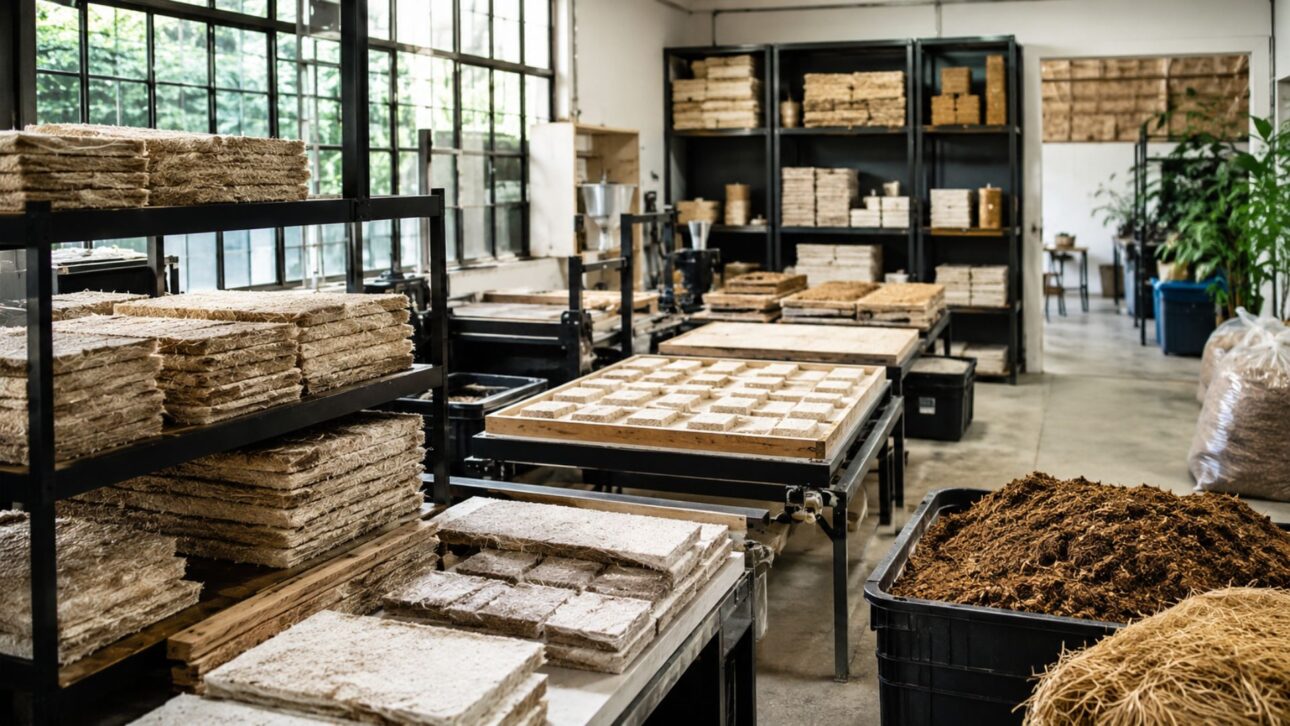
The mushroom house is made with mycelium panels, the root-like structure that the mushroom forms, mixed with natural fibers and molded into plates by MycoTile.
These panels serve as walls and insulation, costing a fraction of the price of clay bricks. It’s not loose mushrooms on the wall: it’s a rigid and lightweight material, the result of mycelium that grows and is then dried.
For the resident, what you see is a common construction board, only cheaper and sustainable. It’s the mushroom house functioning like any other wall.
Hot during the day, cold at night? Actually, the opposite
The big question for those who hear about mushroom walls is comfort. Jedidah Murugi assures that there is no significant difference in quality between a brick house and one with mushroom panels.
According to her, the house “is not cold at night nor hot during the day,” meaning the material insulates well against temperature. Instead of becoming an oven in Kenya’s heat or freezing at dawn, the house maintains a pleasant climate.
This insulation is one of the strengths of mycelium, which retains temperature better than many common materials. In the end, the resident swapped bricks for mushrooms without losing comfort.
MycoTile and production in Nairobi
Jedidah’s house is not an isolated case; it is part of a growing business. MycoTile currently produces about 3,000 square meters of material per month in Kenya.
The company uses facilities from the Kenyan Industrial Research and Development Institute in Nairobi, where it has access to machines to manufacture the panels. With this support, MycoTile can reduce production costs and serve more people.
The panels range from wall and roof insulation to interior decoration. It is proof that the mushroom house has moved from experiment to a real product in the Kenyan market.
Why this matters for housing
Jedidah’s case touches on a huge problem: the cost of building. In many places, including Kenya, the cost of bricks and cement puts homeownership out of reach for millions of people.
A material that cuts wall expenses to a fifth can open the door to housing for those who never had the chance. For a street vendor, paying $208 instead of $1,000 changes everything.
Add to that the sustainable aspect, as mushrooms grow from agricultural waste and do not rely on polluting clay kilns. Cheap and ecological at the same time is a rare combination in construction.
What Jedidah Murugi’s case shows
The biggest lesson is about solving a big problem with a simple solution. Jedidah Murugi proved that a street vendor can build her own mushroom house spending a fraction of the price of bricks.
Of course, it’s important to stay grounded. The mushroom house is still new, depends on companies like MycoTile to produce the panels, and needs to gain scale and trust to become a common housing option.
Even so, seeing someone build a 15-square-meter home for $208 in Kenya is the kind of news that shows a cheaper path to housing. From street vendor to homeowner, Jedidah chose to innovate where the budget was tight, and proved that sometimes, the key to housing might be in a mushroom.
And you, would you live in a house made of mushroom panels if it cost a fifth of the price of bricks? Tell us in the comments what you think of this type of affordable building material.