






 Portuguese
  Spanish
  3 min of reading


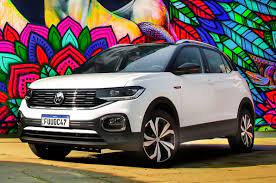
Federal Brazilian Universities Are Receiving Private Initiatives for Greater Development in Vehicle Automation Research in Engineering Areas. One of the Highlights in Development in the Area Is Unicamp, Located in the City of Campinas, São Paulo, Competing with USP in Scientific Development and Research Funding.
Vehicle automation, for the manufacture of autonomous cars, is already part of the technology in many countries, including brands like Tesla, which is based in the United States. In short, it enables the creation of vehicles that are smarter and capable of driving without any human effort.
Guilherme Stella, founder of TrackFY, a company focused on automotive engineering, states that without digital mapping technologies, it would not be possible to create new developments like those being fostered in our country.
Channel Shows More About How Vehicle Automation Works in Practice, Watch the Video
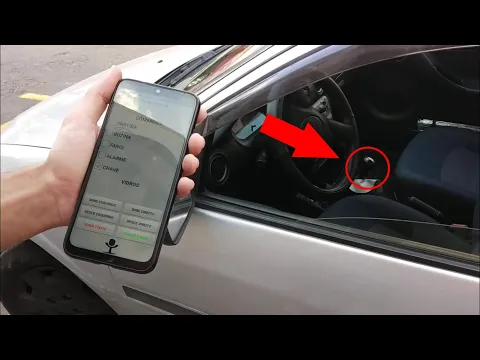

The YouTube channel belonging to Will Vargas has a video (above) that discusses more about how vehicle automation works in practice. Nowadays, with the technologies we already have, it is possible to optimize cars even if they didn’t come that way from the factory. Therefore, anyone can take a version from before 2015, when automation became a trend, to make it more technological.
-
Nissan X-Trail e-Power debuts as a hybrid SUV that runs like an electric vehicle, uses a 1.5 turbo engine only as a generator, promises up to 1,039 km per tank, and arrives in the Philippines with 204 hp, a 482-liter trunk, and a competitive price.

-
Cheaper than Civic and Corolla, this Korean sedan offers a giant 520-liter trunk, 2.0 flex engine, and 6-speed automatic transmission; the Kia Cerato EX 2.0 2022 stands out as an ideal option for those who prioritize interior space and comfort.
-
An old Nissan Bluebird received the motor, inverter, and battery from the Leaf, became electric, and kept the body intact in a conversion done in the United Kingdom.

-
The car that most Brazilians buy today may cease to exist by 2030, and automakers already know that the 1.0 aspirated engine with manual transmission is numbered in the country.


Nowadays, there are cars that have external safety features that monitor traffic so that the vehicle can drive itself and take actions without needing human assistance if another car is approaching. This way, it prevents accidents.
The Vehicle Automation Market Is Valued at R$270 Billion
Brazil already has significant projects in the city of Campinas that are studying the development of vehicle automation. Overall, it is estimated that the market value is at least R$ 270 million, with expectations for even more substantial growth.
Nowadays, private initiatives are crucial for funding 3D equipment that assists UNICAMP students in developing novel ideas for the sector. In other words, engineering fields can work towards more technological development.
Stella argues that, over the past three years, this type of project has seen significant growth in our country, especially when discussing research development sectors. However, it is still necessary to create structures to implement ideas and bring them to fruition.
Tradition in Development
Last year, FUCAMP, the Development Foundation of UNICAMP – University of Campinas, initiated one of its projects to develop a Lidar. A Lidar is nothing more than a sensor that can identify nearby objects and ensures that actions are taken according to its safety programming.
Fucamp already has an extensive history in automating projects, and it also integrates its students into these through grants provided by the federal government, which vary by income and participation.
UNIFEI, Federal University of Itajubá, also began to develop vehicle automation projects during the year 2022, using Lidar sensors created through 3D methods. Financial support from private institutions for project development has been crucial for taking this step.




Be the first to react!