






 Portuguese
  Spanish
  5 min of reading
  0 comments


The electric Nissan Bluebird was born to celebrate the Sunderland factory, reused parts from the Leaf, and showed how an old car can change inside without losing its original appearance
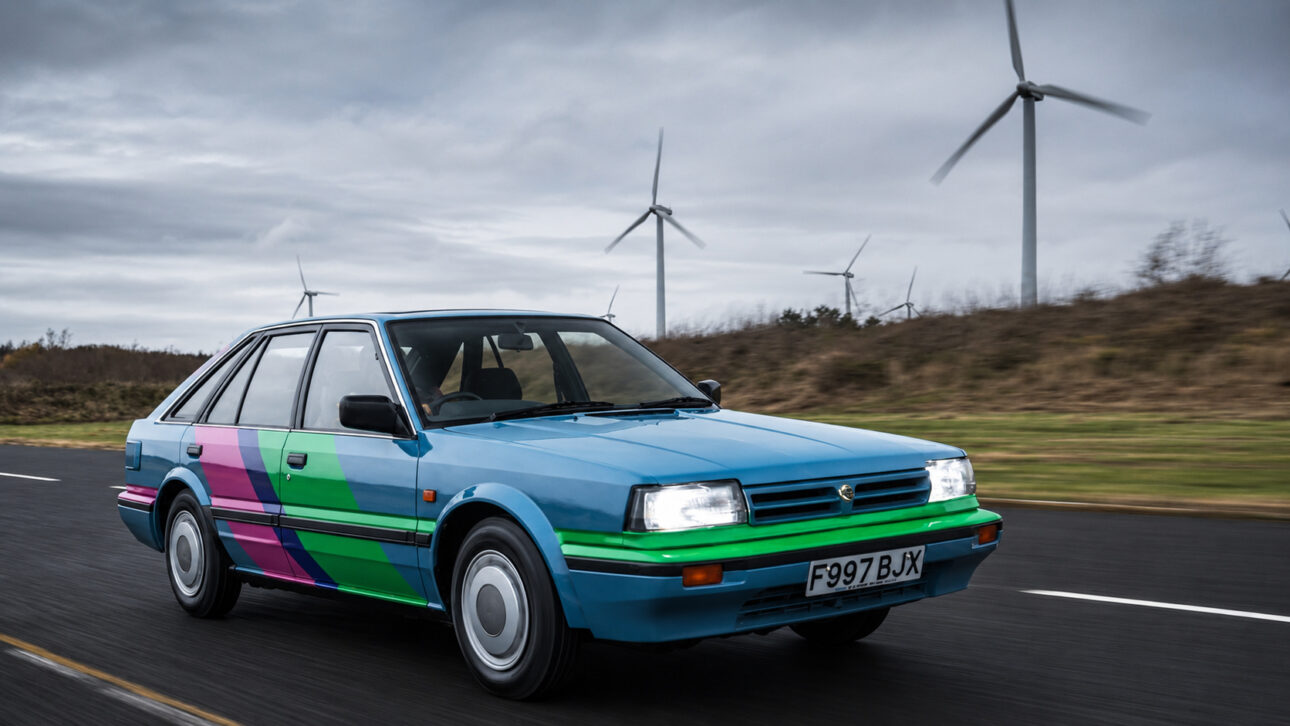
An old Nissan Bluebird received a motor, inverter, and battery from the Leaf, became electric, and kept the bodywork intact in a conversion made in the United Kingdom. The 1989 sedan left the gasoline era to gain a new life as the Newbird, an electric car created to mark the 35 years of the Nissan factory in Sunderland.
The information was released by Nissan UK News, the official news channel of Nissan in the United Kingdom. The conversion attracted attention because it used parts from the Nissan Leaf, but preserved the Bluebird’s bodywork, without cuts and with a bolted solution.
The result seems simple on the outside, but involves a profound change inside. The old car kept the classic appearance while using a modern electric set, with motor, inverter, and battery in place of the gasoline engine.
-
The car that most Brazilians buy today may cease to exist by 2030, and automakers already know that the 1.0 aspirated engine with manual transmission is numbered in the country.

-
Cheaper than an Onix, Mobi, or Polo: with a 1.4 turbo engine and 185 hp compressor, 7-speed S-Tronic transmission, 270 liters of trunk space, and the performance of a compact sports car, this Audi hatch costs less than many new popular cars. Meet the Audi A1 Sportback 2014.
-
Two Brazilian inventors transformed a Gol into a homemade electric car: they removed the engine, installed 40 lithium batteries, and made the vehicle run 150 km for R$ 0.07 per kilometer.

-
Toyota Hilux owners should be cautious: the model has become a target for gangs that can open the vehicles without triggering the alarms, investigation reveals.


The 1989 Bluebird became a symbol of an important phase for Nissan in the United Kingdom
The Nissan Bluebird had a special significance for the brand’s history in the United Kingdom. It was linked to the early years of Nissan’s production in Sunderland, a factory that was celebrating 35 years when the Newbird was presented.
The presentation took place on December 16, 2021. The choice of model was not random, as the Bluebird helped to recall the beginning of local production and, at the same time, served as a base to showcase an unusual electric conversion.
The car became a bridge between two eras. On one side, a family sedan from the 1980s. On the other, the electric technology already used in the Nissan Leaf, a modern model that served as a donor of parts for the transformation.
Gasoline engine removed and Leaf parts gave electric life to the Newbird
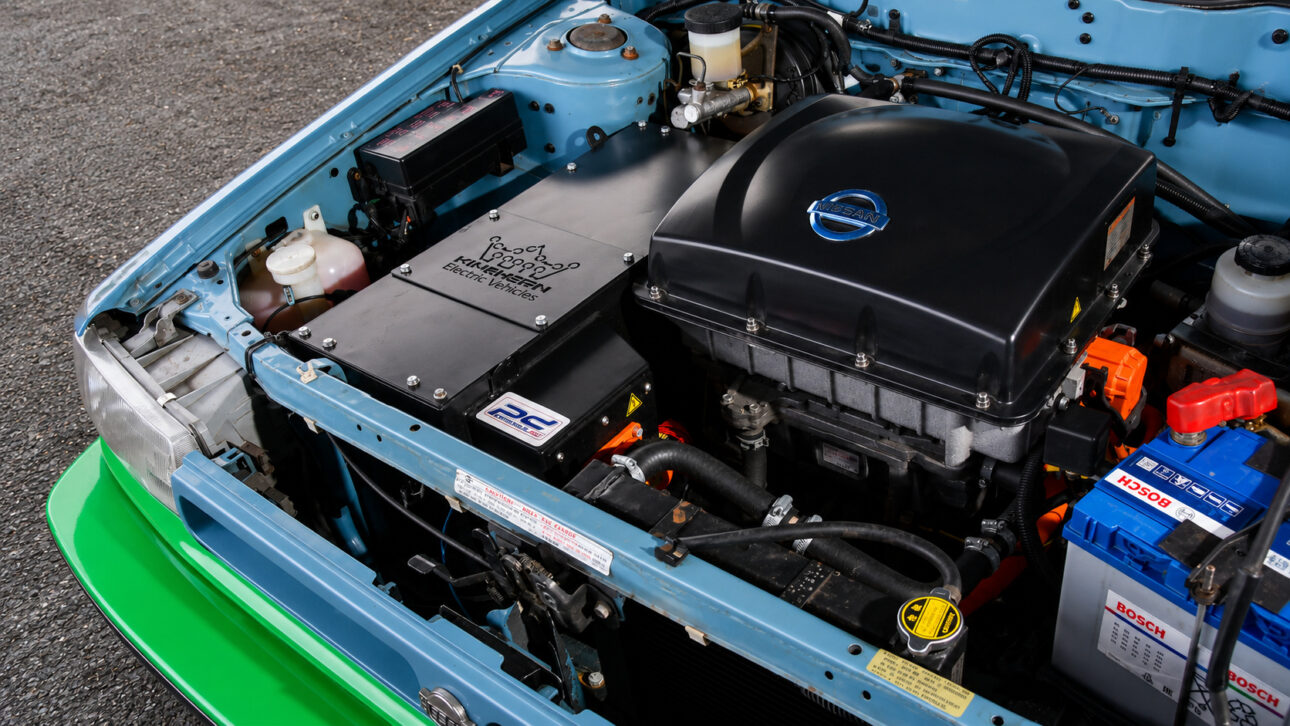
The conversion began with the removal of the gasoline engine and the original gearbox. In its place, the Newbird received a Nissan Leaf electric motor, inverter, and a 40 kWh battery.
The inverter is an important component in electric cars. In simple terms, it helps control the energy that flows from the battery to the motor, allowing the car to move without using gasoline.
The battery needed to be installed in different parts of the vehicle. Part of it was placed in the compartment where the engine used to be, and another part was placed in the trunk. This division helped keep the weight more balanced within the car.
The intact bodywork was the detail that made the conversion more curious
Kinghorn Electric Vehicles, the company responsible for the conversion, worked to keep the bodywork uncut. The adopted solution was bolted, an important choice to preserve the structure of the old sedan.
This point differentiates the Newbird from many more invasive adaptations. Instead of deeply modifying the bodywork, the team installed the electric set trying to respect the car’s original design.
Nissan UK News, the official news channel of Nissan in the United Kingdom, detailed that the conversion also involved steering, brakes, and heating. These systems needed to function with the new electric configuration.
The old fuel cap became the charging point for the electric Bluebird
One of the most interesting details appeared on the car’s exterior. The old fuel cap now hides the charging port, keeping the Bluebird’s appearance almost the same as before.
The charging can reach 6.6 kW. For the driver, this maintains the visual experience of a classic car, even with a completely different function in the same part of the bodywork.
The dashboard also received an adaptation. The gauge that used to show the fuel level now indicates the battery charge. Thus, a familiar piece of the old car gained a new function without erasing its original appearance.
The Newbird shows electric performance but should not be seen as a ready-made recipe
The Newbird had an estimated range of 130 miles per charge. The reported acceleration was just under 15 seconds to go from 0 to 62 miles per hour, also presented as 0 to 100 kilometers per hour.
These numbers help to understand the scope of the conversion, but they do not make the case a simple solution for any old car. The Newbird was a technical showcase, not a common sales model.
The conversion involved specific parts, careful adaptation, and specialized knowledge. Therefore, the case does not allow us to claim that transforming old cars into electric ones is easy, cheap, or accessible everywhere.
The case resonates with Brazil, but requires caution before becoming a direct comparison
In Brazil, old cars still circulate in many cities and are part of the emotional memory of drivers and families. Therefore, the story of the electric Nissan Bluebird also piques the curiosity of the Brazilian public.
Even so, the conversion done in the United Kingdom cannot be treated as a simple path for all old Brazilian cars. Each vehicle has different structure, weight, internal space, and mechanical systems.
The most important point is the idea of reuse. The Newbird shows that an old car can receive new technology without losing its appearance, as long as the adaptation respects the safety, balance, and identity of the model.
Reusing electric technology can preserve classics without erasing their history
The transformation of the Bluebird into Newbird shows that electrification can also engage with old cars. The gasoline engine was removed, but the body, the look, and part of the original experience remained.
This balance makes the case more interesting than a simple engine swap. The conversion preserved the memory of the 1989 sedan, reused technology from the Leaf, and presented a different way of thinking about the future of classic vehicles.
The Newbird does not prove that every old car should become electric. But it shows that, with careful engineering, a vehicle can change internally while still carrying the history that made it a classic.
Would you prefer to see old cars preserved with their original engine or transformed into electric ones when it helps keep these models running? Leave your opinion and share with those who love classic cars.





Be the first to react!