






 Portuguese
  Spanish


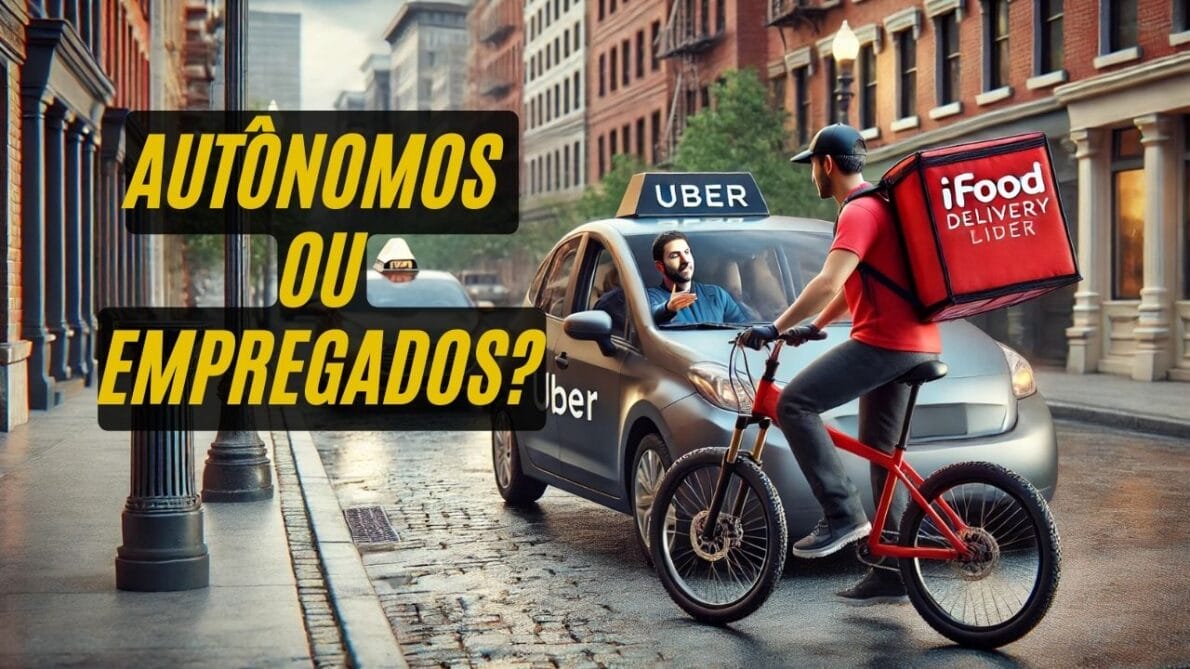

In a city that never sleeps, where drivers and deliverers appear at every corner ready to respond to a notification, app workers are the embodiment of 21st-century agility. But behind every quick delivery and last-minute rush, there is an issue as complex as a legal labyrinth: after all, who are these professionals? Independent contractors? Employees? Or a new category that challenges the very concept of employment relationships? With the topic becoming increasingly relevant, lawyers and legislators are seeking solutions that bring security and clarity to professionals who, between Uber, 99, and iFood, drive the country’s digital economy.
Attorney Marcela Carvalho Bocayuva, a labor law specialist and founding partner of the law firm Bocayuva & Advogados Associados, explains that Brazilian labor legislation was shaped for a very different scenario, with roots in the Industrial Revolution era. “This legislation was created for workers with fixed hours and workplaces, something that does not correspond to the reality of these new app workers,” says Bocayuva, who is also the coordinator of the National School of the Judiciary.
According to data from the Brazilian Institute of Geography and Statistics (IBGE), Brazil had, in 2022, around 1.5 million people who identified as “platform workers”. Of this total, 47.2% worked in private passenger transport and 39.5% in the delivery sector. Although the average income of these professionals reached R$ 2,645 in the last quarter of 2022, with the South recording the highest average earnings, the legal classification of these professionals remains shrouded in uncertainty.
Millions of App Workers at Uber, 99, and iFood
For Bocayuva, the rapid expansion of digital platforms, such as Uber, 99, and iFood, which usually classify these workers as independent contractors, poses a significant challenge to the law. “Platforms bring the supply and demand for services closer together, but the classification of these workers continues to generate legal controversy. The Superior Labor Court, for example, is discussing whether these professionals can or cannot be considered actual employees,” she clarifies.
-
Does Your State Rank Highest? Brazil’s IBGE Reveals Salary Rankings and Worker Disparities

-
World’s Largest Women’s Coffee Collective Emerges in Southern Brazil with 2,179 Female Farmers, Generating $21.7 Million in Four Years, Led by a 103-Year-Old Farmer Ambassador

-
How Recycling is Becoming a Billion-Dollar Industry and Boosting the Circular Economy in Brazil
-
Brazilian Nurse Invents Award-Winning Chocolate with Homemade Machine, Expands to National Markets


The Federal Supreme Court (STF) is also analyzing the issue, evaluating constitutional principles such as free enterprise and the free exercise of work. “The idea is to find a balance between the freedom of companies to hire and the necessary protection for those who depend on these platforms as their main source of income,” the attorney adds.
Bill
In 2024, President Luiz Inácio Lula da Silva took a step towards more solid regulation by sending to Congress a bill aimed at classifying app drivers as “platform independent contractors.” The bill proposes the adoption of rights that traditionally apply to employees, such as a workday of up to eight hours (or 12 hours, by collective agreement), minimum wage per hour, and social security guarantees.
However, Bocayuva points out that the road ahead is still long and full of nuances. “Creating legislation that encompasses all the specificities of these app workers is complex and may not easily adapt to the traditional model of employment relationships. Classifying them as employees may be a solution in some cases, but it is risky to generalize, as many providers may prefer the independent contractor model,” she considers.
There Are Concerns About the Economic Impact on the Sector
By categorizing them as employees, there may be an increase in the operational costs of the platforms, something that tends to reflect on the prices of services for the final consumer. “But on the other hand, keeping these workers as independent contractors or in an intermediate category may also bring benefits to companies that, in some cases, may appear disproportionate and unequal,” reflects Bocayuva.
The debate about app workers thus presents itself as one of the great issues of the contemporary labor market. In light of a still nebulous scenario, the challenge for legislators and the judiciary is to offer a solution that meets the needs of both workers and companies, but also ensures justice and protection in the digital environment.


