






 Portuguese
  Spanish
  5 min of reading
  2 comments


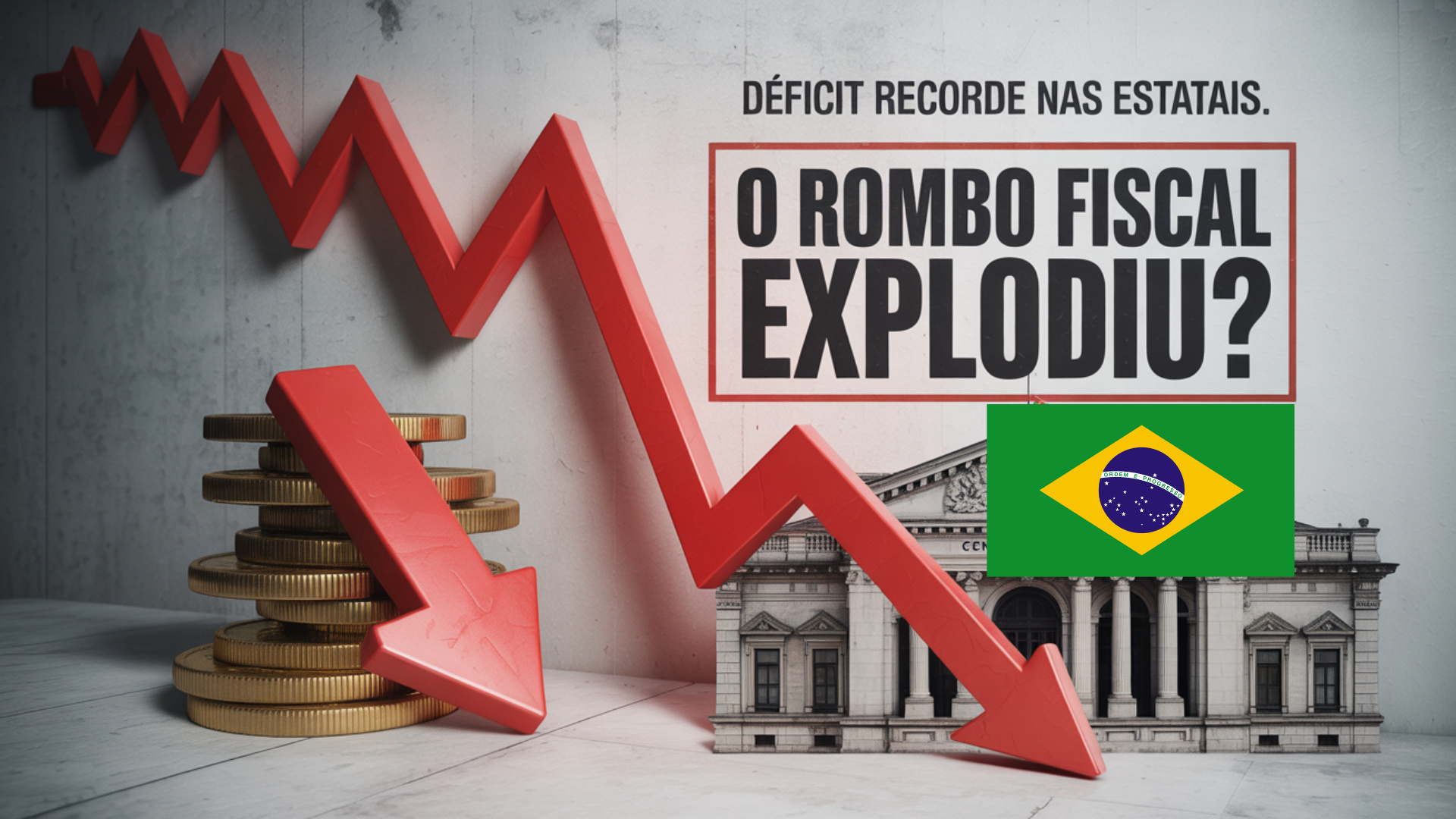


Brazilian State-Owned Companies Recorded in July 2025 the Highest Deficit in History for the Month, While the Government’s Gross Debt Increased and the Consolidated Public Sector Showed the Second Worst Result in the Historical Series.
Brazilian state-owned companies closed July 2025 with a deficit of R$ 2.1 billion, the highest ever observed for this month.
The data appears in the “Fiscal Statistics” report from the Central Bank, released last Friday (29), and highlights the recent deterioration of public accounts.
In the same survey, the consolidated public sector — which includes the Union, States, municipalities, and state-owned enterprises — totaled a primary deficit of R$ 66.6 billion, the second worst performance for July in the series.
-
Brazilian Joins Homeownership Consortium, Faces Decade of Dual Payments Totaling $141,000, Surpassing Traditional Mortgage

-
Land Rover to Halt Production in July, Putting 371 Jobs at Risk, as Chinese Automaker Negotiates to Convert Factory to 100,000 Vehicles Annually by 2027

-
Mexican Pest Threatens U.S. Cattle Herds at Historic Lows, Potentially Boosting Brazilian Beef Exports as Burger Prices Soar

-
Brazilian Freight Bill Progresses in Congress with $5,000 Minimum Wage, 70% Advance Payment, and Fines Up to $1 Million, as Agriculture and Industry Warn of Rising Costs and Legal Uncertainty


Record Deficit of Brazilian State-Owned Companies
The negative balance exceeded the previous record, set in 2024, when the deficit was R$ 1.7 billion.
In previous years, the July result fluctuated between surpluses and deficits, with strong variations.
In 2020, for example, there was a surplus of R$ 789.8 million, followed by R$ 785.6 million in 2021.
The year 2022 saw a deficit of R$ 1.3 billion, while 2023 reported a surplus of R$ 904.4 million.
This history reinforces the unstable nature of the series and helps to gauge the severity of the 2025 figure.
Unlike other periods, when the balance varied little, the most recent data broke the pattern and consolidated the worst performance ever recorded in a July.
The cumulative for the year, which has also shown successive negative results, increases concern about the trajectory of state-owned companies.
Consolidated Public Sector in July
The primary deficit of R$ 66.6 billion recorded in the consolidated public sector is only surpassed by July 2020, a year marked by the impacts of the pandemic.
The majority of the shortfall came from the central government, but States, municipalities, and state-owned enterprises also ended the month in the red.
For the 12 months up to July, the consolidated shows a deficit of R$ 27.3 billion, equivalent to 0.22% of GDP.
The data shows weakening compared to recent results and reinforces pressure on public accounts.
In addition to the primary result, the nominal outcome — which considers interest — remained pressured by high financial expenses and the need for financing.
This scenario, while secondary in the report, helps to understand the dynamics of the debt.
Gross Debt Approaches R$ 9.6 Trillion
The Gross Government Debt (DBGG) reached 77.6% of GDP in July, equivalent to R$ 9.6 trillion.
The index rose 0.9 percentage points compared to June.
According to the Central Bank, the increase was mainly due to accrued nominal interest, net securities issuances, and foreign exchange variations, softened only by the effect of nominal GDP.
In practice, the debt maintained an upward trend and consolidated itself as one of the main points of attention in the fiscal picture.
The increase is not explained solely by July.
The combination of high interest expenses and the constant need to roll over securities puts pressure on the stock month by month.
Consequently, the deterioration of the primary result contributes less to hold back the advance of the debt/GDP ratio.

Factors Explaining the July Result
Part of the July deficit resulted from specific effects.
In the central government, payments of court-mandated payments, concentrated in the month after previous delays, increased the volume of expenses.
At the same time, revenue lost steam due to the slowdown in economic activity.
For subnational entities, the lower intake of transfers combined with seasonal spending pressures on accounts.
State-owned companies, in turn, were impacted both by the performance of individual companies and by investments and disbursements concentrated during the period.
The final result exceeded the common fluctuations in the historical series and established a new negative record for July.
Impacts on Fiscal Policy
The performance of accounts adds difficulties to meeting fiscal targets and the functioning of the framework.
With the DBGG at 77.6% of GDP and a high deficit in July, the need to strengthen the primary result returns to the center of the debate.
Besides the one-off effect of court-mandated payments, the trajectory of mandatory spending and the efficiency of revenue-raising measures will be decisive for the second half.
The debt/GDP ratio also directly depends on the cost of rolling over the debt.
With interest rates still high, the Treasury faces heavier expenses, which feeds back into the growth trajectory of the DBGG.
This cycle demands greater effort on the fiscal side to prevent the debt from continuing to expand rapidly.
The report from the Central Bank, released monthly, serves as a short-term signal regarding the evolution of these indicators.
Historical Overview of Public Accounts in July
The comparison between 2024 and 2025 shows a significant jump. Last year, the deficit was R$ 21.3 billion.
Now, in July 2025, it reached R$ 66.6 billion. Although extraordinary factors explain part of the increase, the data reinforces the recent fiscal deterioration.
In the case of state-owned companies, the difference is also striking. From R$ 1.7 billion negative in July 2024 to R$ 2.1 billion in July this year.
Two years prior, the balance had been positive, showing the strong variability of the sector.
Outlook for the Coming Months
The next figures will indicate whether the performance in July represents just an exception or if it inaugurates a trend of greater fragility.
Measures to rebuild revenue, control mandatory expenses, and any extraordinary actions will play a decisive role in this outcome.
In the case of state-owned companies, the operational performance of large companies and the investment calendar may ease or intensify the pressure.
The question that arises is: with a record deficit in state-owned companies, a shortfall of R$ 66.6 billion in the consolidated and debt at 77.6% of GDP, what strategy will have enough strength to restore the balance of public accounts without compromising economic activity?





Depois o presidente vai para a mídia ESTATAL ****, dizer que o país está uma maravilha, que está muito melhor em tudo.
**** DESCARADO!!!!
É triste um site **** que não ensina a população, PT é ruim sim, Brasil está ruim sim! Mas praticamente a única preocupação são os correios, ok pode vender. Agora neste mesmo canal colocaram lucro recorde no governo Bolsonaro, incluíram Petrobrás, Banco do Brasil, Caixa, Eletrobras… Agora se coloca estas empresas na conta o lucro passa de R$100.000.000.000,00, passa de 100 bilhões o lucro. A intenção é mentir para vender Petrobrás, Caixa, BB? Vergonha de site. Novamente sou fora PT! O rombo está aí e o motivo não é estatal, mas sim a má gestão do PT e toda a **** da nossa direita que junto com nossos canais de comunicação são corruptos igual.