






 Portuguese
  Spanish
  4 min of reading
  0 comments


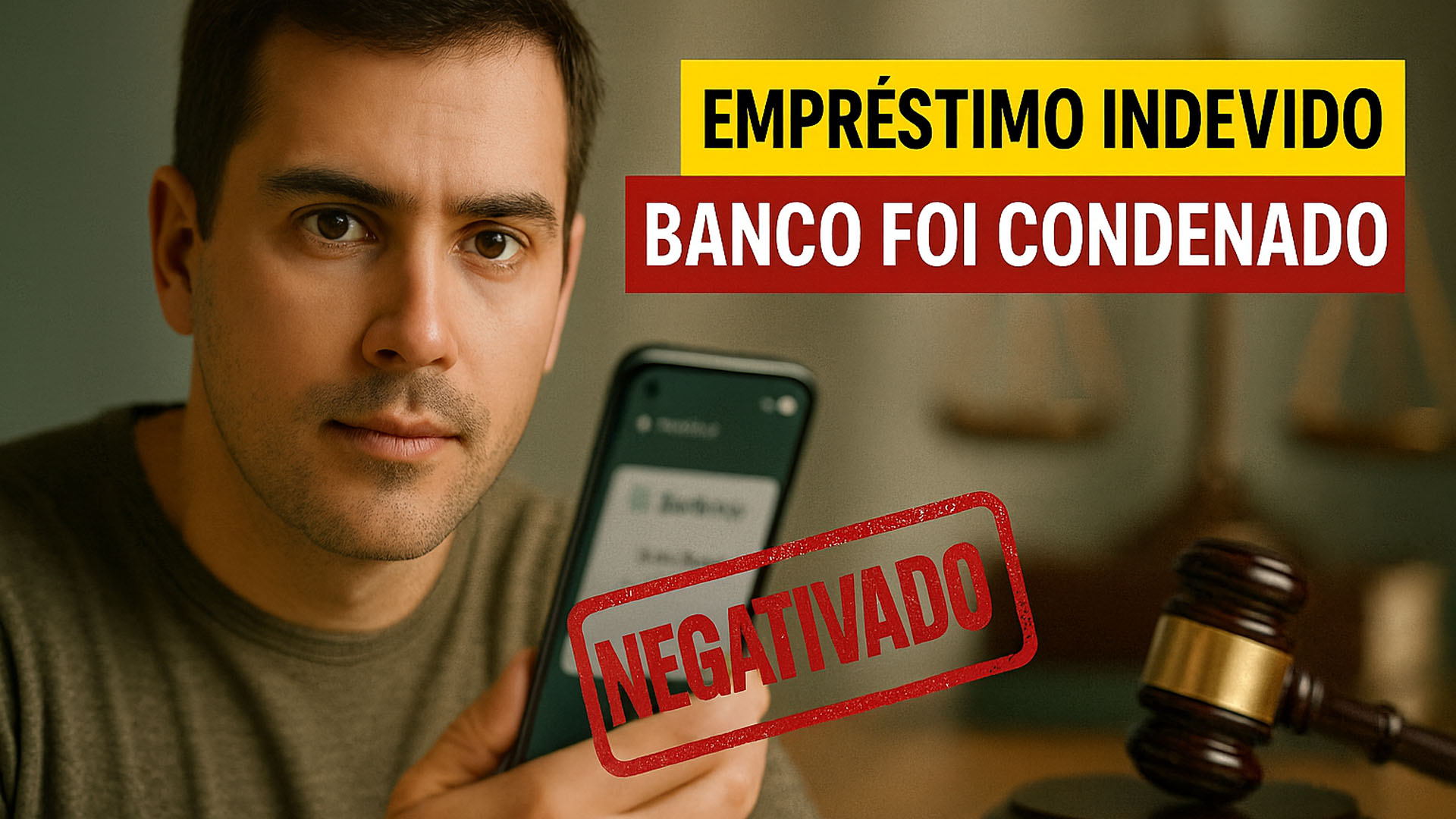
Alagoas Client Obtained a Court Ruling to Cancel a Contract He Did Not Acknowledge and Will Receive Compensation for Moral Damages After His Name Was Added to Default Registries Without Authorization
The fintech PicPay, known as a digital bank, was ordered by the Alagoas Court to compensate a client who had his name negatively impacted without having authorized the renegotiation of a loan. The ruling comes from Judge Bruna de Leão Figueiredo, of the 9th Special Civil Court of the Capital, in Maceió.
The consumer had taken out a loan with the company but discovered that a new contract, amounting to R$ 2,061.36, was registered in his name without any request or authorization. The supposed renegotiation resulted in the inclusion of the client’s CPF in default registries, which directly affected his financial reputation.
Faced with the improper negative listing, the client sought solutions through PicPay’s customer service channels, attempted to register a complaint on the consumidor.gov.br platform, and reached out to Procon/AL, but did not receive an effective response. Left with no alternative, he filed a lawsuit requesting a declaration of inexistence of the debt, the removal of his name from restrictive records, and compensation for moral damages.
-
Detran RJ starts requiring a toxicological test for those obtaining their first driver’s license in the car and motorcycle category starting June 29; see who will be affected.

-
Florida takes TikTok to court and accuses the Chinese giant ByteDance of ignoring the law that bars minors under 14, while parents and authorities demand more protection for children on social networks.
-
Chamber approves constitutional amendment reducing the age of criminal responsibility from 18 to 16 years; what now?

-
Justice confirms that old debts in tax executions that have been stalled for more than 15 years can no longer be collected through judicial or administrative means.


How the Improper Negative Listing of the Digital Bank Client Occurred
According to the decision, the consumer proved that he had only contracted the original loan, without requesting any renegotiation of the debt. Still, PicPay generated a second contract, increasing the amount owed and treating the operation as if it had been properly agreed upon by both parties.
This new contract of R$ 2,061.36 was used as a basis for including the client’s name in default lists, a practice that courts often consider serious, as it affects access to credit and the individual’s reputation in the market. In similar cases, state courts have recognized that improper registration in default registries constitutes presumed moral damage, without the need for proof of concrete loss.
What the Alagoas Court Decided in the PicPay Case
According to news released by the Superior School of the Judiciary of Alagoas (Esmal), linked to the Alagoas Court of Justice (TJAL), the judge ordered the digital bank to pay R$ 3,000 in moral damages to the consumer.
The decision also ordered the removal of the victim’s name from default registries, restoring his status with credit protection agencies.
In the case papers, PicPay claimed system unavailability to justify its absence from the hearing but did not provide evidence to support that justification. The judge emphasized that the company, by imposing on the plaintiff an obligation that he did not acknowledge, engaged in conduct that “transcends mere annoyance“, causing a compensable moral harm.
The ruling references case No. 0701098-22.2025.8.02.0082, which is pending in the 9th Special Civil Court of the Capital, in Maceió. The case reinforces the understanding that digital banks and fintechs are subject to the same civil liability rules that apply to traditional financial institutions, even when operating entirely online.
Consumer Rights in Cases of Negative Listings Without Authorization
Cases of improper negative listings are handled by the Justice System based on the Consumer Protection Code (CDC), which provides for objective liability for financial service providers. This means that the digital bank is liable for the damages caused, even if there was no intent, requiring only proof of the failure in service provision and the loss caused to the client.
Courts across the country have ruled that the improper registration of a consumer’s name in default registries results in dano moral in re ipsa, meaning presumed damage. In this regard, decisions involving traditional banks and digital payment platforms have set compensations varying according to the severity of the case, the duration of the negative listing, and the economic situation of the parties.
Additionally, agencies such as state Procons and the consumidor.gov.br platform, managed by the National Consumer Secretariat, encourage anyone receiving unknown charges to contest them immediately.
The consumer should keep protocols, receipts, and screenshots, as these documents are often used as evidence in potential legal actions.
What the PicPay Case Teaches Digital Bank Users
The condemnation of PicPay in Alagoas highlights that the convenience of digital banks does not eliminate the obligation of security and transparency in credit operations. The creation of unsolicited contracts and the consequent negative listings represent serious control failures, whether due to internal errors or vulnerabilities to fraud.
For fintech users, the incident reinforces the importance of regularly monitoring the loan statements, invoices, and app notifications, as well as periodically checking the CPF with services that show the existence of credit restrictions. Any discrepancy should be immediately contested, in writing, with the company and, if necessary, with consumer protection agencies.
It also makes it clear that when the problem is not resolved administratively, resorting to the Judiciary is an effective route. In recent decisions, courts have reaffirmed that online payment companies, such as PicPay itself, must be held accountable for undue charges and negative listings, under penalty of compensating the consumer and adjusting their systems to prevent further failures.
Have you ever faced a situation where you had a debt you did not acknowledge, unexpected charges from a digital bank, or your name negatively impacted without explanation? Share your experience in the comments, let us know if you think the R$ 3,000 compensation was sufficient, and whether digital banks are truly respecting consumer rights.





Be the first to react!