






 Portuguese
  Spanish


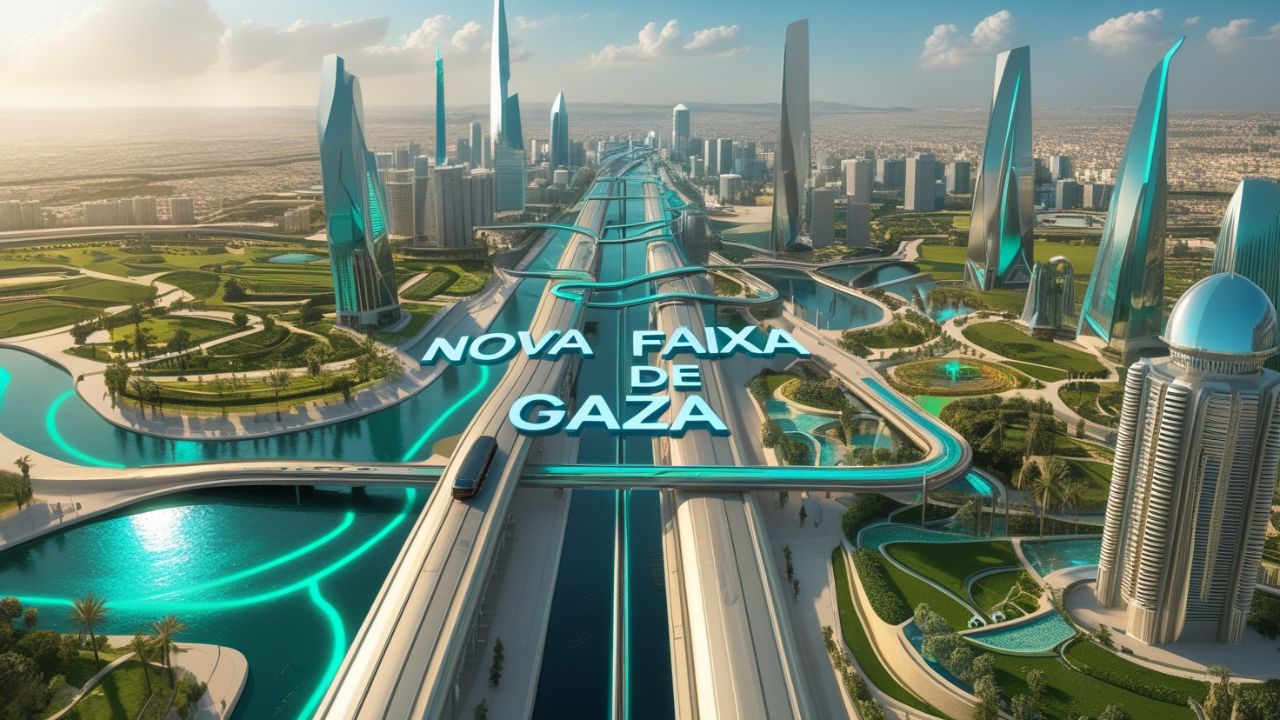


Israeli Prime Minister Benjamin Netanyahu Presents CGI Images of Reconstructed Gaza with Futuristic Skyscrapers, Railways, and Oil Platforms.
The Israeli Prime Minister Benjamin Netanyahu surprised the world by releasing CGI images showing Gaza transformed into a futuristic urban and rural settlement. The ambitious proposal, dubbed “Gaza 2035,” aims to rebuild the area with modern skyscrapers, railways, and a free trade-based economy.
However, the project does not contemplate the return of the displaced Palestinian population, which has drawn harsh criticism from international leaders. The idea was presented shortly after Donald Trump revealed his vision to turn the Gaza Strip into the “Riviera of the Middle East,” a concept that, for many, ignores the political and social complexities of the region.
The Reconstruction Proposal for Gaza by Benjamin Netanyahu
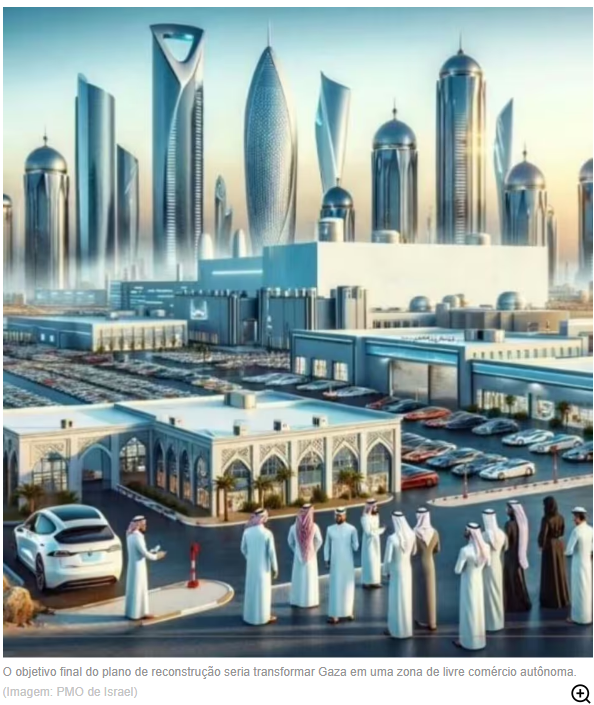
Benjamin Netanyahu’s plans to reconstruct Gaza were presented alongside detailed images of how the region could become a modern and economically vibrant city. However, the announcement came with a controversial proposal: displaced Palestinians would not return to the territory and would be resettled elsewhere.
-
U.S. City Builds Tiny Home Village on Water Company Land to House 136 Homeless People: Inside the Social Housing Units

-
Woman Turns Shipping Container into Home, Embraces Rural Life to Cut Monthly Expenses to Just Over $330
-
France Revamps 530 Social Housing Units with Large Balconies and Glass Facades Without Demolishing Existing Buildings

-
Facing high rent, couple transforms parents’ garage into a fully functional apartment, creating a complete home at a fraction of the market cost.




This idea aligns with previously revealed plans by Donald Trump, who stated that Gaza would be handed over to the United States at the end of the conflict while Palestinians would receive “safe and modern” new homes in another part of the region.
This vision was met with strong opposition from Arab countries and humanitarian groups, who consider the proposal a plan for forced displacement and an attempt to reshape the region without the participation of the Palestinian population.
The ‘Gaza 2035’ Project and Its Futuristic Ambition
The proposal dubbed “Gaza 2035” aims to transform the devastated Gaza Strip into a center for economic development and innovation. The released images depict a futuristic scenario, including:
- Modern skyscrapers dominating the landscape
- A 211-kilometer railway connecting Gaza to the futuristic city of NEOM in Saudi Arabia
- Offshore oil platforms and solar energy fields, turning the region into a hub for renewable energy
The ambition of the project is immense, and comparisons to Dubai and Singapore are inevitable. However, critics point out that this urban utopia does not include the Palestinians who historically lived there, making it a project with strong political and humanitarian implications.
Phases of the Plan and the Creation of a ‘Safe Zone’
For the reconstruction of Gaza to happen, the plan outlines a series of strategic steps, starting with the elimination of Hamas and the creation of a safe environment for investment and development.
Phase 1 (12 Months): Israel would ensure that the region is free of Hamas, establishing a security zone from North to South in the Gaza Strip. During this period, humanitarian aid would be overseen by countries such as Saudi Arabia, Egypt, and the United Arab Emirates.
Phase 2 (5 to 10 Years): The Gaza Rehabilitation Authority would be established, an international body responsible for reconstructing the infrastructure and financial management of the Strip. A “Marshall Plan,” similar to the one that rebuilt Europe after World War II, would be implemented to attract investments.
Phase 3: The governance of Gaza would finally be handed over to an autonomous Palestinian government, on the condition that the leaders accept the Abraham Accords and establish diplomatic relations with Israel.








