






 Portuguese
  Spanish


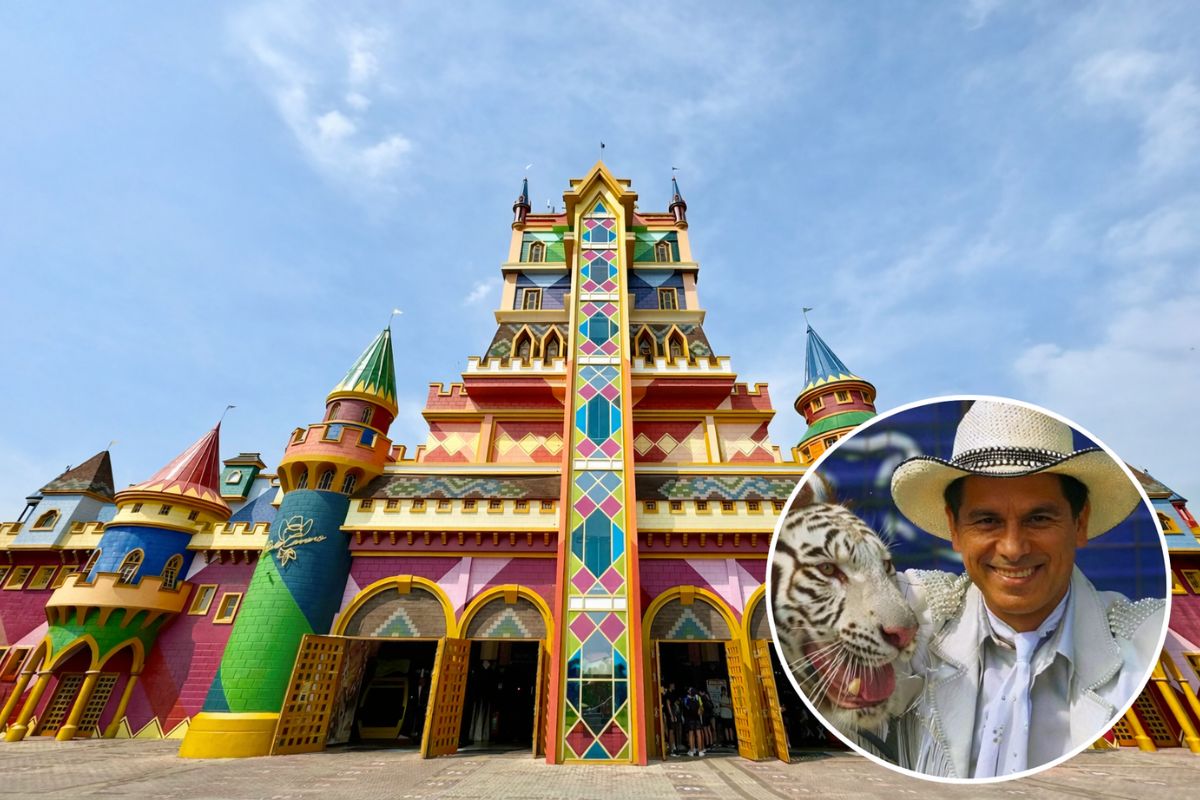


Beto Carrero’s Journey Reveals How His Humble Childhood, Experiences in Radio, Music, Advertising, and Circus, Along with the Creation of an Affective Brand, Sustained the Opening of a Park in Santa Catarina That Evolved into a Latin American Reference, Global Award-Winning and Projected for New Expansions in the Coming Decades with Strong Management.
Beto Carrero is the name that summarizes a rare transformation in Brazilian entertainment: that of João Batista Sérgio Murad, a poor boy from the interior of São Paulo who emerged from the imaginary of a hero to build a real leisure operation on an international scale. The path was not linear but combined artistic talent, audience insight, and business vision.
Born on September 9, 1937, in São José do Rio Preto, João Batista was the second to last of 11 siblings, grew up in a humble family, and went through different professional phases until he consolidated a strong public identity. Decades later, this personal journey became a lasting project, with a physical base in Penha, Santa Catarina, and recognition beyond Brazil.
From Humble Origins to Heroic Imaginary

The foundation of the story begins far from the major cultural production centers. In São José do Rio Preto, João Batista’s childhood was marked by material restrictions and a typical interior routine, but also by a powerful symbolic repertoire: heroes, adventure, popular spectacle, and fascination with courageous characters. This contrast between economic limits and creative ambition helps explain the magnitude of the leap that would come later.
-
China Tightens Control on Antimony, Driving Prices from $22,000 to Nearly $40,000 per Ton as U.S. Rushes to Bolster Strategic Reserves

-
BlackRock Freezes $1 Billion in Brazilian Renewable Energy, Impacting 1.5 GW of Planned Projects and Highlighting Investor Concerns Over Infrastructure Bottlenecks Cutting Up to 25% of Solar and Wind Generation
-
Labor Shortage: Despite Record Average Salary, 90% of Brazilian Bar and Restaurant Owners Struggle to Hire Key Roles Like Sushi Chefs and Head Cooks

-
Supermarket Deli Counter Attendants in Brazil Could Earn Over $2,100 Monthly by 2026, Plus Benefits Package


The dream of being a “Brazilian Zorro” was not just youthful fantasy. It served as a narrative compass for future choices, as it organized two ideas that would later meet in the same project: character and audience. From an early age, there was an intuition that entertainment did not only depend on the stage but on identity, presence, and emotional connection with the viewers.
Before the Park, A Layered Professional Formation
Before the national brand Beto Carrero existed, there was a professional in permanent adaptation.
João Batista worked as a radio announcer until he was 21, was a country musician, host on radio shows, and sales representative for ads. This path, often seen as dispersed, can be understood as complete training in communication, performance, and negotiation.
Over time, he structured an advertising agency that became one of the top 20 in Brazil, expanding his activities in the advertising and editorial markets.
In the 1970s, he was already working as an agent for established artists and performing shows at fairs, rodeos, and exhibitions in Brazil and abroad. In practice, he accumulated a repertoire of content, distribution, and monetization, three pillars that would be decisive when the park left the realm of dreams and became a reality.
How the Name Beto Carrero Was Born and Why It Gained Strength

The name Beto Carrero arose as a tribute to his father, Alexandre Carrero, known in town for driving an ox cart. This seemingly simple detail carries strategic weight: the brand is born with affective origin, family memory, and strong sound recognition. Instead of an artificial label, there was a name with history and popular identification.
In the early 1980s, the character was officially launched with the horse Faísca, consolidating the figure of the Brazilian cowboy. Beto Carrero was not just a stage fantasy; he was a narrative asset ready to circulate across different media. The audience received not just an artist but a coherent character, with clear visual signs and a promise of adventure accessible to various ages.
Expansion of Presence: Circus, Comics, Cinema, and Brand
The character’s projection came before the park’s inauguration. In 1985, Beto Carrero made his debut in comics with “The Adventures of Beto Carrero,” published by Cluq. Soon after, he appeared in the film “Os Trapalhões no Reino da Fantasia,” alongside Xuxa.
These movements broadened reach and frequency of contact with the audience, reducing dependence on a single channel.
In the circus universe, the relationship with the ring and animals also shaped the presentation style and the character’s popular connection. The former Beto Carrero Circus served as an itinerant showcase for the brand throughout the country.
This stage was decisive because it tested language, measured audience response, and consolidated national familiarity before the fixed project in Santa Catarina.
Another relevant point was the visual construction of the brand. Designer Hans Donner created the Beto Carrero logo, initially used for marketing a country fashion brand from Beto Carrero Indústria e Comércio Ltda.
Thus, the name gained commercial traction even before the character’s maximum exposure. In terms of positioning, the brand anticipated the main product.
Penha, 1991: When the Dream Becomes a Theme Park Operation
The structural milestone of the journey occurred on December 28, 1991, in Penha (SC). The opening began modestly, with a few children’s rides and two circus tents.
The central point here is not just the inauguration but the capacity to convert symbolic capital into physical entertainment infrastructure with a scalable model.
Over time, the space grew, received themed areas, and new attractions until it transformed into Beto Carrero World.
The park became recognized as a reference in Latin America and, according to the 2025 Travellers’ Choice Awards from Tripadvisor, was elected the second-best theme park in the world. This indicates a shift in level: from a national initiative to a competitive destination in the global leisure circuit.
The continuous expansion, with new billion-dollar investments, unprecedented areas, and hotel complex projects, points to a strategy of long cycles.
Instead of relying solely on the brand’s emotional memory, the operation continues to update its offerings, increasing visitor stay and reinforcing the economic value of the experience in the Santa Catarina territory.
Legacy After 2008 and Continuity Between Memory and Market
João Batista Sérgio Murad passed away on February 1, 2008, but the project he built did not end with his absence.
The legacy preserves two simultaneous levels: the symbolic, linked to the character Beto Carrero, and the business-oriented, connected to the continuity of the park as a high-traffic destination. When an undertaking spans generations, the real test is the ability to maintain relevance without losing identity.
In Penha, the Beto Carrero World Memorial serves as a preservation axis for this journey, organizing the origin narrative for new audiences and reinforcing the bond between biography, brand, and territory.
This type of structure plays a strategic role: it protects institutional memory while simultaneously sustaining the perception of authenticity in a sector where the audience values history and experience.
In the final balance, Beto Carrero’s story shows that large-scale entertainment can emerge from popular repertoire, business vision, and precise audience insight.
It was not an advancement by chance, but an accumulation of stages in radio, music, advertising, circus, character, brand, and park integrated over decades.
Beto Carrero’s journey combines humble origins, character building, media diversification, and business expansion into a single arc, with a lasting impact on Brazilian entertainment.
What began as a childhood dream in the interior of São Paulo turned into an internationally projected theme park, without breaking from the narrative that originated the name.
Now it’s worth a practical reflection: in your view, what was the most decisive decision in this turnaround — creating the character first, investing in the brand before the park, or betting on Penha when everything was still uncertain? And for those who have already visited, what best embodies this legacy today: attractions, the founder’s memory, or the ability to reinvent itself?


O conjunto de ideias faz o resultado final de todo o projeto que é o parque.