






 Portuguese
  Spanish
  5 min of reading
  0 comments


Blue Origin reused the New Glenn rocket for the first time this Sunday (19), successfully landing the first stage, but placed the BlueBird 7 satellite in an orbit too low, condemning it to destruction in the atmosphere, one of the largest equipment ever launched, with an antenna of 223 square meters.
Blue Origin experienced a split result on Sunday (19): on one side, the first successful reuse of the New Glenn rocket, whose first stage, named “Never Tell Me The Odds” after a famous phrase from the Star Wars universe, had flown previously and this time landed accurately on the Jacklyn maritime platform in the Atlantic Ocean, approximately six minutes after departing from launch pad 36 in Cape Canaveral, Florida. However, hours after the initial celebration, Blue Origin acknowledged that the payload detached and the equipment was activated, but the orbit achieved did not correspond to the planned one. What seemed like a technical detail turned out to be a failure with irreversible consequences.
The confirmation of the failure came from AST SpaceMobile itself, the manufacturer of the satellite. The company reported that, although the BlueBird 7 separated from the vehicle and became operational, the altitude achieved was too low for the equipment to sustain operations with its onboard propulsion, and it would be deorbited. In practice, this means that one of the largest satellites ever placed in space, with a 223 square meter antenna designed to provide cellular broadband directly to smartphones, will be destroyed upon re-entering the Earth’s atmosphere. For Blue Origin, the episode turns a technical victory into a bittersweet result.
What Blue Origin got right on the third flight of the New Glenn

The success of the landing cannot be minimized. Reusing the first stage of an orbital rocket is a capability that only SpaceX commercially masters with the Falcon 9, and Blue Origin demonstrated on Sunday that its New Glenn is also capable of returning and landing after delivering payload to space. The “Never Tell Me The Odds” stage took off, fulfilled its function of boosting the payload beyond the atmosphere, and returned to the Jacklyn platform in the Atlantic in approximately six minutes, an operation executed without visible flaws.
-
Federal Police involved in the case to identify the person responsible for hacking the Civil Defense system, which sent ten false alerts, frightened residents of different capitals, and turned messages about real risks into notifications with “misanthropy” and even alien attacks.

-
Extreme drought causes ghost village to reappear at the bottom of the reservoir that supplies Athens, revealing houses, a school, and ruins swallowed since the 1980s as the lake shrinks and exposes the water crisis threatening the capital of Greece.

-
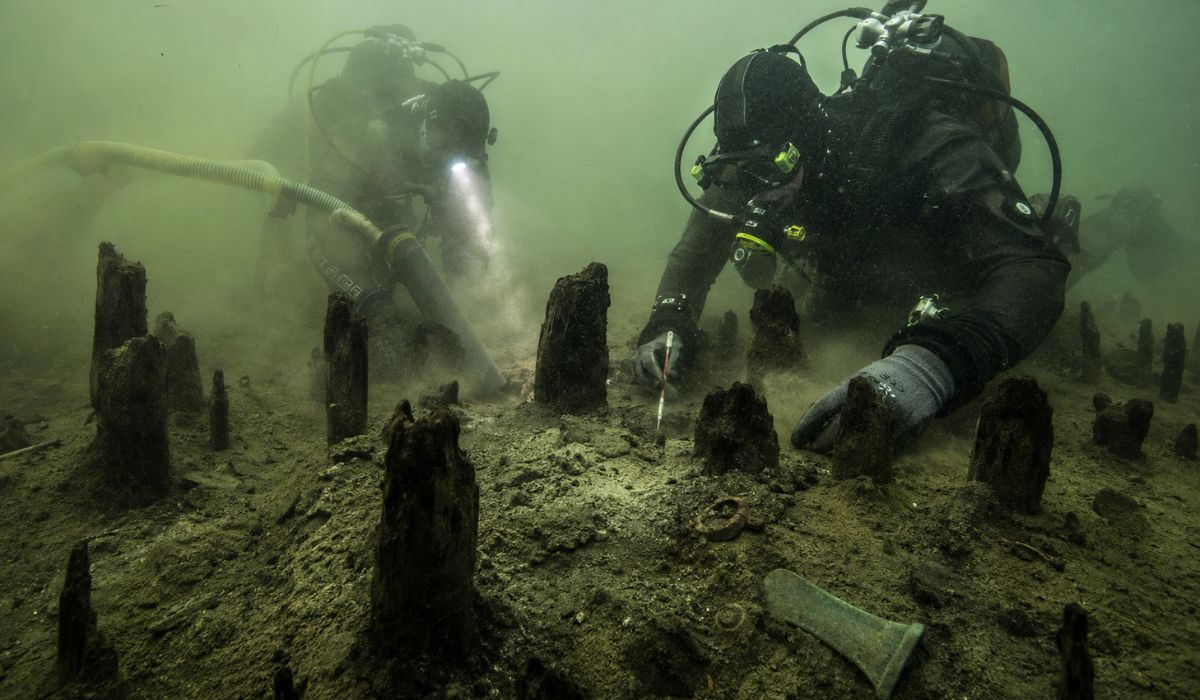
An entire village lay asleep at the bottom of a lake for 3,000 years: divers suction sediments in Italy and reveal more than 600 wooden stakes, bronze tools, and traces of a Bronze Age settlement hidden underwater.
-
They call it the “Shopee house” and even cardboard, but the R$ 20,000 house is a certified Wood Frame from Alea, financed by Minha Casa Minha Vida: understand if it’s worth more than masonry.



For Bezos’s company, this milestone validates years of investment in the concept of large reusable rockets. Blue Origin needs this capability to compete with SpaceX in the commercial launch market and to secure government contracts, including lunar missions planned for the coming years. The successful landing keeps the company on the path of technical development and paves the way for future New Glenn flights to reuse already tested stages, reducing costs and accelerating the launch cadence.
What Blue Origin Got Wrong and Why the Satellite Will Be Destroyed

The failure occurred in delivering the payload to the correct orbit. The second stage of the New Glenn, responsible for positioning the satellite at the planned altitude and inclination, failed to reach the necessary orbital parameters for the BlueBird 7 to operate normally. The achieved orbit was so far below the expected that the satellite’s own propulsion system, designed for fine positioning adjustments and not for large-scale maneuvers, does not have the capacity to correct the difference.
AST SpaceMobile confirmed that the equipment’s fate is controlled deorbiting. The BlueBird 7 will progressively lose altitude and will be incinerated upon re-entering the atmosphere, prematurely ending the life of a satellite that cost millions of dollars and is part of a constellation designed to revolutionize global cellular connectivity. Blue Origin has not publicly detailed the exact cause of the anomaly in the second stage, and the investigation into what prevented the correct orbital insertion may take weeks or months.
The BlueBird 7 Satellite That Blue Origin Lost Was Not Just Any Equipment


The BlueBird 7 is part of a constellation from AST SpaceMobile aimed at providing cellular broadband signal directly to mobile devices, without the need for intermediate ground antennas. The project’s differentiator lies in the scale of the antenna: with 223 square meters of surface area, the satellite is one of the largest ever sent to space, a size necessary to capture and retransmit signals with enough power to reach common smartphones on the ground. Losing equipment of this size represents not only financial loss but also delays in deploying a technology that promises to connect areas without terrestrial coverage.
The destruction of BlueBird 7 raises questions about the reliability of New Glenn as a commercial launch vehicle. Clients hiring Blue Origin to place payloads in orbit need assurance that the satellite will reach the correct destination, and a failure in orbital insertion on the rocket’s third flight does not inspire the necessary confidence to attract high-value contracts. The company will have to demonstrate that the anomaly was identified and corrected before convincing satellite operators to trust new payloads to New Glenn.
What the partial failure means for Blue Origin’s lunar plans
Bezos’s company has a crewless lunar landing scheduled for 2026, using the MK1 “Endurance” module, an earlier version of the MK2 that will eventually carry NASA astronauts to the lunar south pole. The relationship between the second stage failure on Sunday and the timeline of lunar missions has not yet been detailed by Blue Origin, but any orbital insertion issue in commercial flights raises inevitable questions about the system’s maturity for more complex missions. Sending a module to the Moon requires even greater orbital precision than positioning a satellite in low Earth orbit.
The mixed outcome puts Blue Origin in an ambiguous position. On one hand, the reuse of the first stage is a concrete advancement that brings the company closer to the operational level of SpaceX. On the other hand, the loss of a payload on the third flight of New Glenn demonstrates that the rocket still carries technical immaturities that need to be resolved before Blue Origin can present itself as a reliable alternative in the launch market. In space, as the episode itself demonstrated, it is not enough to take off and land gracefully: it is necessary to deliver the payload to the right address.
And you, do you think Blue Origin should celebrate the landing or be more concerned about the loss of the satellite? Does New Glenn have a future as a competitor to Falcon 9? Leave your opinion in the comments.





Be the first to react!