Portuguese
  Spanish


Watts Mobility launched for sale in Brazil, in 2026, the electric motorcycle Watts W125, the model that promises to retire trips to the gas station: up to 160 km of range with two batteries, speed of up to 90 km/h, and price starting from R$ 15,992 in the entry version. Produced in the industrial hub of Manaus, the electric motorcycle arrives precisely to compete for the leadership of a market that continues to grow in the country.
According to Watts Mobility, the electric motorcycle Watts W125 is equivalent to a 125cc combustion engine, but instead of a gas tank, it uses a 72V 40Ah lithium battery, removable and bivolt, which can be charged in a regular household outlet. According to Revista Moto, Watts took the lead among emerging electric motorcycle brands in Brazil after Voltz, until then the main reference in the segment, entered judicial recovery. The central promise is simple: say goodbye to gasoline and turn refueling into an electricity bill.
What changes with the arrival of the Watts W125
The electric motorcycle Watts W125 arrives in Brazil as an urban transport proposal that completely dispenses with the gas station. Instead of a combustion engine, it features a 3,000 W electric motor, with a peak of 4,300 W, delivering performance equivalent to a conventional 125cc, that displacement so popular on Brazilian streets. The difference is that the electric motorcycle does not consume a single drop of fuel.
For the everyday motorcyclist, the entire routine changes. Instead of stopping at the station, the motorcycle owner simply removes the battery, takes it inside the house or workplace, and connects it to a regular outlet. The range of up to 160 km with the two batteries easily covers a whole week’s commute for many people, and charging happens while the person sleeps or works.
-
General Motors Replaces Over a Thousand Workers with 50 Cobots at Electric Vehicle Plant, UAW Union Criticizes Move Amid Industry’s Automation Push

-
Bosch and Nikon 3D Print Entire Aluminum V8 Engine Block, Sparking New Competition in the Automotive Industry

-
Honda and Nissan Form Alliance to Tackle Competition from Chinese Automakers After $9 Billion Loss
-
Hyundai Phases Out Powerful Engine in HB20, Reduces Turbo Version in Strategic Shift Affecting Creta and HB20S, Potentially Impacting Car Prices in Brazil.



More than a vehicle, the electric motorcycle presents itself as a change of habit. The savings on refueling, the absence of noise, and the reduced maintenance form the package that is increasingly seducing Brazilians. And the electric motorcycle wants to be the name that symbolizes this shift towards the end of gasoline on the streets.
Technical specifications: 3,000 W motor and up to 90 km/h
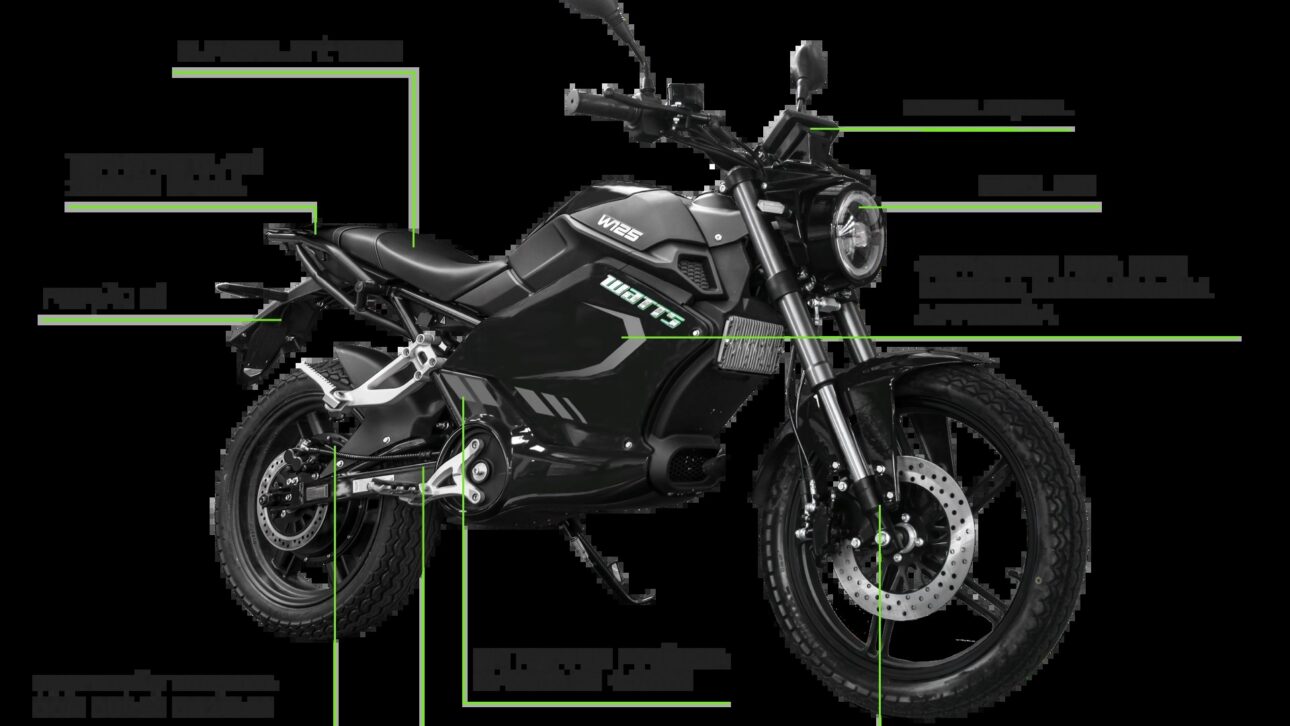
The technical specifications of the Watts W125 explain why it has been attracting so much attention. The 3,000 W motor, which reaches a peak of 4,300 W, offers three riding modes. In Eco mode, the electric motorcycle runs up to 50 km/h and delivers maximum range.
In Comfort mode, it reaches 60 km/h. And in Sport mode, the speed rises to up to 90 km/h, a respectable number for an electric equivalent to 125cc.
The heart of the system is the 72V 40Ah lithium battery. It is removable, allowing it to be taken out of the motorcycle for charging, and is dual voltage, meaning it accepts both 127V and 220V without an adapter. Each battery is designed to be carried by hand, and the motorcycle accepts one or two units, depending on the version chosen by the buyer.
The panel is digital and monitors the two batteries at the same time, showing the charge and remaining range. The electric motorcycle also features an LED headlight, USB port, reverse function for maneuvers, keyless technology with control and alarm. The model supports up to 150 kg of weight and can carry about 20 kg of cargo in the trunk.
Range of up to 160 km: the two batteries that make the difference
Range is the most significant factor for those considering buying an electric motorcycle, and the Watts W125 addresses this with its dual battery system. With just one lithium battery, the model delivers about 80 km in the most economical mode. With both batteries installed, the total range reaches up to 160 km, a number that places the electric motorcycle at the top of the entry-level category.
In practice, this range of up to 160 km means that many urban users can ride for several days without thinking about stopping to charge. The riding mode greatly influences this: in the faster Sport mode, the range per battery drops to around 50 km, while in Eco it stretches to 80 km. The rider decides between speed and range, adjusting everything via the panel.
The great idea of the project is the removable battery. Those living in apartments don’t need to take the motorcycle to a power outlet: just remove the battery and take it up in the elevator.
This solves one of the biggest barriers to the adoption of electric motorcycles in cities, where not everyone has a garage with a power point. Range is no longer an issue when charging fits in a backpack.
Charging at home: how long does it take
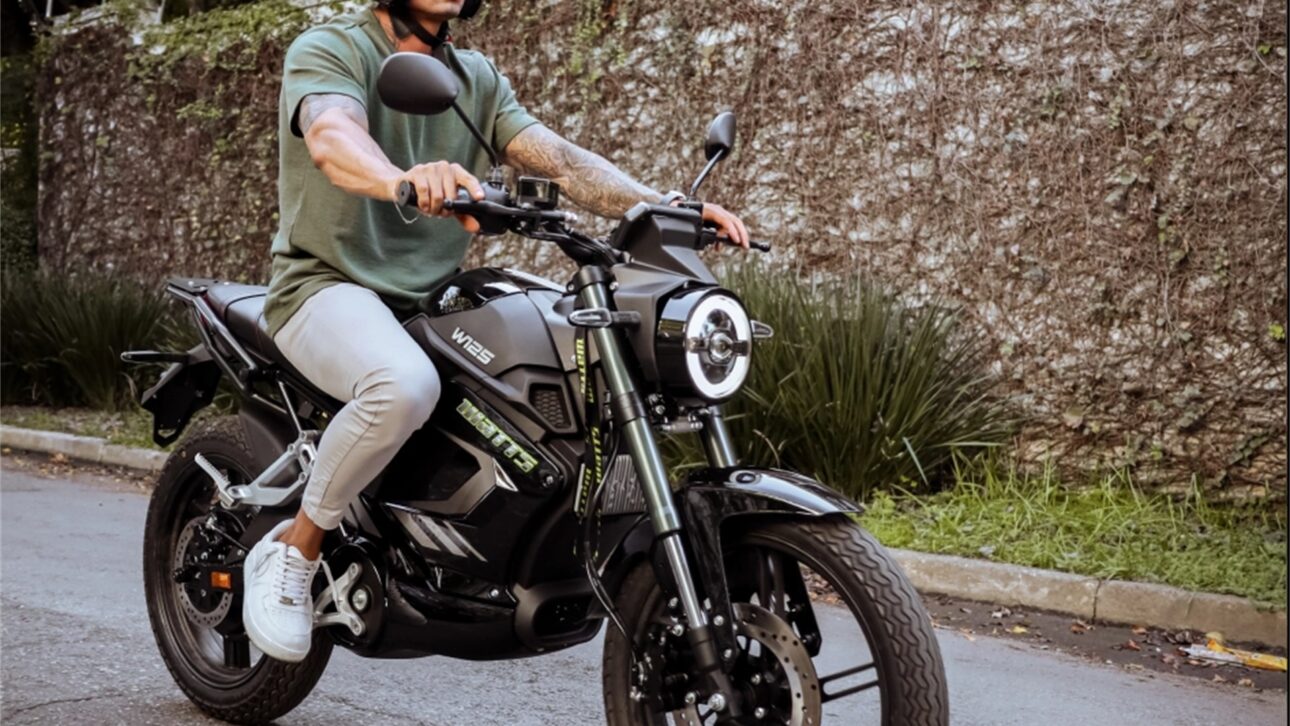
The motorcycle’s recharge was designed to be the most trivial thing in the world. There’s no need to install a special charger or look for a charging station: the battery is dual voltage and plugs directly into a common outlet, the kind found on any wall. A full recharge takes about 5 hours per battery, a time that fits into a night’s sleep or a workday.
Since the charger is dual voltage, recharging works the same at 127V and 220V, without risk and without an adapter. Those who have both batteries can alternate them: use one while the other is recharging, keeping the motorcycle always ready. This flexibility is one of the reasons why the electric motorcycle is winning over those who depend on the vehicle for work.
Recharging at home changes the cost logic. Instead of facing the line at the gas station and the price of gasoline, the electric motorcycle owner pays only for the electricity consumed, which is a fraction of the cost of a full tank.
Nighttime recharging, when many distributors charge lower rates, can further reduce the bill. This is where the biggest promise of the Watts W125 comes in: real savings at the end of the month.
Savings: the true farewell to gasoline
If there is one word that sums up the proposal of the Watts W125, that word is savings. Replacing gasoline with plug-in energy represents significant savings in what many still call refueling. Each recharge costs a few reais, while filling the tank of a combustion motorcycle consumes a much larger amount, which still rises with each fuel price adjustment.
The savings don’t stop at refueling. The electric motorcycle has far fewer moving parts than a gasoline motorcycle, which means less maintenance: no oil changes, no belt, no spark plug, no filter to replace.
Fewer visits to the workshop turn into more savings at the end of the month. For those who use the electric motorcycle as a work tool, like delivery drivers and service providers, these savings accumulate quickly and make a real difference in the budget.
Add to that the time savings. No lines at the gas station and no waiting, the charging happens at home, at the owner’s pace.
The electric motorcycle turns refueling into a quiet household task. It’s this combination of money, maintenance, and time savings that explains why so many people are willing to say goodbye to gasoline and switch to the electric motorcycle for good.
Brakes, safety, and what’s standard
Speed and range are worth nothing without safety, and the electric motorcycle features disc brakes on the front and rear, with a CBS system. The CBS distributes the braking force between the two wheels when a single command is activated, which helps to stop in less space and with more stability, something especially useful in stop-and-go urban traffic.
The suspension has been calibrated for Brazilian roads, with an adjustable rear monolink shock absorber. The setup aims to balance comfort and firmness, so the electric motorcycle can handle potholes and speed bumps without sacrificing drivability. The model supports up to 150 kg and can also carry about 20 kg of luggage, a number that interests those who work carrying weight around the city.
In terms of technology, the package is complete: keyless start with control, alarm, LED headlight, USB port, and reverse function, which greatly facilitates parking a heavier vehicle. All of this comes standard, at no extra cost, reinforcing the argument that the electric offers a lot of content for the price charged.
Price and where to buy
The price is perhaps the model’s strongest argument. The entry-level version, with one battery, costs from R$ 15,992, a price that places it below many combustion motorcycles of similar size. The version with two batteries, which guarantees a range of up to 160 km, costs around R$ 20,000 to R$ 25,000 at dealerships, depending on state taxes and freight.
The Watts W125 is produced in the Manaus industrial hub and sold by a network of dealerships spread throughout Brazil, which facilitates assistance and parts replacement. The brand offers a 24-month warranty for the motor and battery, the most expensive components, and a 12-month warranty for the rest of the electric motorcycle. There are four color options for the buyer to choose from.
It’s worth remembering that the value of the extra range weighs in: those who opt for the single battery version save on the purchase but give up half the range. Those who ride a lot tend to offset the investment in two batteries with daily energy savings. It’s a decision that depends on usage, and the electric motorcycle offers both entry points.
Is it worth it? Watts leading the electric market
The question that remains is straightforward: is it worth it? For those who ride in the city and seek savings, the answer tends to be yes. The W125 combines competitive range, charging from a regular outlet, and an entry price that few competitors can beat. It’s the kind of vehicle that pays for itself over time, precisely because of the reduction in fuel and maintenance costs.
The market context reinforces the movement. Watts took the lead among emerging electric brands in Brazil after Voltz, the former sector reference, entered judicial recovery. This gap opened space for the Manaus manufacturer to take the leading role and gain the trust of those who were unsure about migrating to new technology.
Of course, there are caveats. The actual range depends on the riding mode, the weight carried, and the terrain, and the speed of up to 90 km/h does not qualify the model for long road trips. But for urban use, which is the vast majority of cases, the proposal works: less cost, less noise, fewer trips to the gas station. The farewell to gasoline, which was once a distant promise, has become a concrete option in many people’s garages.
It remains to be seen how many Brazilian motorcyclists are ready to embrace this change now. If the numbers add up and the outlet permanently replaces the gas station, how long will it take until gasoline becomes an exception in the country’s garages?