






 Portuguese
  Spanish


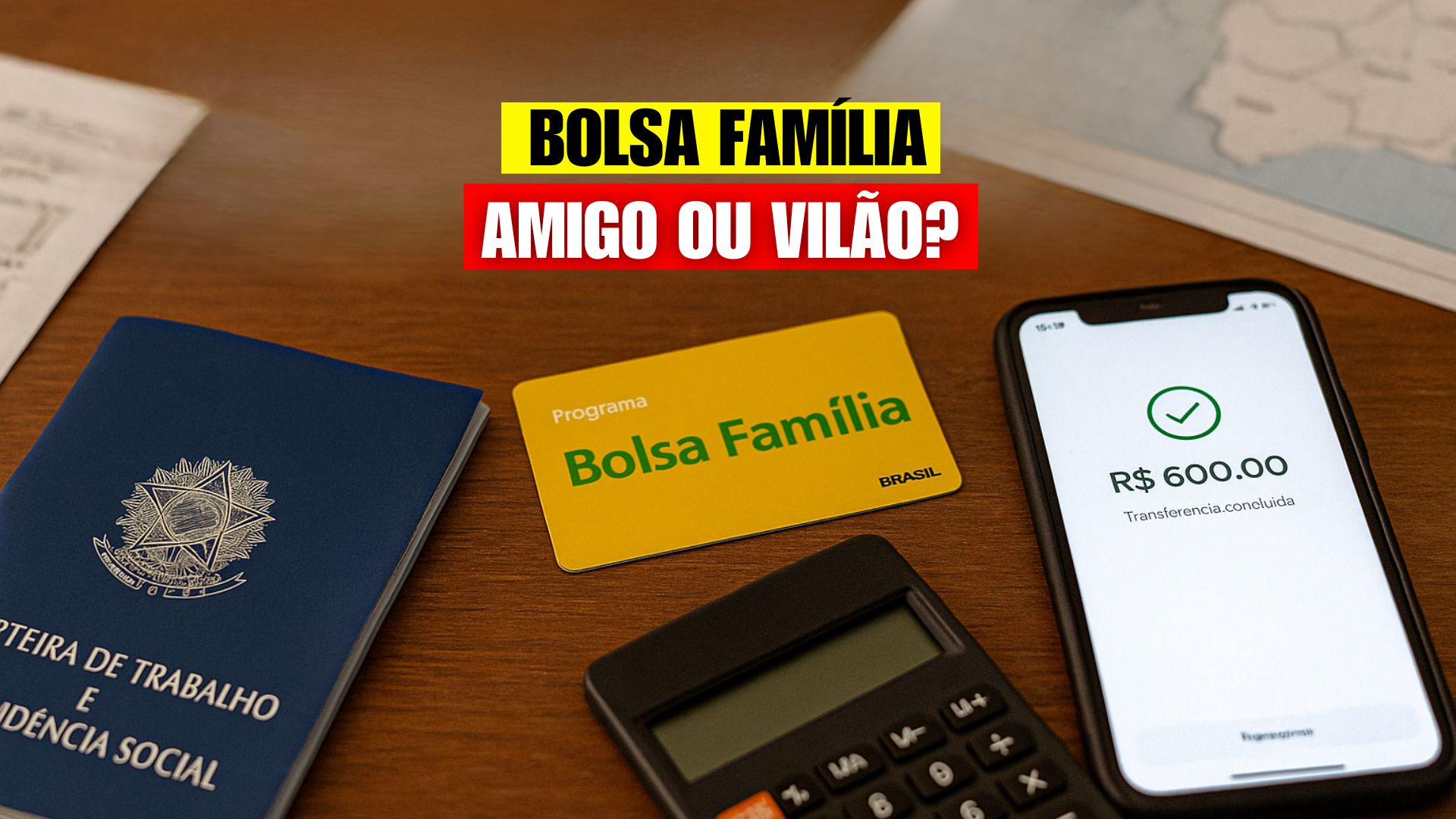

Study by Ipea Evaluates Impact of R$ 600 Minimum of Bolsa Família on Participation and Formalization, with Cuts by Gender, Region and Occupation, and Compares Findings with Other Research that Estimates Distinct Effects on the Labor Market.
Effect of Bolsa Família of R$ 600 on the Labor Force
The increase of the Bolsa Família minimum to R$ 600 produced a measurable, yet limited, effect on the exit of beneficiaries from the labor force, concentrated mainly on individuals with already fragile market integration.
The conclusion is from a technical note by the Institute of Applied Economic Research (Ipea), which estimated a decline between 2.2 and 4.7 percentage points in the probability of participation for those who were already receiving the benefit when the amount increased from R$ 400 to R$ 600, in August 2022.
The study also indicates no impact on formalization and negligible effect on hours worked.
-
Brazil’s 2026 Tax Refund: Record 9.58 Million Filers in Largest Payout Ever, But a Key Detail on Priority Recipients Draws Nationwide Attention

-
Itaú Alters Hybrid Work Model, Increasing Office Days from 2028, Prompting Employees to Adjust to New Routine
-
Facing Labor Shortage, Japan Plans to Invest $34 Million to Attract Foreign Workers in Construction, Healthcare, Industry, and Commerce

-
Brazilian City Makes Remarkable Leap, Becomes 4th Wealthiest in the Country with GDP of R$ 134.1 Billion




In terms of counterfactual, Ipea calculates that, in the absence of the increase, the participation rate of the beneficiaries followed in the panel would be 3.2 percentage points higher than observed after the change, with the localized adjustment mainly among those already on the margins of the market.

Methodology with Continuous PNAD in Panel
The analysis uses the microdata from the Continuous PNAD in panel.
This database follows the same households for five consecutive quarters.
This characteristic allows for comparing beneficiaries before and after the change and confronting them with a similar profile group that did not receive the program.
With this, the authors isolate the income shock from the rest of the macroeconomic scenario.
Profile of Those Who Left the Labor Force
The profile of those who left the labor force after the new minimum reinforces the idea of an effect concentrated among the most vulnerable.
Long-term unemployed are overrepresented among those who left, with 28.5% compared to 16.7% in the total beneficiary group.
Also overrepresented are informal domestic workers (11.4% vs. 9.4%) and auxiliary family workers (6.5% vs. 4.1%).
In contrast, formal salaried workers (CLT) hardly appear among those who left, with 3.9% against 12.6% in the beneficiary universe.
The sociodemographic breakdown shows that women were more affected, with 61% of those who left compared to 43% of the total.
The impact is greater among mothers with children up to 10 years old (38% vs. 24%).
There is a higher incidence among Northeast residents (59% vs. 48%) and those from the rural area (34% vs. 25%).
Among the stated reasons for inactivity, 34.4% cited the need to “take care of domestic chores, a child, or another relative”.

Context of the PEC of Bondades and Auxílio Brasil
The temporary increase of the minimum to R$ 600 occurred in August 2022, when the program was still called Auxílio Brasil.
The measure was part of the so-called PEC of the “state of emergency”, approved in Congress.
The proposal authorized additional spending with transfers and aids in an election year, including reinforcement for the gas allowance and payments to truck drivers and taxi drivers.
The package became known as “PEC of Bondades” or “Kamikaze PEC”.
Participation and Labor Market Post-Pandemic
The participation rate in Brazil remains slightly below the pre-pandemic level, with signs of stability in 2025.
In August 2025, participation was at 62.3%, stable compared to the annual comparison and slightly below July in the seasonally adjusted series.
At the same time, unemployment hit historic lows throughout the third quarter of 2025, while underutilization continues to decline.
These movements contextualize the debate.
Participation has not fully returned to the 2019 level, but employment has advanced consistently since 2021.
Other Studies and Methodological Divergences
Literature prior to the pandemic indicated null or very small effects of transfers on labor supply.
With the increase of the average amount and the expansion of the audience, new estimates started to indicate stronger impacts in specific niches.
Daniel Duque (FGV Ibre) estimated, for the group that became eligible in 2023 due to the adjustment in the income line, a 11% decline in participation rate compared to a comparable group that remained ineligible.
The researcher also found reductions of 12% in occupation and 13% in formal employment, with effects concentrated among men and, especially, youth.
In the Central Bank Blog, Leandro Siani Pires and Fábio José Ferreira da Silva suggest that the expansion of benefits may have a “not negligible” aggregated effect on participation.
At the same time, they recognize that there was also a decline among non-beneficiaries, indicating additional factors beyond the program.
Adjustments in the Design of the Program
Even though they consider the effect of the new level on labor supply to be small, the authors advocate for improvements in the design of the Bolsa Família.
The recommendation is to better target resources and mitigate exits among those in very precarious occupations.
The proportionality of the benefit to the size and composition of the household is a central point.
Reinforcing variable payments per child and adjusting the basic floor tends to reduce distortions.
The measure aligns the program with the objective of combating child poverty and investing in human capital.
Dimension and Budget of Bolsa Família
The reach of the program remains high. In August 2025, 19.19 million families received the Bolsa Família, with average benefit around R$ 671 in the month.
On the budgetary front, the 2025 LOA anticipated about R$ 158 billion for the program.
The amount for 2024 was around R$ 168.6 billion. These numbers help to size the scale change compared to the period prior to 2019.








