Portuguese
  Spanish


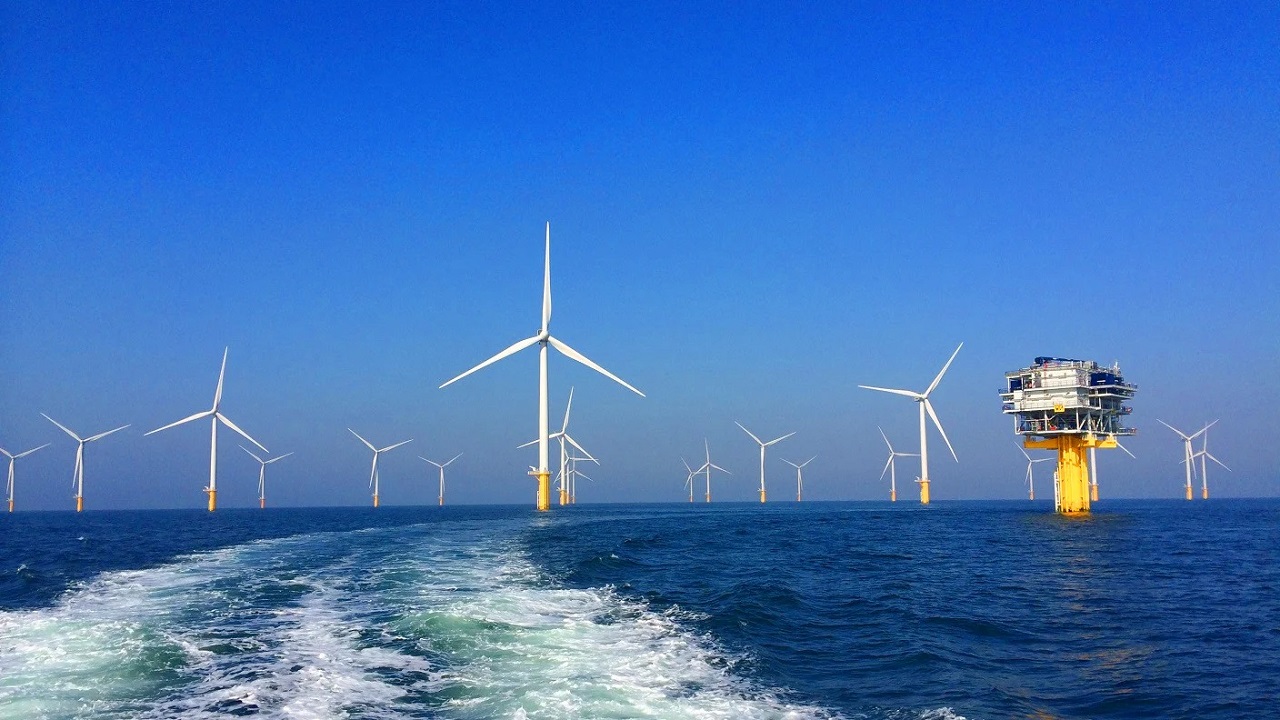

Brazil Is Focusing on the Offshore Wind Energy Market to Revive the Economy and Industries. Moreover, This Source Will Provide a Significant Boost for the Energy Transition.
Brazil has a positive energy outlook, especially when it comes to a huge opportunity to revive the economy and industry through renewable resources and energy transition. This is the vision of the Brazilian Wind Energy Association (ABEEólica).
Elbia Gannoum, president of the organization, participated last Thursday (11/17) in the panel Offshore Wind: Trends and Opportunities, on the last day of programming at the Brazil Pavilion at the 27th United Nations Climate Conference, taking place in Sharm el-Sheikh, Egypt.
Brazil Has 170 GW of Offshore Wind Energy Projects
For the president, offshore wind energy, generated at sea, will be the main way for Brazil to strengthen its position in the energy transition and emphasizes that the organization is planning to create an industrial structure to place Brazil on the energy transition path, attract technology, capital, innovation, and generate jobs and income.
-
Fired during apartheid and with a little borrowed money, an electrician started with a borrowed truck and transformed electrical services into a group connected to energy, real estate, and infrastructure in South Africa.

-
Wood has ceased to be just a construction material in Yale research and has become insulation for electrical transformers that face intense heat, aging, and increasing pressure from the renewable energy-powered grid.
-
More than 1,000 residents of a remote island in Kiribati now have clean water and electricity with solar systems operated by the community itself.
-
Ceará brings together 7 giants and R$ 66 billion to transform Pecém into the largest green hydrogen hub in Brazil, with final decisions expected by the end of 2026.


Gannoum highlights that onshore wind energy in Brazil, generated on land, accounts for 13% of the national energy matrix, with an installed capacity of 25 GW, making the country the 3rd in the world to invest in this source and the sixth in installed capacity. Through the development of offshore wind energy and green hydrogen, in the opinion of the president, Brazil can take the global lead in energy, especially renewable energy.
Investors have shown great interest, and currently, the big challenge is not attracting companies, as they are already planning to invest. In fact, ABEEólica already has 170 GW of projects pending licensing from Ibama. With 7,367 km of coastline and 3.5 million km² of maritime space under jurisdiction, the country has an extensive continental shelf which provides favorable conditions for the establishment and operation of offshore wind generation projects.
Federal Government Focuses on Energy Transition
In January of this year, the Federal Government issued a decree regulating the granting of utilization of natural resources and physical spaces in sea waters under the Union’s jurisdiction for electricity generation.
The decree defines how the procedures should be conducted, where requests for granting can be submitted, and what steps the entrepreneur must follow to achieve the project. In October, the Ministries of Environment (MMA) and Mines and Energy (MME) published a decree creating the Single Portal for the Management of Offshore Areas for Energy Generation.
All services for requests and monitoring of authorization to produce offshore energy will be handled through the platform. Diogo Nóbrega, an executive at COP, a company specialized in offshore wind projects, was also present at the panel and highlighted the importance of regulation for providing legal security to investors.
Brazil Can Generate Up to 700 GW of Offshore Wind Energy
Nóbrega emphasizes that this type of project requires significant investment, as well as government incentives for development.
Nóbrega recalls his experience in Denmark, which developed the world’s first offshore wind energy project in the 1990s. In England, offshore wind energy no longer receives government subsidies and the cost is lower than generation in onshore parks.
According to Ibama, the expectation is that 700 GW of energy will be generated if all of Brazil’s wind potential is explored, corresponding to ten times more than what is produced by all energy projects currently installed in the country.