





 Portuguese
  English
  Spanish
  4 min of reading
  0 comments


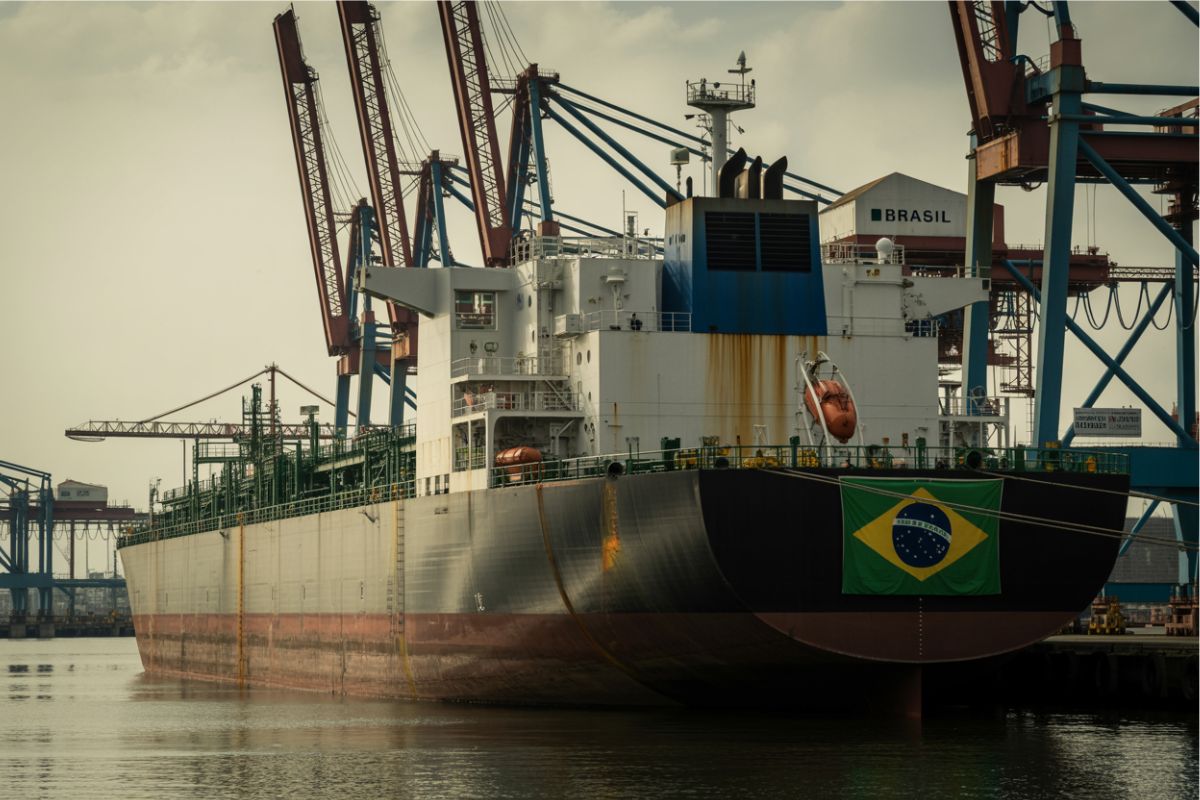
In 2025, Brazil Did Not Export Crude Oil to Israel, Zeroing Shipments That in 2024 Totaled 2.9 Million Barrels and US$ 215.9 Million, According to Official Data from MDIC and ANP
The oil trade between Brazil and Israel reached a breaking point in 2025. Official data from Comex Stat, the statistical system of the Ministry of Development, Industry, Trade and Services (MDIC), shows that between January and August of this year, there were no records of Brazilian crude oil exports to the Israeli market.
The contrast is striking: in 2024, Brazil had shipped 2.9 million barrels worth US$ 215.9 million. Now, the figure has dropped to zero, leaving only US$ 325.2 thousand in derivatives, such as fuel oils and bituminous minerals.
From Approach to Cut: The Trajectory of Exports
The absence of records in 2025 marks an unexpected retreat in a commercial relationship that had intensified in recent years. Until 2020, there were no significant flows between the two countries. Exports began in 2021, during Jair Bolsonaro’s government, when the first shipments emerged.
-
Oil sees sharp drop after rumors of a deal between the United States and Iran raise hopes for an end to the war in the Middle East.

-
Brazil’s oil production soars and hits an all-time high for the second consecutive month, driven by the pre-salt and the advancement of energy sector giants.
-
Oil price falls even with Trump’s threats to Iran and rising geopolitical tensions in the Middle East impacting global market expectations.
-
China discovers more than 200 new oil and gas fields in the last five years





The most significant jump occurred in 2022, with 11.9 million barrels sold to Israel. However, the trend did not sustain: in 2023, the volume fell back to 1.9 million barrels.

Agência Brasil
In 2024, a few months after the start of the Israeli military offensive in Gaza, shipments began to grow again, although at levels lower than those at the peak of the commercial relationship.
Thus, the drop to zero in 2025 is interpreted by experts as a reflection of political and market factors, in addition to social pressures calling for the severance of energy ties with Israel.
Reactions from the Government, Companies, and Unions
Questioned by reporters, MDIC highlighted in a statement that the absence of exports “is likely related to market movements,” although it admitted that investigating the reasons is the responsibility of the private sector.
Petrobras, for its part, stated that it has not conducted direct sales to Israel since 2023 and emphasized that its oil is sold directly to foreign refineries, with no control over the final destination.
The National Agency of Petroleum (ANP) was also contacted. The agency reminded that, as a regulator, it does not interfere in the definition of export policies and does not impose restrictions on destination countries.
On the other hand, oil worker unions reacted differently. For leaders of the Unified Federation of Oil Workers (FUP) and the National Federation of Oil Workers (FNP), the interruption may be linked to a political decision by the government.
In May 2025, the entities sent a letter to President Luiz Inácio Lula da Silva requesting an energy embargo against Israel, arguing that Brazilian oil should not fuel a war machine accused of genocide.
Rodrigo Araújo, director of Sindipetro-SP, stated that the category welcomed the data confirming the absence of exports this year. For him, the decline can only be explained by internal political pressures.
International Analyses and Pressures
According to Mahatma Ramos, technical director of the Institute of Strategic Studies on Oil, Gas, and Biofuels (Ineep), the decision to redirect Brazilian oil to other more promising partners also aligns with the international scenario.
The institute had requested formal explanations from Petrobras about tracking sales to Israel at the end of 2024. The state-owned company replied that there were no direct operations but did not inform who might have mediated the sales.
Ramos argues that energy is not just any commodity, as its use surpasses the industrial sector and reaches military objectives. Ineep, along with union entities and international networks, has positioned itself in favor of an energy embargo on Israel.
The debate has also gained momentum after the UN Special Rapporteur for the Palestinian Territories, Francesca Albanese, denounced in August that various multinationals, including four with a presence in Latin America, were “benefiting from the genocide in Gaza.” Among them is Petrobras itself.
Boycott Campaigns and Geopolitical Impact
The halt in Brazilian exports occurs amid mobilization of the BDS campaign (Boycott, Divestment, Sanctions), active since 2005 and seeking to pressure governments and companies to suspend trade and strategic relations with Israel.
In Brazil, union organizations, academic entities, and social movements have reinforced the discourse that energy policy should also consider humanitarian values. For these groups, continuing oil sales to Israel would mean financing military operations against the Palestinian population.
If, indeed, the cut in 2025 is consolidated as a political decision, it will represent a significant realignment of Brazilian foreign and energy policy.
Brazil, a major global exporter, would have chosen to use oil as a diplomatic tool, joining a growing international pressure against Israel in the context of the Gaza conflict.







-

-

-

3 people reacted to this.