Portuguese
  Spanish


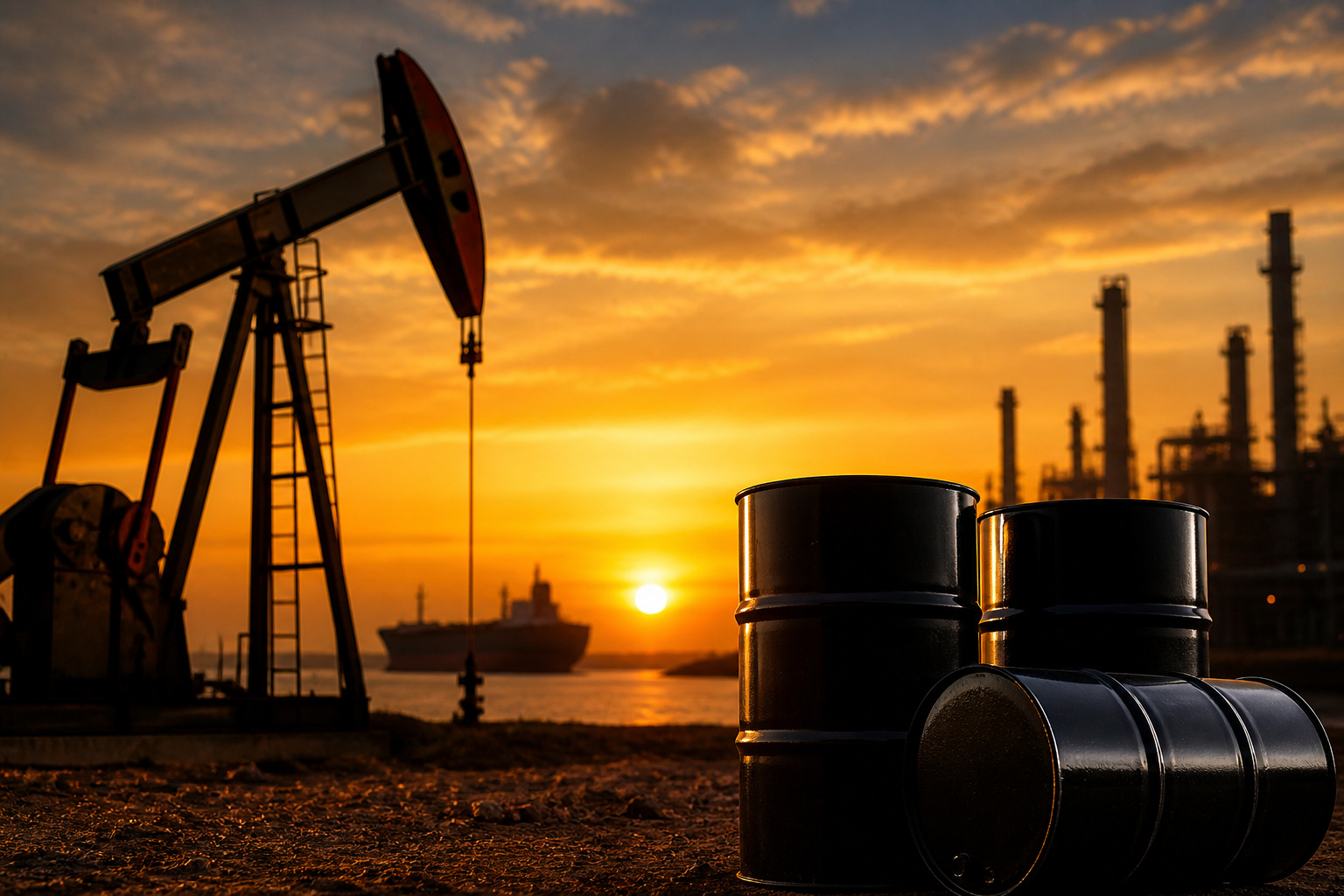

Even amidst a scenario of strong geopolitical tension, the energy market surprised by registering a movement contrary to expectations. Despite recent threats from former United States president, Donald Trump, and the escalation of conflicts involving Iran, the price of oil fell, indicating a more complex behavior of the global market.
This movement is noteworthy because, traditionally, crises in the Middle East tend to raise commodity prices. However, in this case, other factors seem to be influencing investor behavior and the dynamics of supply and demand.
What motivated the new tension between the United States and Iran
The scenario intensified after statements by Donald Trump, who stated that Iran “will be wiped off the face of the Earth” if it attacks American ships. This statement escalated the conflict and raised concerns about a possible military escalation.
-
Qantas and Airbus Invest in Company Aiming to Convert Unsorted Household Trash into Jet Fuel

-
Brazil’s ANP Opens 86 New Oil Blocks in the Equatorial Margin, Expanding the Amazon River Mouth Frontier

-
OPEC+ Boosts Oil Supply by 188,000 Barrels per Day in July 2026, Leading to Price Drop from $112 to $89 per Barrel in Under Two Months

-
TotalEnergies Signs 20-Year Deal to Purchase 2 Million Tons of LNG from Alaska, Boosting Project Viability



Furthermore, the Middle East region had already been facing an unstable environment, with recent episodes involving military forces and strategic disputes. In this context, the risk of direct confrontation between the two countries gained strength.
According to the Metrópoles website, the statements occurred on the eve of the drop in oil prices, which reinforces the contrast between the political scenario and market behavior.

Why oil prices fell even with tensions
Despite increased tensions, the price of oil traded lower, contrary to initial expectations. This movement can be explained by a combination of economic and strategic factors.
Firstly, the market may be assessing that, so far, there has been no concrete interruption in the global oil supply. In other words, although there is a risk, the supply remains stable.
Furthermore, investors tend to react not only to statements but to effective actions. In this sense, as long as there is no direct impact on production or transport, the market may maintain a more cautious stance.
Another important factor involves the expectation of a global economic slowdown. When there are signs of slower growth, demand for oil tends to fall, which puts downward pressure on prices.
The role of geopolitics in the energy market
The relationship between geopolitics and oil prices is direct and historical. However, the market’s reaction is not always immediate or linear.
In many cases, investors analyze the full context before making decisions. This includes assessing the probability of conflict, the real impact on supply, and the response of other countries.
Furthermore, the market already has experience with situations of tension in the Middle East. Thus, part of the risk may already be “priced in,” meaning incorporated into current values.
The influence of global supply and demand
Another fundamental point involves the balance between supply and demand. Even with geopolitical tensions, the price of oil directly depends on these two factors.
Currently, there are signs that global supply remains sufficient to meet demand. Furthermore, some producing countries may increase production if necessary.
On the other hand, demand may be under pressure due to economic factors. The slowdown of major economies directly impacts energy consumption.
In this scenario, the combination of stable supply and weaker demand contributes to falling prices.
Investor behavior in the face of uncertainty
In times of instability, investors tend to act cautiously. However, this does not necessarily mean a rise in oil prices.
On the contrary, many prefer to await more concrete signals before taking more aggressive positions. Thus, the market may show more moderate movements.
Furthermore, investment diversification reduces exclusive reliance on oil as a hedge asset. This also influences price behavior.
The impact of political statements on the market
Statements by political leaders, such as those made by Donald Trump, have an immediate impact on risk perception. However, their effect can be temporary.
The market tends to differentiate between discourse and action. Therefore, while threats increase tension, they do not necessarily alter the reality of oil supply.
In this sense, the impact of statements depends on the evolution of events. If they turn into concrete actions, the scenario can change rapidly.
Possible scenarios for the oil market
The future of oil prices will depend on several factors. Among them, the evolution of tensions in the Middle East and the behavior of the global economy stand out.
If there is military escalation and supply disruption, prices could rise significantly. On the other hand, if the situation stabilizes, the downward trend may continue.
Furthermore, decisions by major producers, such as OPEC members, can also influence the market.
The impact for consumers and the global economy
The drop in oil prices can bring benefits to consumers, especially in the short term. Cheaper fuels tend to reduce transportation and production costs.
In addition, oil-importing countries can benefit from lower energy spending. This can ease inflationary pressures.
On the other hand, exporting countries may face challenges, as falling prices reduce revenues.
What this scenario reveals about the market
Recent oil behavior shows that the market is influenced by multiple factors. Geopolitics remains important, but does not act in isolation.
Furthermore, the episode reinforces that expectations and perceptions play a central role in price formation.
Even in a scenario of tension, the market can react differently than expected, depending on economic conditions and the balance between supply and demand.


What to expect in the coming days
In the coming days, the market should remain attentive to updates on the conflict between the United States and Iran. Any significant change can quickly alter prices.
In addition, global economic indicators will also be closely watched. They help define the pace of oil demand.
Finally, the current scenario shows that the energy market remains highly sensitive, but also increasingly complex. The combination of politics, economics, and strategy will continue to define the direction of oil prices in the international arena.