Portuguese
  Spanish


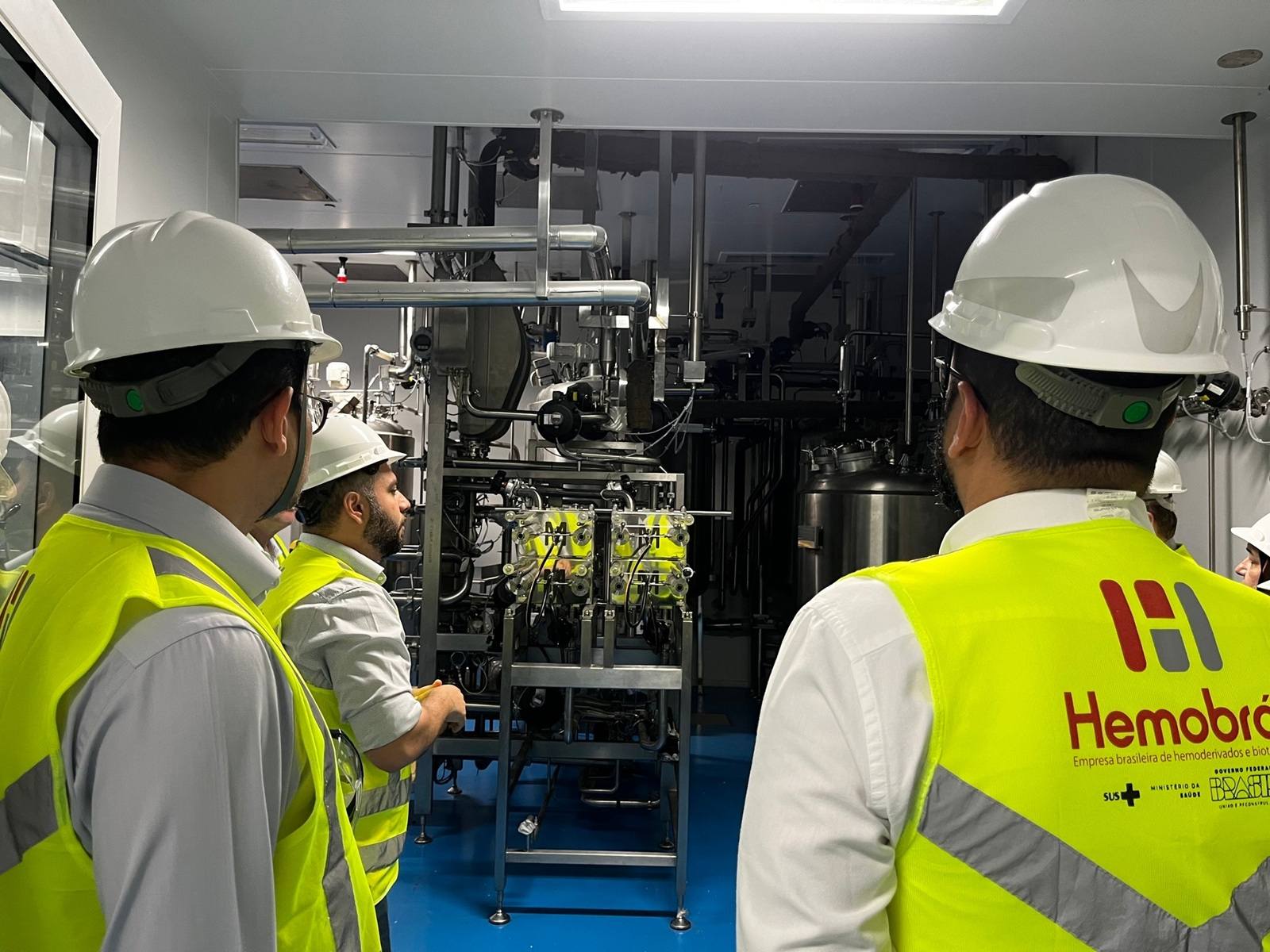

New Hemobrás Factory in Pernambuco Promises to Expand National Production of Essential Medicines and Reduce External Dependency in SUS Care.
Brazil inaugurated on Thursday (14) the new factory of Brazilian Company of Hemoderivatives and Biotechnology (Hemobrás), in Goiana (PE).
President Luiz Inácio Lula da Silva and Health Minister Alexandre Padilha attended the ceremony. “Today, Hemobrás is the largest hemoderivative factory in Latin America,” said President Lula.
Structure and Production Capacity
With an investment of R$ 1.9 billion, the industrial plant will produce high-cost medicines from human plasma.
-
World Cup Ball Chip Uses Technology to Detect Invisible Touches, Confirms Offside, Secures Portugal’s Victory Over Croatia

-
36-Meter Hydrogen-Powered Superyacht Arrives in Brazil to Debut German Engines and Showcase Future of Clean Navigation

-
Indian Students from Jaipur Win Top Prize at World’s Largest Science Fair with EcoFog, an Affordable Mesh to Harvest Fog Water Without Energy

-
Italy Sinks Massive 11-Story Concrete Structures in the Ligurian Sea to Create a 6.2 km Barrier, Clearing the Way for 400-Meter Ships in Genoa




Among them are Albumin, Immunoglobulin, and Coagulation Factors VIII and IX, used in treatments for severe burns, ICU patients, hemophilia, and rare diseases.
Minister Alexandre Padilha highlighted the importance of the venture. “Hemobrás shows the strength and potential of the Northeast, ensuring essential medicines to save lives. It is the realization of a dream that crowns SUS, which this year celebrates 35 years,” he stated.
The operation will gradually expand national production, incorporate new medicines, and strengthen universal and free access through SUS.
Production and Social Impact
Hemobrás President Ana Paula Menezes stated that the new factory “is not just a medicine factory; it is a factory of citizenship.”
According to her, the donated plasma returns in the form of essential medicines, ensuring social justice and autonomy in production.
Currently, Hemobrás supplies the public system through technology transfer agreements.
In 2024, it delivered 552,000 bottles of hemoderivatives and 870 million International Units of recombinant medicines. With the new plant, the country will be able to produce up to 500,000 liters of fractionated plasma per year and six types of medicines.
Qualification and Operation Stages
Blocks B02, for plasma fractionation, and B03, for filling and lyophilization, have been inaugurated. The equipment has already been delivered, and the factory is starting the qualification of processes, a requirement of the pharmaceutical sector. The expectation is to begin plasma fractionation next year.
Production will grow gradually, reducing external dependency and providing cutting-edge technologies to the population.
The excess plasma, collected from 72 blood centers and hemotherapy services, will increasingly be processed in Brazil, boosting the biotechnology industry and strengthening the Health Economic-Industrial Complex.
Recent Advances and Perspectives
In April of last year, the Biotechnology Produced Medicines Factory was inaugurated in block B07.
This unit produced the first batch of Hemo-8r (Recombinant Coagulation Factor VIII) packaged in Goiana. After inspection by Anvisa, it received the Good Manufacturing Practices certificate, making it ready to carry out the first of the three stages of national production.
By the end of 2024, 300,000 bottles of Hemo-8r will be delivered to SUS.
In the second half, the second stage will begin, with the filling of the first batch of medicines. The expectation is to complete the third stage, with the production of the active pharmaceutical ingredient, by the end of 2026.
Self-Sufficiency Goal
The goal is that by 2027, Hemobrás will produce 100% in Brazil at least six hemoderivatives: albumin, immunoglobulin, factor VIII, factor IX plasma, prothrombin complex, and Von Willebrand factor. These medicines will be provided exclusively to SUS.
The estimate is to benefit more than 30,000 people with coagulopathies and millions of Brazilians who need albumin or immunoglobulin in various treatments.
According to the government, the initiative represents a decisive step for Brazil to become self-sufficient in the production of these strategic inputs.