Portuguese
  Spanish




The Embraer E2 aircraft emits a whale sound in certain power phases, explained by the Pratt & Whitney engine. The combustion chamber generates harmonic vibration during internal transitions, without indicating defect, wear, or operational risk, and helps to understand why the noise draws attention.
The Embraer E2 aircraft has once again caught the attention of passengers and aviation fans due to a whale sound in certain power phases. The explanation involves the Pratt & Whitney engine, in which the combustion chamber can generate harmonic vibration during internal transitions of operation.
According to an explanation presented by Lito Sousa from the YouTube channel Aviões e Músicas, the explanation was presented in a video aimed at the aeronautical public, based on a question sent by an enthusiast from Foz do Iguaçu. The phenomenon is linked to the Pratt & Whitney engine used in the E2 and not to the aircraft itself, nor to a structural failure of the aircraft.
Whale sound drew attention during takeoffs and go-arounds

Anyone who has observed an Embraer aircraft E2 taking off, accelerating, or going around may have heard a deep, prolonged noise different from the traditional turbine sound. Therefore, the comparison to a whale has become common among curious observers and more attentive passengers.
-
NASA’s Plan to Dump ISS Debris in Ocean Sparks Environmental Concerns Among Scientists

-
14-Year-Old Invents Eco-Friendly Water Pump Using Recycled Materials to Aid Communities Without Water Access
-
Pigeons Trained to Detect Cancerous Changes in Medical Images Astonish Scientific Community

-
Plastic Waste from Beaches and Poor Communities in Kenya Transformed into School Desks, Replacing Wood in Classrooms and Turning Marine Litter into Durable Study Tables


The noise is striking precisely because it deviates from the expected pattern for a modern commercial jet. It can scare those who do not know the origin of the phenomenon, but the technical explanation indicates that the sound does not represent a defect or sign of malfunction.
The secret is in the engine, not in the aircraft fuselage
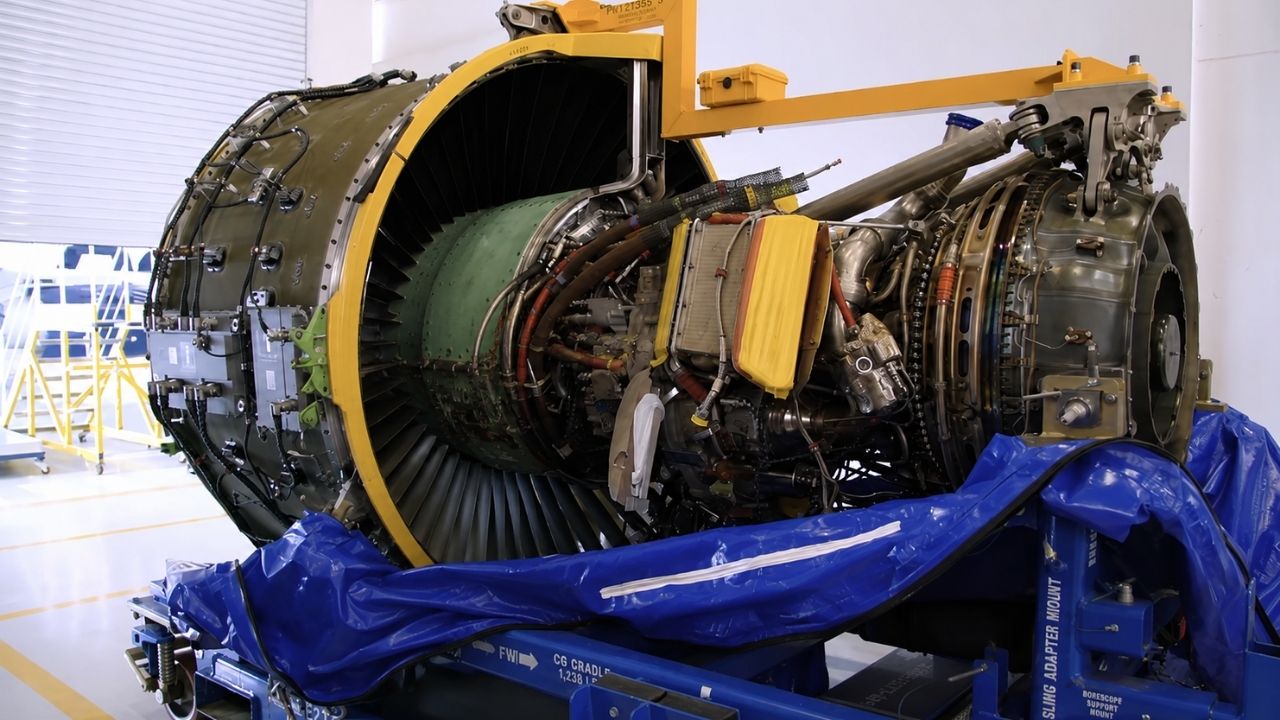
The first common confusion is imagining that the noise is produced by the airplane itself. According to the technical explanation presented in the video, the sound comes from the Pratt & Whitney engine installed in the E2, and not from the jet’s structure or any external part of the fuselage.
This detail is important because the Embraer airplane only carries the propulsion set responsible for the phenomenon. The noise originates inside the engine, in a specific phase of operation, when the system changes condition and goes through a power transition.
Combustion chamber generates harmonic vibration
The central point of the explanation is in the combustion chamber. When the pilot advances the throttle, the engine’s electronic system responds by increasing the fuel supply and accelerating the internal air flow to deliver the requested power.
In this process, a harmonic vibration occurs in the combustion chamber. It is this vibration, compared in the video to the sound effect of a tuba, that produces the whale-like noise. The sound appears during the transition between operating regimes, especially at low power.
Noise does not indicate failure nor affect durability
Although it may seem strange to those listening from outside, the noise is not treated as a sign of failure. According to the explanation attributed to Pratt & Whitney, the vibration responsible for the sound does not cause a negative effect on the durability or operation of the engine.
This means that the Embraer airplane can emit this sound without there being an automatic reason for concern. The phenomenon is an acoustic characteristic of the set under certain conditions, and not an alert of malfunction, unusual wear, or operational risk.
Geared engine led to misinterpretation
For some time, many attributed the sound to the engine’s gearbox. This engine features a geared system, in which there is a gear between the engine core and the fan, a solution used to improve rotation efficiency and performance.
However, according to the explanation presented, the origin of the sound is not in this gearbox. The cause pointed out is the harmonic transition in the combustion chamber, which dismantles the idea that the noise comes directly from the engine’s front mechanical system.
Airbus A220 also presents a similar phenomenon
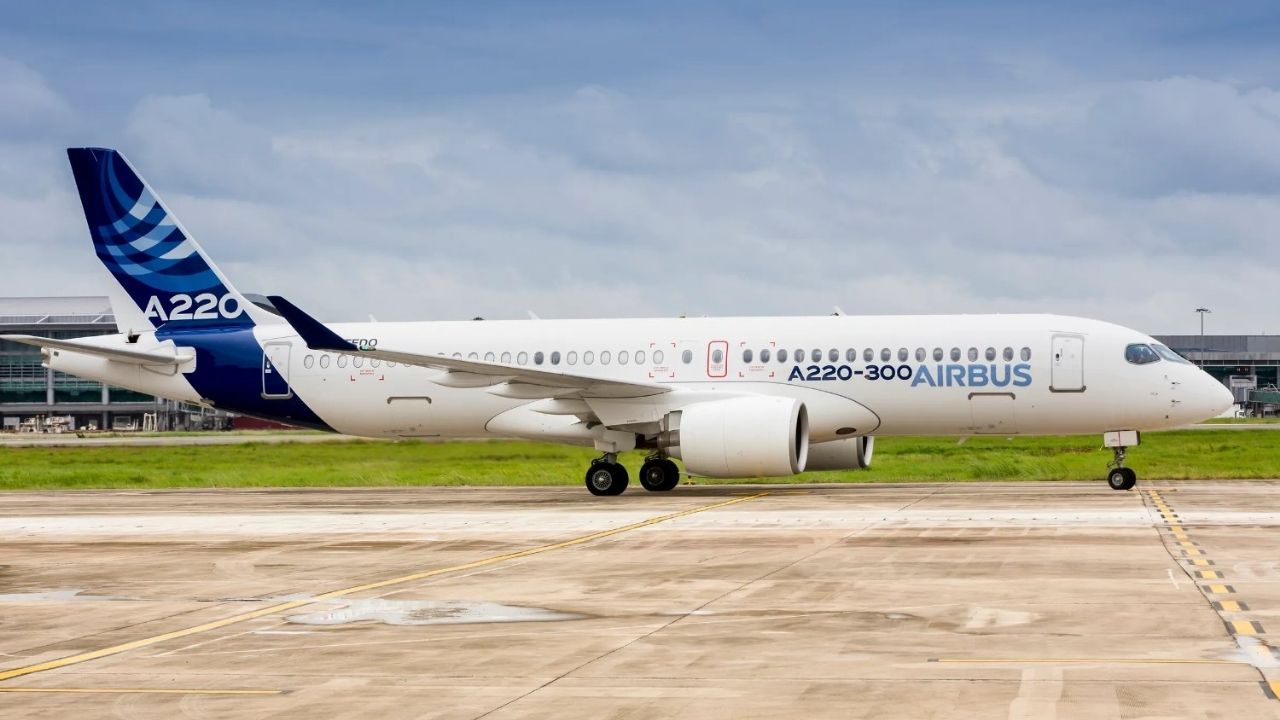
The curiosity is not limited to the E2. The video also mentions that the Airbus A220, equipped with an engine from the same family, can produce a similar sound. This reinforces the interpretation that the phenomenon is linked to the engine, and not exclusively to the Brazilian jet’s design.
On the other hand, aircraft using larger versions of the same engine concept may not emit the noise in the same way. The explanation given is that larger engines have more internal space to attenuate this sound transition, making the effect less noticeable.
Why the sound appears more in certain phases of the flight


The noise tends to be more noticeable in specific power regimes, especially when the engine goes through transitions and internal adjustments. At certain times, such as low power, acceleration, or regime change, the sound becomes more audible to those nearby.
In the case of the Embraer aircraft, this helps explain why not every passenger notices the noise on every flight. Hearing it depends on the operational moment, the observer’s position, the external environment, and how the engine is responding at that moment.
Technical curiosity became a topic among aviation fans
The case gained traction because it mixes technology, oddity, and an easy-to-understand comparison. The whale sound makes the E2 recognizable to many aviation fans and creates a curiosity that attracts attention even from those who do not follow technical details of engines.
At the same time, the explanation helps separate curiosity from concern. Not every different noise in an aircraft indicates a problem, and some sounds may just be a consequence of normal physical phenomena in complex systems.
Have you ever heard this sound on an Embraer aircraft or another modern jet? Do you find this noise curious, scary, or even interesting from an aviation perspective? Leave your opinion in the comments.