Portuguese
  Spanish


The defense starts from an uncomfortable realization: the steel inside the concrete rusts and condemns the structure in a few decades, while stone cathedrals span centuries. But the real case of London is more subtle than it seems, and even those who defend stone recognize that concrete will not leave the scene anytime soon.
A debate about the future of construction is gaining strength among architects. The argument is straightforward: while reinforced concrete tends to deteriorate in a few decades and turn into rubble, solid stone buildings can stand for centuries and even be dismantled to erect another building, as advocated by professionals who built a building in London supported by limestone blocks taken practically straight from the quarry.
The cited example is 15 Clerkenwell Close, a building designed by architect Amin Taha and the Groupwork office, completed in 2017 in central London, which uses a limestone exoskeleton as a structure. It is important, however, to treat the subject with balance: it is the passionate defense of stone-enthusiast architects, and not a consensus of engineering, and the London case itself is more subtle than the slogan suggests, as we will see below.
The argument against reinforced concrete
According to stone advocates, the weak point of reinforced concrete is the steel inside, the rebar, which can start to corrode after about 50 years unless expensive protective measures are taken, compromising the structure and generating waste that is difficult to reuse, in contrast to stone buildings that remain standing for generations.
-
Bridge Rebuilt in Just One Year Reconnects Two Brazilian States

-
Custom Furniture Costs in Brazil Expected to Range from $350 to Over $1,450 per Square Meter by 2026, with Kitchens, Closets, and Laundries Highlighting the Impact of Premium Features
-
Australia Builds Entire Airport from Scratch to Spark Development of New City
-
17-Story Building with 112 Apartments Opens in Australia to House Homeless Population, Offering Fully Equipped Units with Daily On-Site Support


However, a technical caveat is necessary: saying that concrete simply rots in 50 years is an oversimplification.
The problem lies mainly in the corrosion of the steel reinforcement in poorly executed or highly exposed works, and there are durable and well-maintained concrete constructions.
Even so, critics remind us that the material became popular in the 20th century due to the post-war economy, which demanded building quickly and cheaply, and the freedom of forms it gave to architects, and not necessarily because it was the most durable option.
The London building that became a symbol
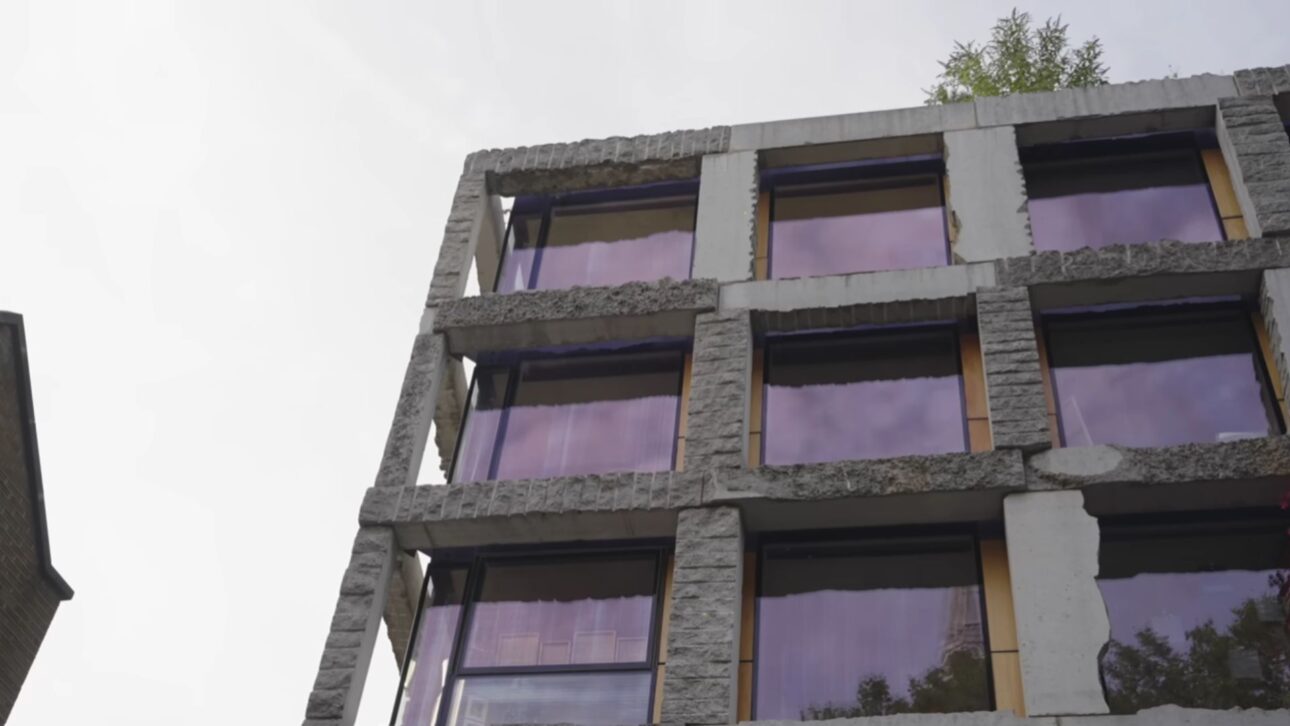
The 15 Clerkenwell Close, which houses apartments and the office of architect Amin Taha himself, has an exoskeleton made of raw limestone blocks, with extraction marks still visible, that functions as a supporting structure, not just a decorative cladding, something rare in current architecture.
It is necessary, however, to be precise about the work: the building is not made solely of stone.
It combines a concrete core and slabs with the limestone exoskeleton that supports the facade’s load, in a hybrid system.
According to the architects, the choice of structural stone reduced the embodied carbon of the construction by about 90% compared to a typical steel or concrete structure.
The project even received a demolition order from the local council, due to aesthetic and compliance issues, a decision later reversed after an appeal.
Why stone would be more sustainable
The second major argument is environmental.
Advocates claim that building with stone requires less extraction than concrete, since for stone, you basically open a quarry, while concrete demands aggregate, cement, made from the burning of limestone, sand, and the steel of the rebar, multiplying the environmental impacts, in addition to the emissions associated with cement production.
Another highlighted point is the possibility of reuse.
Historically, stone blocks from one construction were reused in another, like ancient amphitheaters that became churches, and advocates see this as a model for the future, where each stone building would be a kind of potential quarry.
There is also the advantage of thermal mass: very thick stone walls help regulate internal temperature, potentially reducing the need for additional insulation, as seen in recent European projects.
How solid stone construction works


The advocated technique has a name and method.
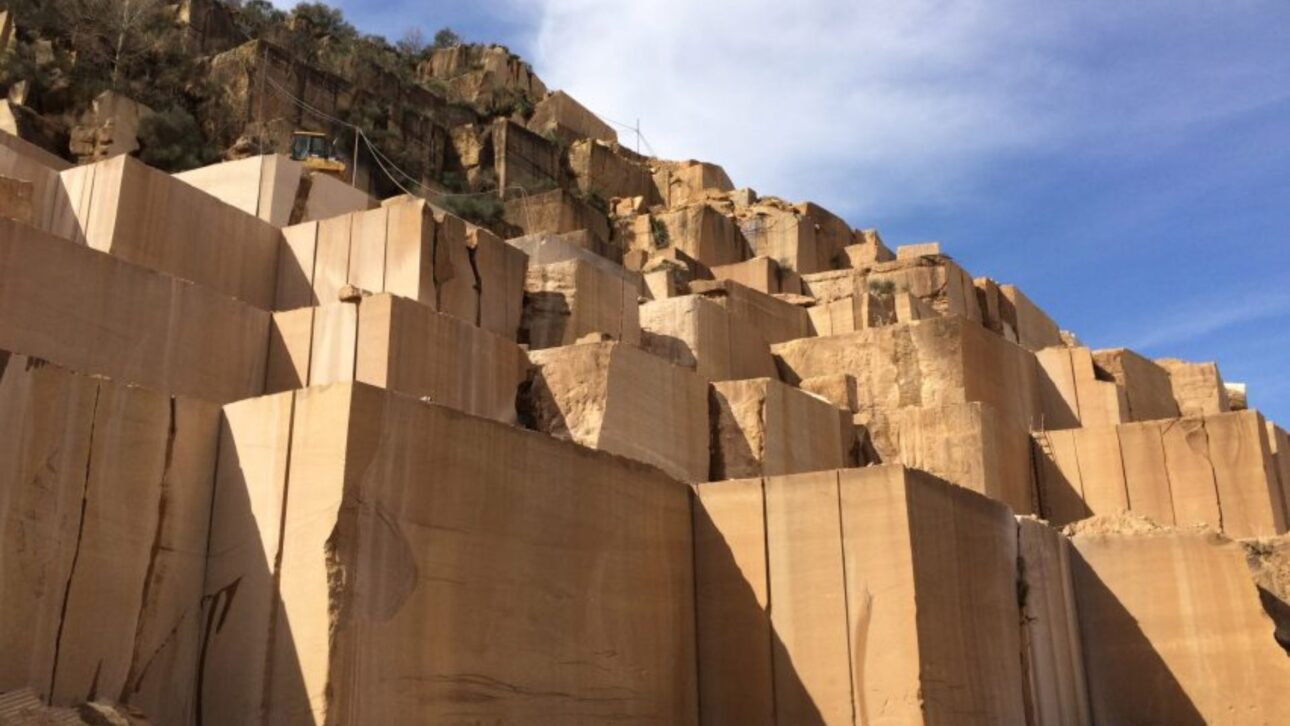
Called pre-cut solid stone, the system consists of sawing the stone into large, precisely dimensioned blocks, either at the quarry or on site, assembling the building like a kind of interlocking set, which, according to its proponents, makes the construction fast and reduces costs with the use of machines to cut and lift the blocks.
Since stone withstands compression well but tends to break under tension, it is usually used in load-bearing walls, arches, and vaults.
For floors, which work under tension, proponents cite alternatives such as prestressed stone, where a steel cable compresses the blocks against each other, or the use of wood and steel.
It is a return to the old model, where the walls themselves support the building, instead of the independent structure with partition walls typical of concrete and steel.
Can it be built tall and at what cost
Two common objections are height and price.
Regarding height, proponents remind us that there are already multi-story stone towers, such as buildings designed by French architect Fernand Pouillon in Marseille and Algeria, as well as monuments like the Cologne Cathedral in Germany, which reaches about 157 meters, showing that stone can go beyond low-rise constructions.
Regarding cost, the argument is that much of the stone extracted from quarries is discarded, which would make certain types, the simpler-looking ones, quite affordable.
Here, balance is also needed: viability depends on factors such as transportation, local availability, and scale, and concrete remains unbeatable in speed and spanning large distances.
Enthusiasts argue that, in France, social housing is already being built with stone, and suggest that the material could even be encouraged, but they recognize that large-scale adoption is, above all, a choice to be made.
The debate over solid stone rekindles an interesting question about how we want to build the cities of the future: prioritizing speed and low immediate cost or durability and the possibility of reusing materials for centuries.
Proponents of stone present consistent arguments about sustainability and longevity, even if it is an enthusiastic vision, and not a definitive engineering verdict, and that London’s own case combines stone and concrete.
More than choosing a villain or a hero among the materials, the value of this discussion lies in making us think about what we expect from a building and how long we want it to last.
And you, what do you think about the idea of returning to building with solid stone instead of concrete? Do you believe it’s worth investing in more durable buildings, even if they cost more initially? Leave your comment, share your opinion with respect for different views, and help spread the article to those interested in architecture, construction, and sustainability.