






 Portuguese
  Spanish


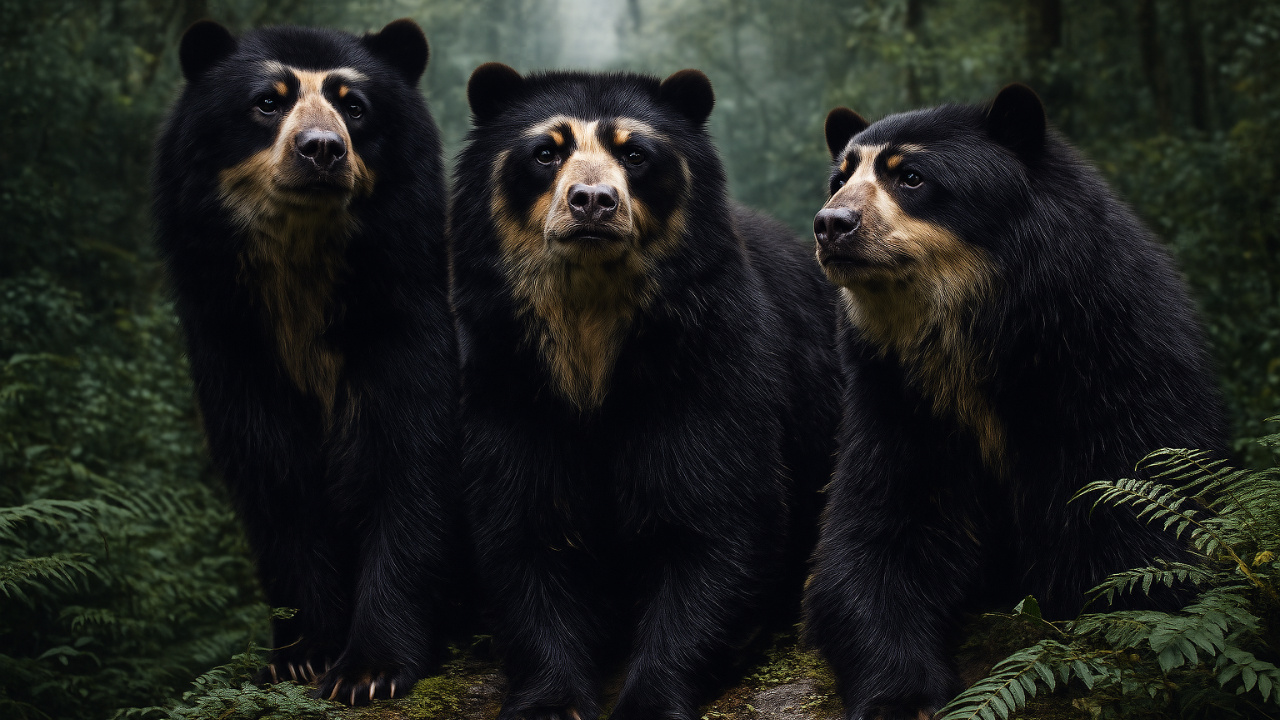


Why Doesn’t Brazil Have Bears While Other South American Countries Do? Why Has Our Territory Never Hosted These Mammals?
What causes neighboring countries, like Peru, Bolivia, and Colombia, to host bears while Brazil has never recorded these animals in its territory?
The answers come from experts in fauna and ecology who, when analyzing geographical, climatic, and historical factors, show why Brazil does not have bears while other South American countries do.
The absence, which intrigues many readers, persists even with extensive forests like the Amazon.
-
Ancient 4,000-Year-Old City in Brazil Grew Wealthier and Reduced Inequality, Study Finds

-
Lost Page from Archimedes Palimpsest Resurfaces in French Museum After Decades, May Reveal Hidden Mathematical Calculations with X-ray and Multispectral Imaging
-
Brazilian Education Ministry Announces Tech Benefits for Teachers, Providing Smartphones, Notebooks, and Tablets to Enhance Digital Learning and Professional Development
-
Woman Stranded for Six Months in Brazilian Airport After Losing Passport and Ticket, Faces Agonizing Wait to Reunite with 15-Year-Old Son at Age 56.



Thus, understanding the phenomenon requires observing when and how these animals distributed themselves across the continent, as well as where they were able to adapt and why they did not advance into Brazil.
Spectacled Bear: Where Does the Only Bear in South America Live?
The Tremarctos ornatus, known as the spectacled bear, is the only representative of the group on the continent.
It occupies mountain ranges of the Andes, living between 250 and over 4,000 meters above sea level.
In these regions, it explores humid forests, misty areas, and rocky environments that offer a mild climate and vegetation compatible with its diet.
Moreover, it exhibits solitary and discreet behavior, which facilitates its survival in remote areas.
As a result, it is found in countries such as Colombia, Venezuela, Ecuador, Peru, and Bolivia, with isolated records in northern Argentina.
However, there are no reliable reports of the species’ presence in Brazil, even in areas close to the Andes.
This data reinforces the central question: why doesn’t Brazil have bears while other South American countries do?
Why Has the Spectacled Bear Never Reached Brazilian Territory?
The main explanation involves natural barriers that shaped the distribution of these mammals over thousands of years.
The Andes function as a true “ecological wall,” separating the ideal habitat of the spectacled bear from Brazilian biomes.
Additionally, the predominant tropical climate in Brazil, with dense forests and high temperatures, contrasts with the cold and mountainous environment that the species requires.
So, why doesn’t Brazil have bears while other South American countries do? Because there is mainly a lack of the type of ecosystem that supports this mammal.
Another determining point is the vegetation. The spectacled bear depends on humid forests and cloud formations for food and shelter.
On the other hand, biomes like the Amazon, Cerrado, and Atlantic Forest offer less compatibility with these habits.
There is also competition with other native species, which would hinder the occupation of Brazilian territory even if the animal could cross geographical barriers.
Could Climate Change Bring Bears to Brazil?
Although the continent is subject to environmental changes, experts affirm that the natural arrival of the spectacled bear in Brazil is unlikely.
The country has no representatives of the family Ursidae in its fauna, whether current or historical. There are no fossils, archaeological evidence, or reliable reports indicating the presence of bears in Brazil’s past.
Thus, even if new climatic scenarios alter Andean habitats, the spontaneous migration of this species to Brazil remains limited by ecological obstacles and the physiological characteristics of the animal itself.
Factors That Explain the Absence of Bears in Brazil
To definitively answer why Brazil doesn’t have bears while other South American countries do, experts highlight three main axes:
Natural Barriers: The Andes prevent the natural expansion of the species.
Ecological Adaptation: The spectacled bear does not adapt to the hot and humid climate predominant in Brazil.
Evolutionary History: There are no fossil records indicating the presence or passage of these animals through Brazilian territory.


Tem ursos sim recolhidos de circos aonde eles foram parar ja deve ter filhotes ursos no brasil