Portuguese
  Spanish


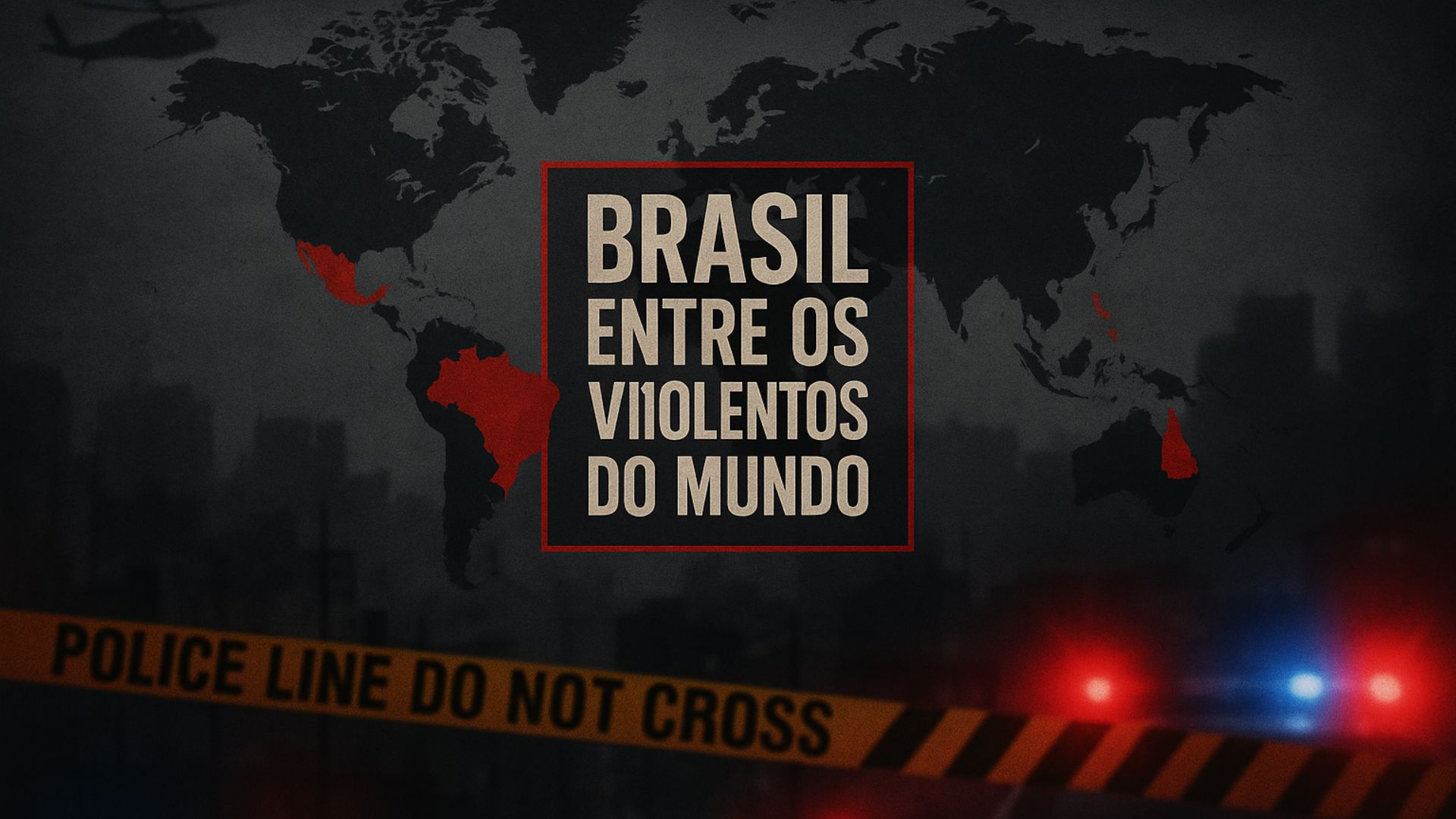


International Survey Places The Country Among The Most Violent Scenarios On The Planet In 2025, Alongside War-Affected Territories, Based On Data On Lethality, Risk To Civilians, Territorial Reach And The Action Of Armed Groups, According To Specialized Organization.
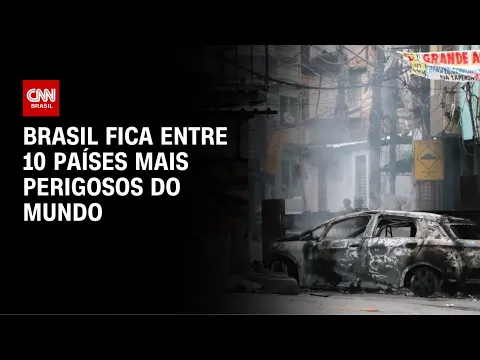
Brazil appeared among the most severe violence scenarios in the world in 2025.
It ranked 7th in the Conflict Index of the organization Acled (Armed Conflict Location & Event Data Project), which compares the intensity of violence in countries and territories using data from events recorded throughout the year.
The ranking places the country in the “extreme” level group, alongside locations affected by civil wars, armed insurgencies, and confrontations involving armed groups and state forces.
-
YouTuber Discovers Surreal Collection in 400-Year-Old Italian Fortress Near Florence: 419 Anvils, Giant Walruses, Ancient Church, and WWII Tunnels

-
Creative Uses for Toilet Paper Rolls That Will Change Your Perspective
-
Crab Trapped in Plastic Bottle for 62 Days Near Okinawa Highlights Little-Known Impact of Marine Pollution on Small Animals
-
Esperanza’s Bamboo Barrier in Oaxaca Redirects River and Reduces Erosion by 85% in Five Years



The index considers four criteria to measure the severity of conflicts: lethality, danger to civilians, geographical dispersion of violence, and fragmentation of armed groups.
Based on these metrics, Acled ranks the 50 most severe scenarios and classifies them into ranges such as extreme, high or turbulent.
The update released by the organization also points to the global volume of violence during the analyzed period.
There were 204,605 conflict events recorded between December 1, 2024, and November 28, 2025, with a conservative estimate of over 240,000 deaths worldwide.
Methodology Of The Conflict Index Of Acled
The methodology of the Conflict Index is based on event data collected and standardized by Acled itself.
The goal is to compare countries facing different forms of violence, from open wars to criminal disputes with territorial impact and attacks against civilians.
In “lethality,” the focus is on the number of deaths associated with violent events.
The danger indicator observes violence directed at civilians.
“Geographical dispersion” measures how much of the territory presents high levels of violence.
Finally, fragmentation assesses how many non-state armed groups are involved in violent episodes, a sign of complexity and difficulty in resolving the conflict.
According to the organization, countries that remain high on three or four indicators tend to represent the most severe and most difficult scenarios to contain.
It was in this context that Brazil entered the most critical group of the survey.

Why Brazil Appears At The Extreme Level Of Violence
In Acled’s view, Brazil stands out mainly due to indicators related to danger to civilians and fragmentation.
The organization points out that violence associated with factions and organized criminal groups contributes to keeping the country among the most critical scenarios in the world.
This framing considers the set of 50 evaluated countries and territories.
In the supporting text for the ranking, Acled states that “Myanmar, Mexico, Brazil, and Nigeria have consistently remained high in all four indicators of the index.”
The statement signals that these countries presented, throughout the period, a persistent combination of deaths, attacks against civilians, territorial reach, and multiplicity of armed actors.
This framing does not only compare the absolute number of deaths.
It also takes into account the pattern, frequency, and distribution of violent episodes.
The specific risk to civilian populations is treated as a central factor.
Acled itself emphasizes that the dynamics of gangs and criminal organizations have significant weight in Brazil’s position.
Especially in urban contexts marked by territorial disputes and frequent armed confrontations.
Global Violence Ranking And Countries At Extreme Levels
The ranking was led by Palestine, described by Acled as the most dangerous place in the world in 2025.
The territory combines high lethality and widespread geographical distribution of the conflict.
The organization records that there are “high levels of violence in almost 70% of Gaza and the West Bank.”
The data highlights the extent of the impact on the population and territory.
Next are Myanmar and Syria, both classified at the extreme level.
In the case of Myanmar, Acled points to an exceptional degree of fragmentation.
The scenario is described as particularly complex.
The organization cites the presence of “more than 1,200 distinct armed groups” involved in violent episodes.
Mexico ranked 4th.
The position is associated with the actions of cartels and frequent confrontations between security forces and criminal groups.
5th place is occupied by Nigeria, still marked by overlapping regional conflicts and persistent armed violence.
Equador, in 6th place, entered the group of greatest severity following a recent escalation.
According to Acled, the country has become more lethal.
The report points to “over a thousand additional deaths due to political violence compared to 2024.”
Right after Brazil, the list includes Haiti, Sudan, and Pakistan.
All are classified at the extreme level of the index.
Acled’s assessment is that, despite conflicts of different natures, these countries share patterns of intense violence.
The high risk to civilians and the difficulty of stabilization also appear as common elements.
Latin America And Caribbean Under Pressure From Armed Violence
The regional snapshot made by Acled indicates a deterioration of the security scenario in Latin America and the Caribbean.
The organization highlights the presence of Mexico, Ecuador, Brazil, and Haiti among the ten most violent countries in the world.
The advance of gangs and criminal groups is pointed out as a central factor for the intensification of armed confrontations.
Attacks against civilians and territorial disputes appear as direct consequences of this process.
In Brazil, Acled cites the impact of a large police operation in Rio de Janeiro conducted in October.
The action is described as a milestone that worsened the violence scenario throughout the year.
According to different public records, the total number of deaths in the operation varied according to the source.
Acled reported at least 121 deaths.
Other counts mentioned by entities and international outlets reported 119 and 122 victims.
The organization states that the episode contributed to a 12% increase in deaths resulting from confrontations between security forces and armed groups in 2025.
In Ecuador, the escalation of violence is also associated with the prison system.
The Acled text mentions a massacre in a prison in Machala.
The episode left 32 dead during confrontations between criminal factions.
The case exposed the limits of security strategies adopted in the country.
In Haiti, the organization reports that police operations against gangs have raised armed confrontations by 80%.
The increase was more intense in the peripheral areas of Port-au-Prince.
The survey also describes growth in targeted attacks against civilians.
The context includes institutional fragility and territorial expansion of armed groups.
Meanwhile, in Mexico, Acled relates the local intensification of violence to the murder of the mayor of Uruapan, in the state of Michoacán.
According to the organization, confrontations between security forces and armed groups doubled in the region in 2025.
The increase occurred despite the announcement of new strategies by the federal government.
With Brazil consolidated among the ten most severe scenarios of the index and the region concentrating several countries at the extreme level, what kind of public response can reduce violence without increasing the risk to civilians?