






 Portuguese
  Spanish


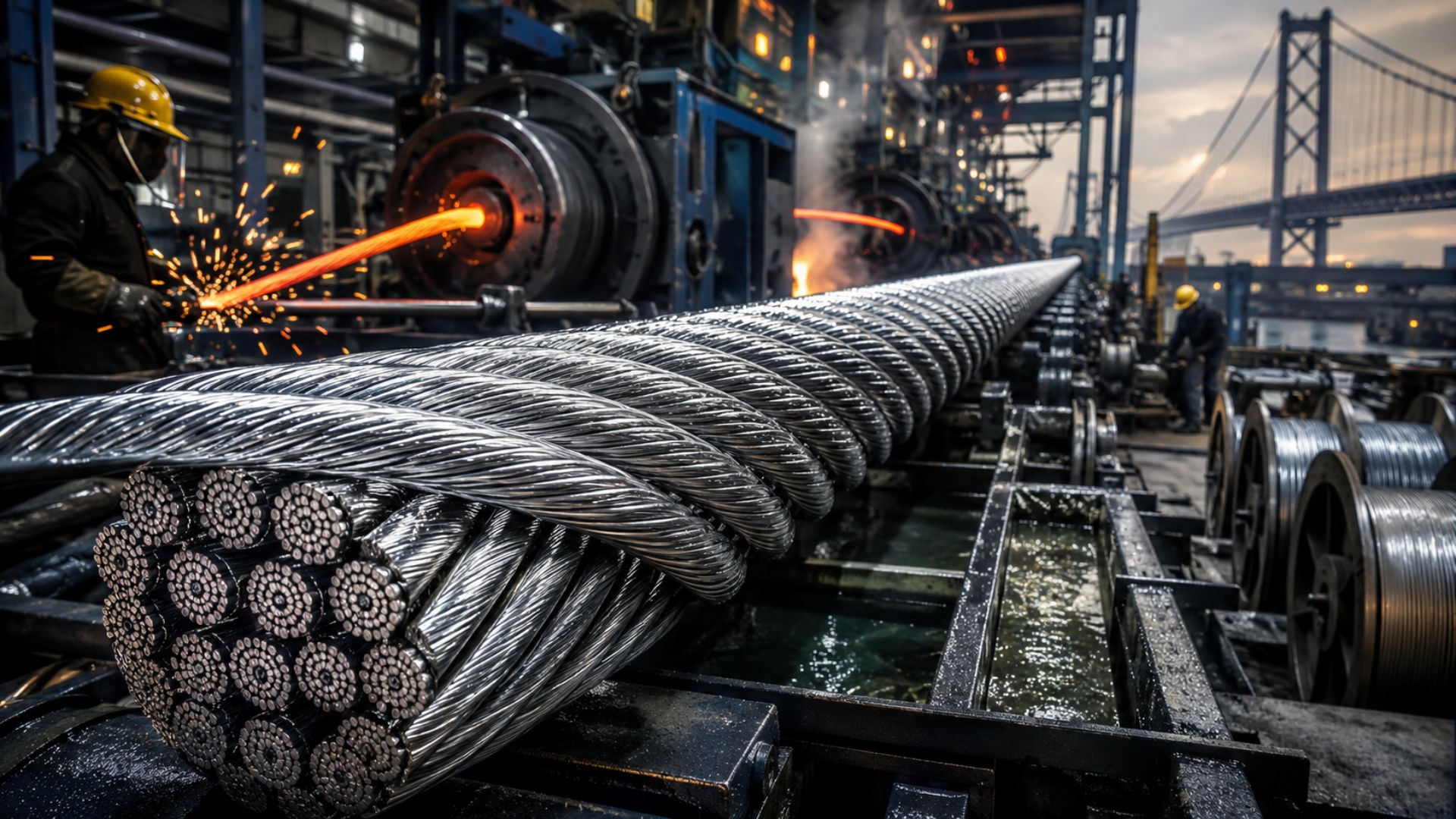


The secret is not in the thickness, but in the geometry. Hundreds of fine wires, twisted at a calculated angle, share the load among themselves and gain flexibility without losing strength. Behind this engineering is a long journey that begins at the bottom of a mine and goes through furnaces, dies, and zinc baths.
A cable just a few centimeters thick can support hundreds of tons and hold entire bridges. This feat is only possible thanks to an industrial process that transforms iron ore into very fine steel wires, which are treated, galvanized against corrosion, and twisted in layers with specific functions, forming what is called a steel cable, one of the most important and underestimated components of modern engineering.
Present in elevators, cranes, oil platforms, and large suspension bridges, the steel cable is an engineering piece that hides in plain sight. The classic Brooklyn Bridge in New York, opened in 1883, is a good example: it was the first suspension bridge to use galvanized steel wire cables and has remained strong for over a century. Next, we go through the entire journey of this material, from the bottom of the mine to the finished cable, explaining why something that seems like just twisted steel can withstand decades in the harshest conditions.
Why a thin cable can hold so much weight
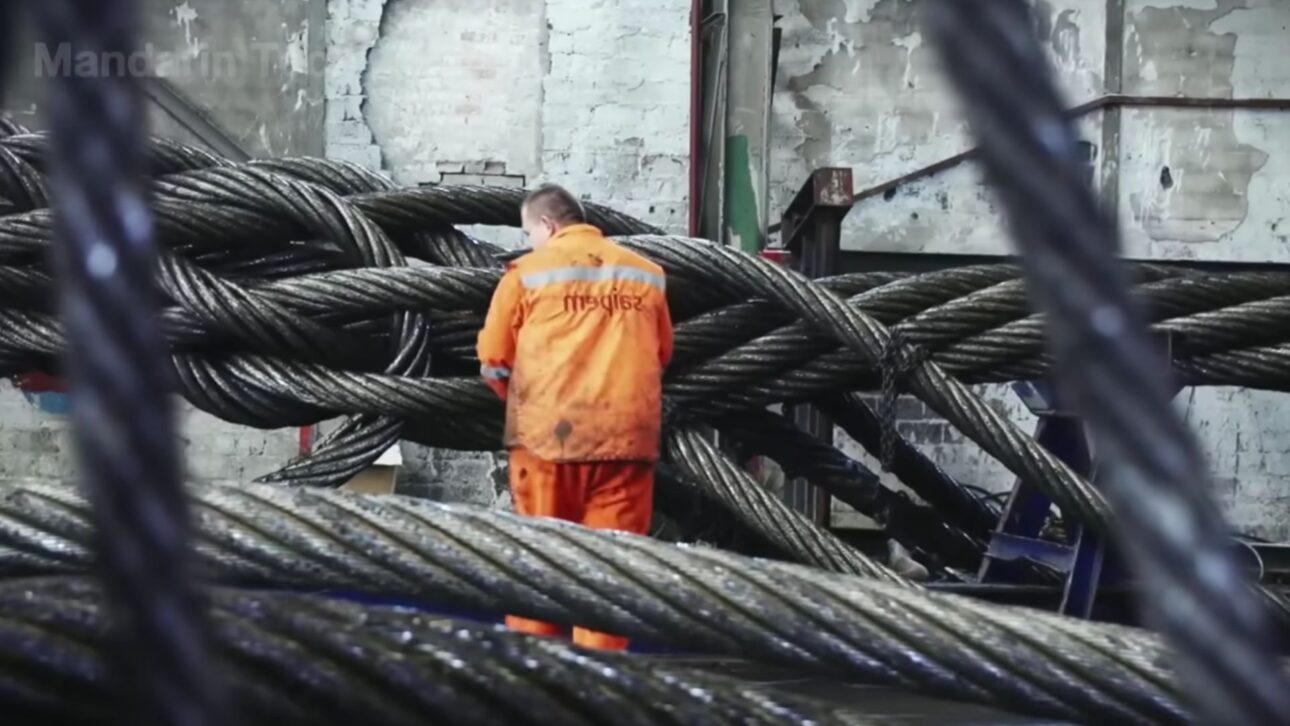
Instead of a single solid bar, the steel cable is made up of hundreds of fine wires tightly twisted, an arrangement that offers flexibility and, at the same time, distributes the force evenly throughout the section, allowing a cable just a few centimeters thick to support hundreds of tons, with an impressive weight-to-strength ratio.
-
Mother and Daughter Convert Small Garage into Full Apartment to Save Money and Stay United

-
Woman Leaves Restaurant Job to Become a Builder in Brazil, Launches Her Own Construction Brand “Construcida”

-
Mother and Daughter Turn Abandoned Warehouse Find into Million-Dollar Business in the U.S., Uncovering 25,000 Caps, 10,000 Sneakers, and Rare Apparel from Nike, Adidas, and Puma
-
After Nearly 30 Years at Beto Carrero, Elephant Baby Begins New Life at Sanctuary in Brazil’s Mato Grosso


This principle is not new.
The steel cable emerged around the 1830s in the deep mines of Germany, when the old fiber ropes could no longer handle the loads and were replaced by a material capable of safely descending hundreds of meters below the surface.
Almost two centuries later, the world consumes millions of tons of steel cables per year, present from heavy industry to energy, showing how this invention has become indispensable.
It all starts with iron ore
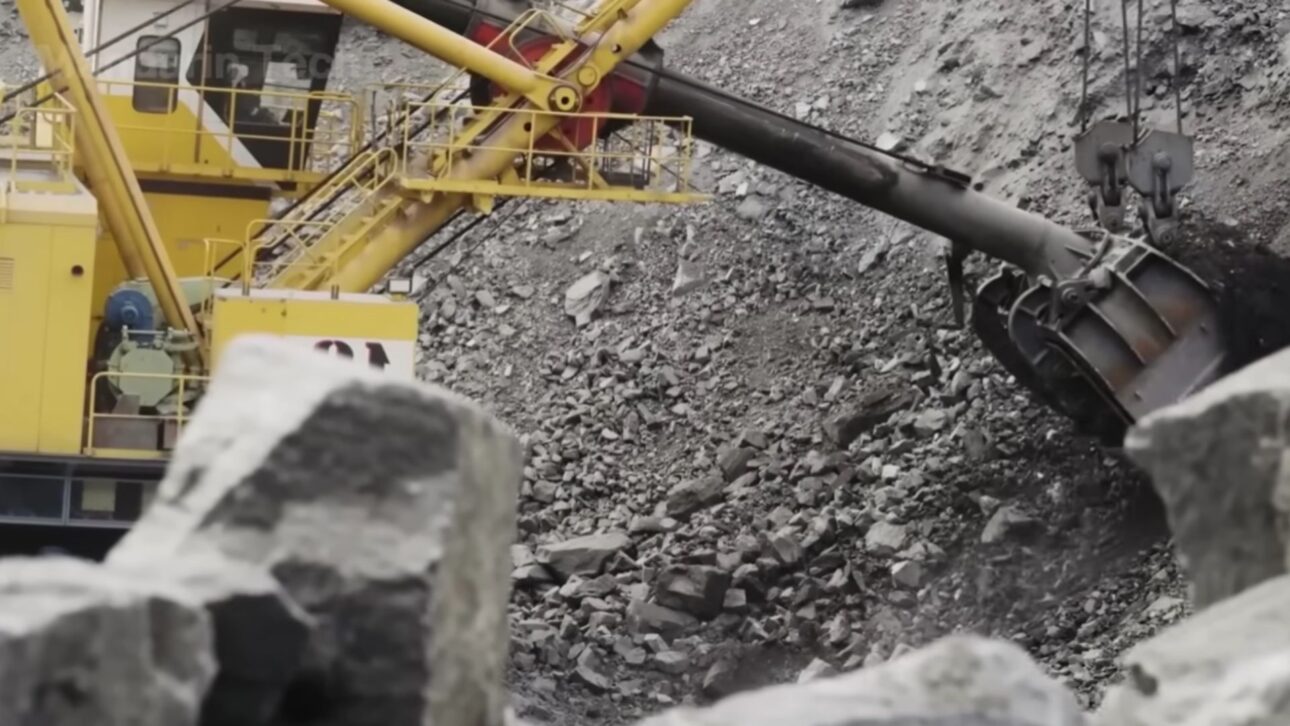
The process begins in large iron ore mines, where the rock is fragmented with controlled explosives, loaded by excavators and giant trucks, and then crushed and separated from impurities before heading to the steel mill, in a cycle that operates almost uninterruptedly to supply the industry.
This initial link is especially relevant for Brazil, one of the largest producers and exporters of iron ore in the world, an essential raw material for steel manufacturing.
After pre-processing, the ore is transported by railways and cargo ships, each carrying thousands of tons at a time, to the plants where it will be transformed into metal.
It is there, in the heat of the furnaces, that steel begins to take shape.
From the furnace to the steel billet
In the steel mill, the ore turns into liquid steel.
The iron ore, combined with recycled metal scrap, is melted in a huge electric arc furnace, generating heat of over 1,500 degrees Celsius, enough to melt the metal, while graphite electrodes conduct intense currents and create a glowing mass, shining like lava.
To adjust the properties of the steel, engineers add elements like manganese, which increases strength, and chromium or nickel, which improve corrosion resistance.
At the same time, lime and limestone form a slag layer that rises to the surface and acts as a filter, absorbing impurities and leaving the metal cleaner.
Then, the liquid steel is solidified in water-cooled molds, in a continuous casting process that creates billets, solid blocks that remain hot for the next stage.
From billet to very fine wire


This is where the steel begins to thin until it becomes wire.
Still at high temperature, the billets go through hot rolling, where massive rolls apply enormous pressure, flattening and elongating the metal, transforming it into thinner bars, which then proceed to drawing, a stage where the wire is pulled through a sequence of increasingly smaller dies, gaining the exact diameter and smooth surface.
Drawing is done at room temperature and requires strict control of pulling force, speed, and friction, as the slightest deviation can break the wire or compromise its quality.
In modern factories, laser sensors continuously measure the diameter and adjust tension in real-time.
The result is high-strength steel wire coils, produced with almost perfect precision, ready to receive treatments that will ensure their durability.
Heat treatment and rust protection
Reaching the right diameter is only part of the challenge.
To achieve the ideal balance between hardness and flexibility, the wire undergoes heat treatment, being heated in controlled atmosphere furnaces and then rapidly cooled, in a process that reorganizes its internal structure and makes it capable of withstanding loads without breaking when twisted, a decisive step for the final performance of the cable.
Soon after, comes corrosion protection.
The wire is cleaned with an acid solution and then receives a protective layer, usually by galvanization, where it is dipped in molten zinc, or by coating with polymers.
This layer acts as an invisible shield against moisture, seawater, and chemicals, preventing the steel from rusting over the years.
The coating needs to be uniform and flawless, as any breach can compromise the entire wire in the field.
The secret of layered twisting
With the wires ready, it’s time to assemble the cable.
In the stranding line, dozens or even hundreds of wire coils are mounted on rotating structures that twist the steel into a precise helical pattern, first forming smaller bundles, the strands, which are then twisted around a central core to create the finished cable, with tension and angle controlled by sensors at all times.
This core can be made of steel, resulting in a stronger cable for high loads, or synthetic fibers, making it lighter and more flexible, depending on the use.
Each layer of the cable serves a function: the outer resists wear, the intermediate supports the main load, and the inner stabilizes the structure.
Finally, the cable receives a layer of lubricant that penetrates between the wires, reducing friction and protecting against corrosion, before undergoing final tests.
The tests that separate the approved cable from the rejected one
Before going to market, the cable needs to prove its resistance.
In hydraulic machines, the cable is continuously pulled until it breaks, to determine its real load limit, in addition to being bent and twisted repeatedly to simulate the most severe usage conditions, and any sign of failure, even microscopic, results in immediate rejection, ensuring that only the most reliable reach real applications.
Only cables that pass all these tests proceed to winding on reels, with traceability codes that record the data of each batch.
This rigor is explained by the responsibility involved: the same type of cable that raises and lowers a crowded elevator is closely related to the one that supports a bridge or lifts loads of hundreds of tons in a crane.
In all these applications, a failure can have serious consequences, which makes each control step absolutely essential.
The journey of a steel cable, from raw ore to the final product, is a remarkable example of how engineering transforms raw material into safety.
Each step, from casting to galvanization and twisting in layers, exists to ensure that something seemingly simple can support bridges, elevators, and colossal structures for decades.
Next time you cross a large suspension bridge or enter an elevator, it’s worth remembering that, behind the routine, there are fine steel wires working together, the result of an impressive industrial process and a lot of quality control.
And you, did you have any idea how much technology exists behind a simple steel cable? Which step of the process surprised you the most? Leave your comment, share your opinion, and help spread the article to those interested in engineering, industry, and the behind-the-scenes of great constructions.


