Portuguese
  Spanish


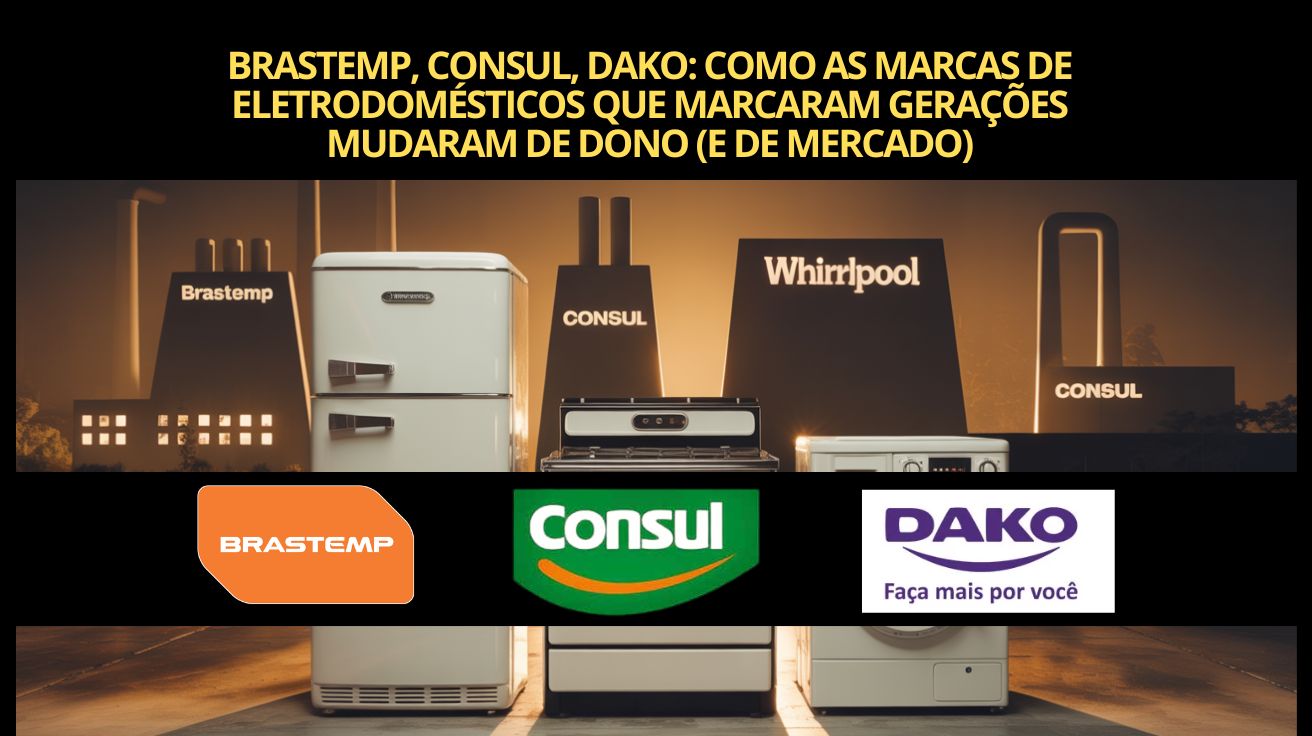

From Brazilian Kitchens to the Shelves of Billion-Dollar Multinationals, Brands Like Brastemp, Consul and Dako Faced Surprising Turnarounds, Unexpected Acquisitions and Changes That Not All Consumers Noticed, but That Changed the Household Appliances Market in Brazil.
From Status Symbols to International Acquisitions: Understand How These Brands Transformed Over the Years and Who Truly Owns Them Today.
For Decades, Brands Like Brastemp, Consul and Dako Were Constant Presences in Brazilian Homes.
Much More Than Household Appliances, They Became Synonymous with Tradition, Innovation, and Even Family Affection.
-
Father Lives with 3 Children on a 15-Meter Off-Grid Houseboat, Reduces Living Costs to £500 a Month, and Filters Canal Water with a £300 System He Built

-
In 1961, Hollywood held a unique audition with 152 black cats to cast the perfect feline for the horror film The Black Cat.

-
Brazilian Truck Driver in the U.S. Earns $11,200 Commission on Heavy Haul, Highlights High Income Potential and Demands of the Job

-
Teen without prom date invites pet cat to dance, goes viral with tuxedo and pink dress photoshoot




But What Few People Know Is That These Brands Underwent Major Turnarounds Over the Last Few Decades — Including Mergers, Acquisitions, and Even Identity Changes That Left Many Consumers Uncertain About Who Actually Manufactures the Products They Buy Today.
Is Brastemp No Longer “A Brastemp”?
Founded in 1954 by the Brasmotor Group, Brastemp Quickly Stood Out in the Brazilian Market for Its High-Quality Refrigerators.
In the 1990s, the Brand Became an Absolute Reference in Marketing with the Famous Slogan: “It’s Not a Brastemp,” Used to Highlight the Product’s Superiority.
What Few People Realized Is That, in 1997, Brastemp Was Acquired by the Multinational Whirlpool, an American Giant in the Household Appliance Sector.
Since Then, Brastemp Remains in the Market, but Its Products Are Manufactured by the Same Company That Controls Other Traditional Brands — Including Consul, Its Former Rival.


Consul and Brastemp: Rivals That Are Now Sisters
Consul Emerged in 1950, in Joinville (SC), Also Initially Focusing on Refrigerators.
Over the Years, It Diversified Its Product Line and Positioned Itself as a More Affordable Brand.
For a Long Time, Brastemp and Consul Competed for the Top of the White Goods Market, Representing Different Audiences: the Former, More Sophisticated; the Latter, More Popular.
But That Rivalry Ended with the Arrival of Whirlpool.
The American Giant Acquired Both Brands and Began to Control Them Simultaneously, Although It Maintains a Differentiation in Market Positioning.
This Strategy Allows the Company to Reach Various Consumption Segments Without Cannibalizing Its Own Products.
Dako: From Popular Explosion to Near Oblivion
If Brastemp and Consul Are Still Well-Known Names, Dako Went Through a Period of Transformations That Repositioned It in the Market.
Founded in 1935, the Brand Was One of the Largest Stove Manufacturers in Brazil for Many Years, Being Synonymous with Quality and Tradition.
In the 2000s, Dako Faced Challenges with the Arrival of International Brands and the Consolidation of Large Conglomerates, Leading to a Significant Reduction of Its Presence in Retail After the Bankruptcy of Mabe in Brazil in 2016.
However, Since 2017, Dako Has Been Part of the Portfolio of Atlas Eletrodomésticos, a Company that Is Driving an Important Renewal Process for the Brand.
Currently, with the Launch of New Product Lines and Strengthening Its Presence in the National Market, Dako, Together with Atlas, Leads the Stove Segment in Brazil, Regaining the Prestige and Relevance It Once Had in the Past.

Whirlpool: The Giant Behind Brazilian Brands
Many People Still Believe That Brastemp and Consul Are Independent Brazilian Companies.
But, In Fact, They Are Part of the Whirlpool Corporation Empire, Founded in the United States in 1911.
The Company Is Present in Over 170 Countries and Owns Brands Like KitchenAid, Maytag, and Indesit, in Addition to the Brazilian Ones.
In Brazil, Whirlpool Operates with a Strong Industrial Presence.
Its Factories Are Located in Manaus, Joinville, and Rio Claro.
The Company Invests in Portfolio Differentiation to Maintain the Identity of the Brands, Even Though the Products Share Technologies or Components.
Why Does It Matter?
This Market Concentration Raises Important Discussions.
While Consumers See Variety on the Shelves, Many Competing Brands Belong to the Same Economic Group.
This Can Influence Prices, Innovations, and Even the Level of Competition in the Sector.
Moreover, There Is an Emotional Factor Involved.
When Someone Says They “Only Trust Brastemp,” They Are Often Referring to the Affective Memory of the Brand — Built at a Time When It Was Indeed an Independent Brazilian Company.
Other Brands That Have Undergone Changes
The Movement Does Not Stop There.
See Other Brands That Changed Owners and Perhaps You Didn’t Even Notice:
- Esmaltec: Traditional in the Northeast, Today Is Part of the Edson Queiroz Group (Also Owner of Ipanema and Indaiá).
- Electrolux: Maintains Its Own Operation in Brazil but Has Absorbed Various Lines That Were Independent.
- GE Eletrodomésticos: Its Line of Refrigerators and Stoves in Brazil Was Transferred to Mabe and Then to Electrolux.
What Lies Ahead?
With the Advancement of the Internet of Things and the Search for More Connected Homes, the Household Appliance Market Will Undergo a New Revolution.
Today, Companies Are Investing in Wi-Fi Connected Stoves, Refrigerators That Automatically Identify Foods, and Machines That Can Be Operated via Apps.
Brands That Can Maintain Their Identity, Invest in Innovation, and Adapt Their Communication to New Generations Are Likely to Survive.
The Others, as We Have Seen with Dako, May Disappear Silently.